
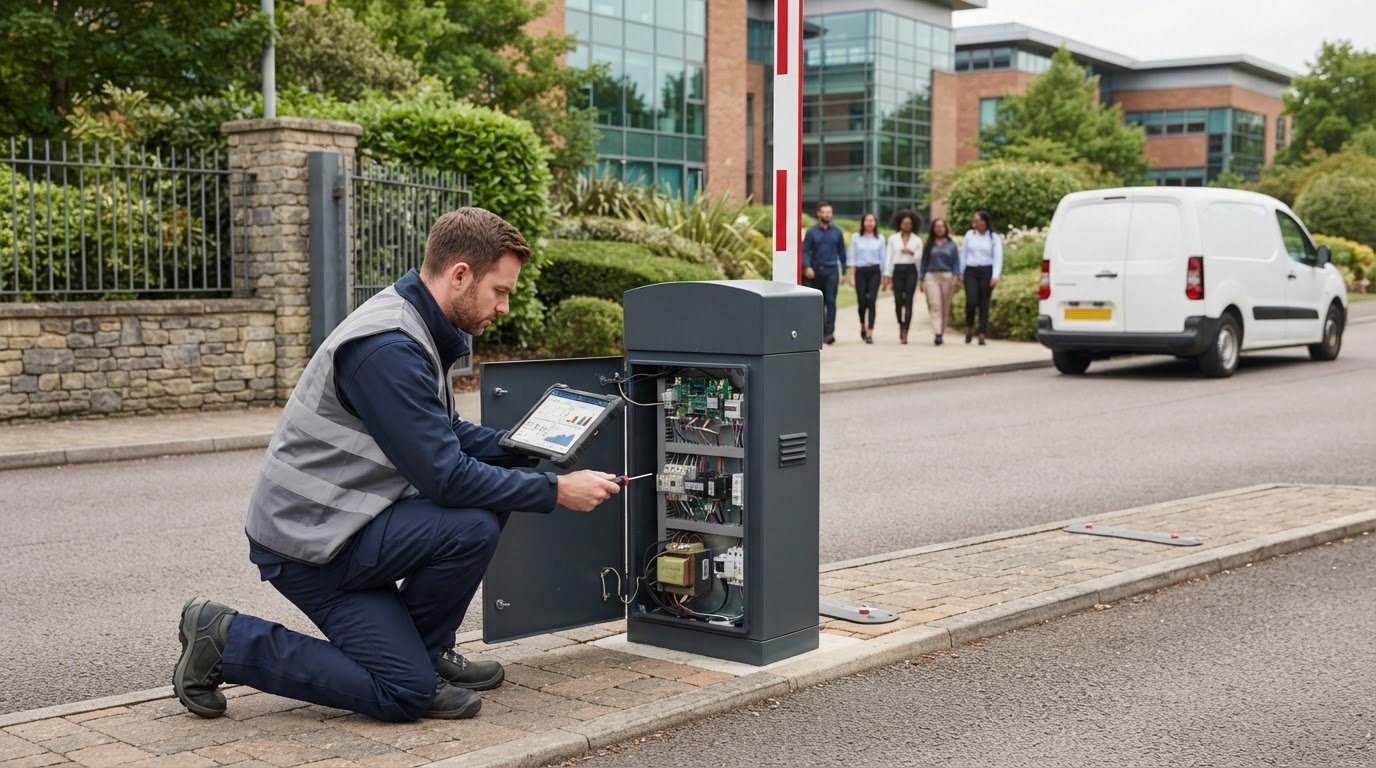
What happens when a site’s vehicle barrier fails at the start of a busy working day? Access queues, deliveries and staff movements can all be affected. An annual barrier service contract Surrey businesses consider should reflect the barrier’s condition, how often it operates and the role it plays in site access, rather than treating maintenance as a generic visit.
Routine servicing gives a qualified specialist the opportunity to identify wear and operational issues before they contribute to disruption. To understand what a contract will do for your site, look at the equipment and tasks covered, how visits fit around daily operations and whether the barrier connects to access control.
This guide explains the purpose and potential scope of planned barrier maintenance, how to compare contract arrangements and how to match servicing to site use. Links Integrated Systems supplies, installs, commissions and maintains commercial barriers and related physical security systems, supporting sites across Surrey with planned system care.
Key Takeaways
- Plan barrier maintenance around how the equipment is used and how important it is to daily site operations.
- Service scope can include condition checks, operational testing and review of relevant safety features, depending on the equipment and agreed plan.
- Compare an annual barrier service contract by equipment covered, planned tasks, visit arrangements and reporting.
- Prepare for servicing by recording equipment details, usage, access restrictions, operating hours and site induction requirements.
- Links Integrated Systems aligns commercial barrier maintenance and commissioning with your site’s equipment and operational requirements.
Why a Surrey business should plan annual barrier servicing
An annual barrier service contract sets out planned maintenance over an agreed contract period. Rather than waiting for a fault to affect vehicle access, the site and service provider agree an approach in advance, based on the equipment and its operational role. For a Surrey business, this makes barrier maintenance a planned part of site management.
Planned servicing differs from repair work after a fault develops. It provides an opportunity to inspect the barrier’s condition and operation at agreed intervals, and to identify wear or developing issues that may need attention. Servicing cannot guarantee that faults will not occur, but a proactive maintenance plan can help reduce the risk of avoidable disruption. Emergency call-outs address urgent problems and do not replace routine maintenance.
What does planned barrier maintenance aim to achieve?
A barrier controls more than a physical entrance. Reliable operation can support controlled entry, orderly traffic flow and the movement of staff, visitors and deliveries. If a barrier stops working as expected, vehicles may be delayed and site teams may need to change access arrangements.
Maintenance checks the equipment’s condition and operation. The precise tasks depend on the barrier and the agreed scope. Barrier types and applications vary; this general overview of types of safety barriers provides broader context. Start by identifying the equipment installed at your site, then relate its maintenance needs to how it is used.
Which Surrey sites may benefit from an annual contract?
Commercial premises with regular vehicle movements can benefit from planning maintenance in advance. Examples include offices with controlled staff or visitor entry, business premises receiving deliveries, and managed sites where a barrier forms part of the access-control arrangement. The right plan depends on how the site operates, not on a one-size-fits-all schedule.
Assess the need for a contract against three practical factors:
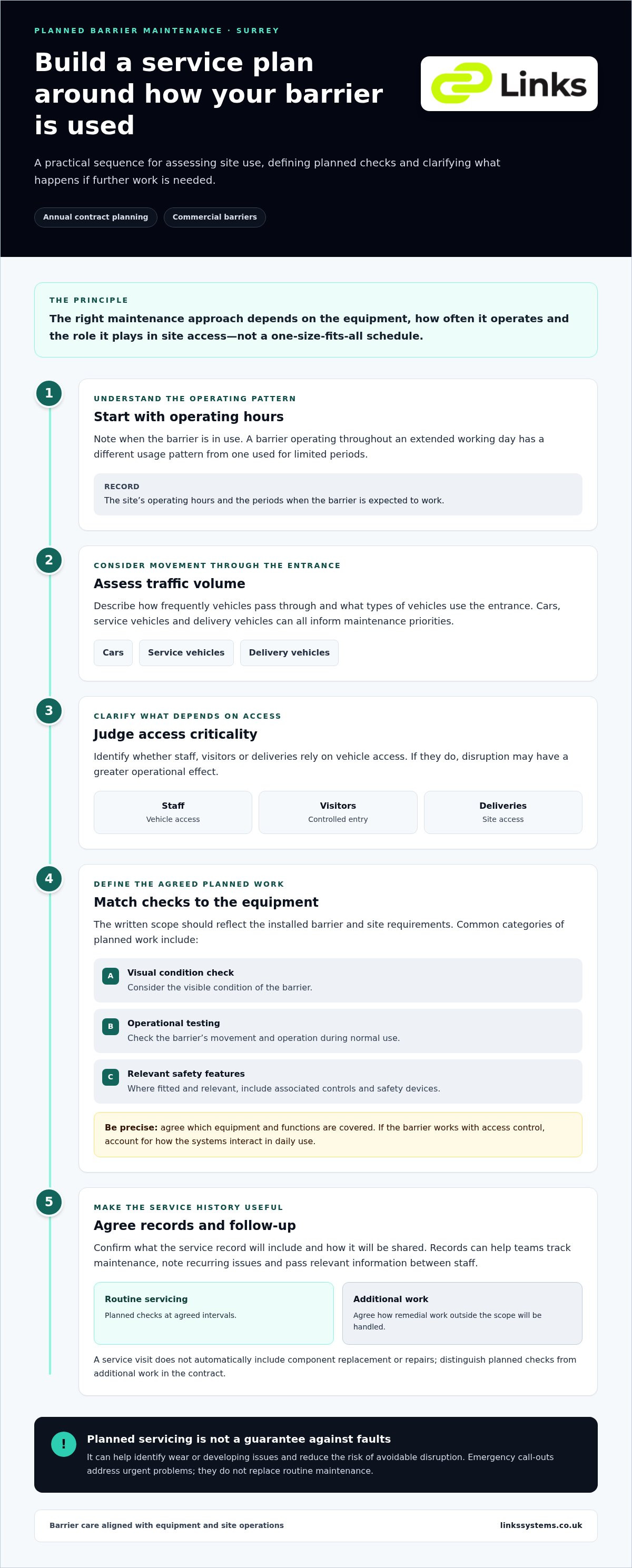
- Operating hours: A barrier used throughout an extended working day has a different usage pattern from one operating for limited periods.
- Traffic volume: Frequent movements by cars, service vehicles or delivery vehicles can influence maintenance priorities.
- Access criticality: If staff, deliveries or visitors depend on vehicle access, disruption may have a greater operational effect.
These factors help a site manager explain what the barrier needs to support and inform a suitable maintenance plan. Links Integrated Systems maintains commercial barriers and physical security systems across Surrey, aligning planned servicing with site equipment and operational requirements.
What an annual barrier service contract can cover
The scope of an annual barrier service contract should reflect the equipment installed and the site’s operating requirements. Common maintenance tasks include a visual condition check, operational testing and a review of relevant safety features. These are typical categories of planned work, but the written scope should state exactly what is included for your equipment.
Links Integrated Systems tailors commercial barrier maintenance to the system and its wider access-control environment. For background on barrier types and specification considerations, see the commercial speed gates and barriers specification guide. An accurate inventory of the equipment helps define a practical servicing scope.
Inspection, operation and safety checks
A planned inspection can consider visible condition, the barrier’s movement and its operation during normal use. Where fitted and relevant, checks may also cover associated controls and safety devices. The exact checks and any remedial work required depend on the equipment and agreed service scope. A service visit does not automatically include component replacement or repairs, so make sure the contract distinguishes planned checks from additional work.
If the barrier works alongside access control, the maintenance plan can account for how the systems interact in daily use. A clear scope helps site managers understand which equipment and functions the planned work addresses.
Service records and follow-up actions
Service records help site teams track maintenance, note recurring issues and share relevant information during staff handovers. For example, recording an operational concern gives facilities teams a reference when reviewing the system’s history and planning subsequent work. Agree what information the record will include and how it will be shared.
It is also useful to distinguish routine servicing from additional remedial work. If an inspection identifies an issue outside the agreed maintenance scope, the contract should explain how further work will be handled. This gives site teams a clearer basis for planning and managing operational priorities without assuming that every repair is included.
For Surrey organisations assessing an annual barrier service contract Surrey, consider whether the scope reflects the installed barrier, its relevant safety features and the way the site uses it. Links Integrated Systems provides commercial barrier maintenance and commissioning. Explore commercial barrier maintenance support as part of a planned approach to system care.
How to compare annual barrier service contracts for a Surrey site
Compare the work each plan defines, not just its title or the number of visits. A site with one lightly used entrance has different maintenance priorities from a busy commercial entrance handling regular deliveries and staff vehicles. When assessing an annual barrier service contract Surrey businesses should match the scope to the equipment, operating conditions and impact of restricted access.
| What to compare | What to look for in the written scope |
|---|---|
| Equipment covered | Identify each barrier and any connected controls included in the plan. Check that the description distinguishes the main entrance from secondary access points. |
| Planned tasks | Look for clearly described inspection and operational checks, including relevant safety features where fitted. The wording should make the planned work easy to understand. |
| Visit arrangements | Compare the agreed schedule and how visits will be arranged around site operations. Do not assume a particular frequency or response time unless it is stated. |
| Records and follow-up | Understand what information will be recorded, how identified issues will be communicated and how further work will be handled. |
Match the service scope to barrier use
Usage helps determine where maintenance attention matters most. A barrier serving a low-use entrance may experience fewer opening cycles than one managing frequent vehicle movements throughout extended operating hours. Vehicle types, site conditions and reliance on connected access-control systems also shape the maintenance plan. A critical entrance used by staff, visitors or delivery vehicles may need a different scope from a secondary route. The right service scope reflects how the barrier is used and what it controls.
Compare visit arrangements, records and follow-up
Review the planned activities alongside the schedule and documentation, rather than treating visit count as the only measure of value. Clear records help site teams track completed maintenance and recurring observations. The contract should distinguish routine servicing from additional remedial work, including relevant boundaries or exclusions. Base your comparison on the written terms.
Look for a clear process for reporting issues found during planned work and explaining how further work will be addressed. This gives the site a practical understanding of what happens after an observation is recorded, without implying guaranteed response times or round-the-clock support. Links Integrated Systems shapes commercial barrier maintenance around installed equipment and operational requirements, helping Surrey sites develop a considered, site-specific plan.
Planning annual barrier servicing across Surrey
A well-prepared service plan starts with accurate site information. Map the barriers in use, consider what each one controls and identify practical arrangements for access. This helps create a scope that reflects the equipment and the way the site operates, rather than relying on assumptions.
Prepare site and equipment information
Gather the details site teams use day to day. Note each barrier’s location, any known equipment information and the entrance or route it manages. Add typical usage patterns, operating hours and recurring operational concerns, such as interruptions to vehicle flow or issues staff have observed. This gives the maintenance discussion useful context.
Record practical arrangements for planned attendance, including site access restrictions, relevant induction requirements and the contact responsible for coordinating a visit. For a multi-building or managed site, clear location details help distinguish one entrance and system from another.
Agree scope and coordinate planned visits
Use the information gathered to agree which equipment and service activities the contract covers. Then coordinate planned work with site operations. Consider busy access periods, delivery schedules and the process for admitting a visiting engineer. Surrey includes a range of commercial settings, so local access arrangements should be part of the plan, not left until attendance is due.
A practical four-step process keeps responsibilities clear:
- Identify equipment: list barrier locations and the entrances they control.
- Document usage: summarise vehicle movements, operating hours and recurring concerns.
- Agree scope: set out the equipment and planned service activities covered by the arrangement.
- Schedule planned work: coordinate attendance around site access, operations and induction procedures.
Before putting the plan into practice, establish how findings and recommendations will be recorded and communicated. Clarify how additional work will be handled under the agreed terms. This gives facilities teams a clearer handover and a practical way to review maintenance observations without assuming further work is automatically included.
For organisations arranging an annual barrier service contract Surrey, this preparation connects the maintenance scope with the site’s actual demands. Links Integrated Systems supplies, installs, commissions and maintains commercial barriers, aligning planned servicing with equipment and operational requirements across Surrey. To discuss planned barrier maintenance for your site, contact Links Integrated Systems.
Arrange an annual barrier service contract in Surrey with Links Integrated Systems
Links Integrated Systems supplies, installs, commissions and maintains commercial barriers as part of its physical security services. For Surrey sites, planned maintenance can be shaped around the barriers in place, their role in managing vehicle access and the way the premises operate. This gives you a practical basis for agreeing a service scope that reflects the site, rather than assuming every entrance has the same needs.
A service partner for commercial security equipment
Barrier servicing can sit alongside other physical security systems where they are integrated at the site. If a barrier is connected to access control, for example, its operation can be considered within that wider arrangement. The agreed scope should specify which equipment and activities are included. For broader context, read the physical security integration guide.
Links Integrated Systems brings commercial barrier maintenance and commissioning experience to the planning process. The service plan is aligned with the equipment and operational requirements discussed for your site, with the agreed terms setting out the work covered.
What to prepare before discussing a service plan
A few details can make the initial planning discussion more focused. Facilities and site teams can bring together:
- Equipment details: known barrier information, locations and the entrances each system controls.
- Operating patterns: typical vehicle movements, operating hours and periods of heavier use.
- Performance concerns: recurring issues or changes in operation that staff have observed.
- Site arrangements: access restrictions, induction requirements and the contact coordinating planned attendance.
This information connects maintenance planning to real site conditions. A barrier at a main entrance may have a different operational role from one serving a secondary route. Sharing that context helps shape a service scope and planned attendance arrangements around the equipment and how the site functions.
If you’re considering an annual barrier service contract Surrey businesses can plan around their equipment and access requirements, Links Integrated Systems can discuss a site-specific approach to commercial barrier maintenance. Discuss an annual barrier service contract in Surrey.
Put a clear maintenance plan in place
A well-planned barrier service arrangement starts with the equipment and the role it plays in site access. Match the agreed scope to how often the barrier operates, the conditions around it and the effect disruption could have. Clear visit arrangements, maintenance records and follow-up processes also help site teams understand what to expect.
For businesses considering an annual barrier service contract Surrey, Links Integrated Systems provides commercial barrier maintenance and commissioning for sites across Surrey, London, Kent, Hertfordshire and Essex. The service plan can be shaped around your equipment and operational requirements, including connected access-control systems where they form part of the site setup.
Take the next step towards planned barrier care. Discuss an annual barrier service contract in Surrey with Links Integrated Systems and start building a maintenance plan around your site’s needs.
Frequently Asked Questions
What does an annual barrier service contract include?
An annual barrier service contract sets out planned maintenance for specified equipment over an agreed contract period. Depending on the barrier and agreed scope, work can include a visual condition check, operational testing and review of relevant safety features or controls where fitted. Records and follow-up arrangements can also be defined. Links Integrated Systems provides commercial barrier maintenance across Surrey, London, Kent, Hertfordshire and Essex, with service plans shaped around site requirements.
How often should a commercial barrier be serviced?
Maintenance frequency should reflect the equipment, how often it operates and the importance of the access point. The Health and Safety Executive and Gate Safe recommend maintenance visits every six months. An annual contract describes the agreement period, not necessarily one visit per year, so the planned visit schedule should be set out separately. Higher usage, demanding site conditions or a critical entrance may affect the maintenance plan.
Is an annual barrier service contract worth having?
It can be worthwhile where a barrier plays an important role in staff access, visitor management or deliveries. Planned inspections create opportunities to identify wear or developing operational concerns before they contribute to disruption, although servicing cannot guarantee that faults will not occur. A contract also provides a framework for scheduling maintenance and recording observations. Its value depends on the barrier’s condition, site usage, operational importance and the work covered by the agreed scope.
Can a barrier service contract cover more than one entrance?
Yes. A service agreement can cover barriers at multiple entrances if the equipment and locations are included in the agreed scope. The plan should identify each system clearly, including the entrance it controls and any relevant access arrangements. This helps site teams distinguish a main entrance from a secondary route and coordinate planned attendance. Where barriers have different usage patterns or operational roles, the maintenance approach can account for those differences.
What happens if a fault is found during a scheduled barrier service?
If a service visit identifies a fault or concern, the finding should be recorded and communicated to the site team, with recommended next steps explained. Whether repair work is included depends on the contract’s terms and agreed scope. Routine servicing and additional remedial work are not automatically the same thing. Clear wording helps facilities teams understand how further work is assessed and arranged, without assuming a particular response time or emergency call-out provision.
Do commercial barriers need to meet particular safety standards?
Powered barriers and gates should be assessed against the safety requirements that apply to their design, installation and use. BS EN 12453 is a key UK standard covering safety requirements for power-operated doors and gates; its application depends on the equipment and circumstances. Site operators should ensure that safety checks and maintenance are appropriate to the installed system. A competent specialist can help assess the barrier’s condition and relevant safety features.
How much does an annual barrier service contract in Surrey cost?
The cost depends on factors such as the number and type of barriers, their condition, site usage and the agreed maintenance scope. Visit arrangements and whether additional remedial work is included can also affect the overall agreement. There is no single price that applies to every Surrey site, so compare what the work covers rather than figures alone. Links Integrated Systems tailors commercial barrier maintenance plans to site equipment and operational requirements.