
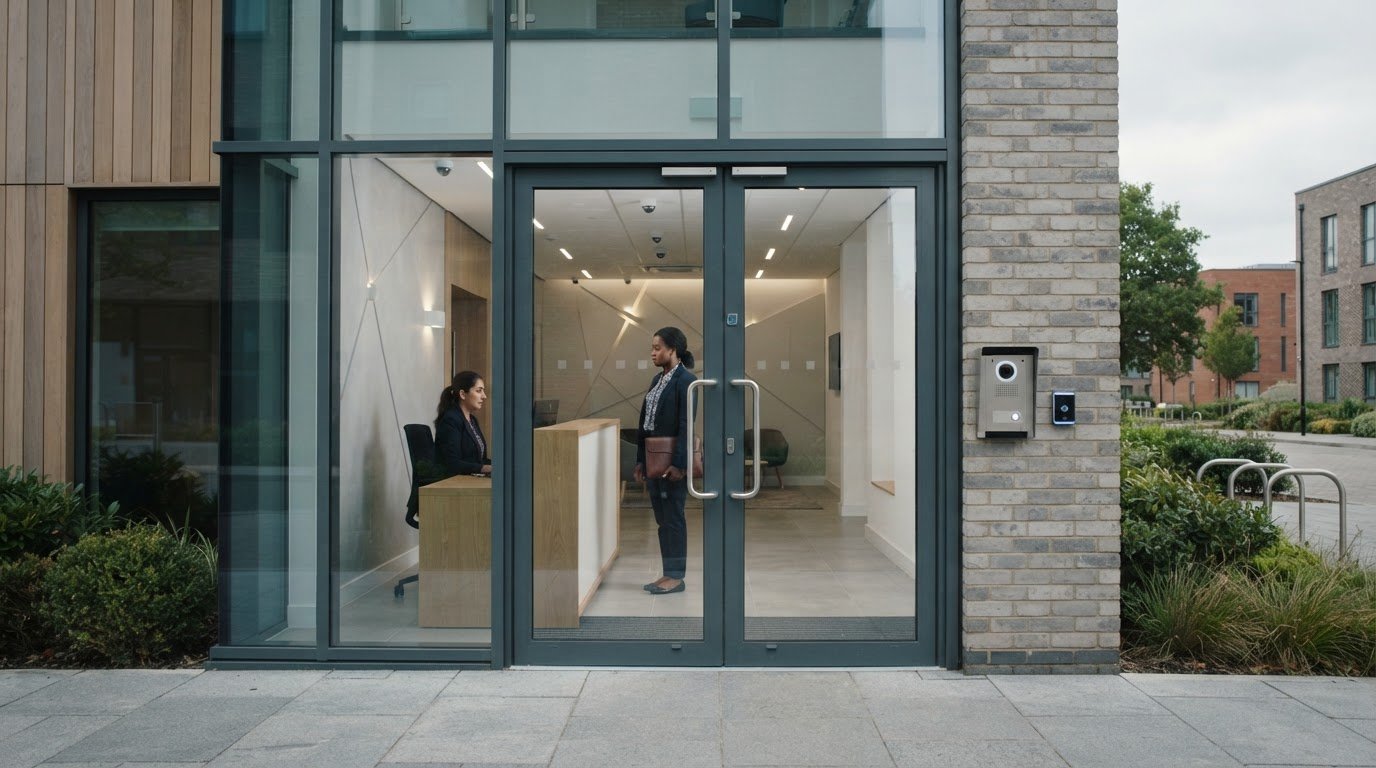
A commercial entrance can appear straightforward, yet the right intercom depends on who uses it, how access is managed and what equipment is already in place. Can experienced IP intercom installers in Essex design and commission a system that fits your site? The answer starts with planning each entrance, call route and access procedure, not simply choosing a device.
Compatibility with existing access control, disruption during installation and responsibility for testing the finished system all deserve attention. These details matter because an intercom needs to support the site’s wider security arrangements, not operate in isolation.
This guide explains how to plan a commercial IP intercom around your entrances, users and operational requirements. It covers the site assessment, coordination with access control and IP CCTV, installation planning, commissioning and ongoing maintenance. Links Integrated Systems supplies, installs and commissions commercial IP video intercom systems for sites in Essex, London, Kent, Surrey and Hertfordshire, bringing these stages together in a clear project process.
Key Takeaways
- Assess your entrances, visitor flow and call-handling arrangements before deciding what type of intercom the site needs.
- Compare audio-only and video options by considering what staff need to know before making an entry decision.
- Prepare entrance plans, existing system details and stakeholder responsibilities to help define a clear project scope.
- IP intercom installers in Essex can plan supply, installation and commissioning around your commercial premises and its security systems.
- Include maintenance in your planning so the system has ongoing support beyond installation and handover.
When does an Essex business need an IP intercom installer?
At a busy entrance, staff need to identify visitors and manage entry without leaving people unsure where to go or whom to contact. A commercial intercom can provide a clearer process if visitors arrive through several doors, reception is not beside the entrance, or staff currently rely on informal arrangements to admit people. IP intercom installers in Essex can assess how the system should support day-to-day operations, rather than treating every entrance alike.
An IP video intercom is a network-connected entry communication system that uses audio and video to let someone at an entrance communicate with a member of staff. The call point, receiving location and entry procedure all need to work together. For a useful overview of the technology and its development, see Intercom systems.
Which commercial sites benefit from IP video intercom installation?
Offices often need to distinguish between employees, contractors and scheduled visitors. A call point at a controlled entrance can direct a visitor to the appropriate team, while staff follow an agreed process for responding and granting access. Where a site has more than one entrance, each may serve a different purpose, such as a main reception door, a staff entrance or a delivery access point.
Education sites can have distinct visitor routes and responsibilities across their entrances. The arrangement should reflect how visitors report to reception and how staff handle calls from different parts of the site. Other professional premises, including business parks and operational facilities, may use an intercom when reception teams need to identify callers before deciding how entry should proceed. The right arrangement depends on the premises and its visitor procedures, not simply the sector.
What should the intercom system help site teams manage?
Start by agreeing who receives calls and who is authorised to respond at each entrance. A call directed to an unattended desk can create delays, while unclear responsibility can leave visitors unsure whether to wait or call again. Map each entry point to its intended users, the staff member or team responsible for handling calls, and the usual visitor procedure.
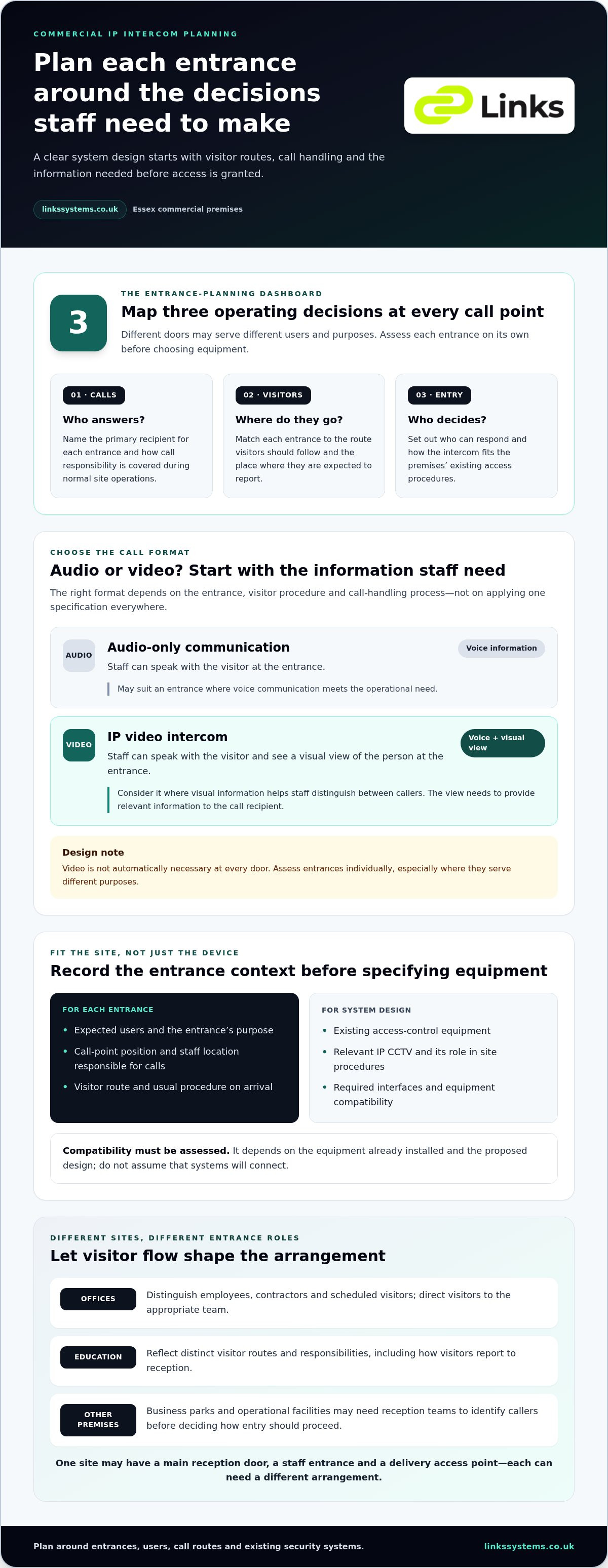
- Call handling: Identify the primary recipient for each entrance and how responsibility is covered during normal site operations.
- Visitor flow: Match entrance locations to the routes visitors should take, including where they report on arrival.
- Entry decisions: Set out who can respond and how the intercom fits the site’s existing access procedures.
Consider visibility as well. Decide what staff need to see at each call point and whether the view provides useful information before entry is authorised. This helps avoid a setup that directs every call to the same place when entrances serve different functions. Links Integrated Systems supplies, installs and commissions IP video intercom systems for commercial premises, with requirements shaped around the site and its operating procedures.
How an IP intercom installation fits your Essex site and security systems
A suitable system starts with the entrance and the decisions staff need to make there. Before specifying equipment, map each entry point, who uses it, where calls should be answered and how access is currently controlled. A staff entrance used throughout the day has different requirements from a visitor entrance managed by reception. Recording these differences gives the project a practical basis for selecting the system.
For each entrance, note the expected users, the position of the call point and the staff location responsible for handling calls. Include existing access-control equipment and any relevant IP CCTV in the site information. This helps IP intercom installers in Essex understand how the site operates and identify which interfaces need to be included in the design. Broader considerations for coordinating security systems are covered in this physical security integration guide.
How should a business assess audio versus video entry?
Choose the format according to the information staff need before responding. Audio-only communication lets staff speak with a visitor, while video adds a visual view of the person at the entrance. That distinction can matter where employees need to distinguish between callers, but video is not automatically necessary at every door. The entrance environment, visitor procedures and call-handling process should guide the decision.
Consider sightlines and staff workflow, too. A video image is useful only if it gives the call recipient relevant visual information, while audio may suit an entrance where voice communication meets the operational need. Where entrances serve different purposes, assess them individually rather than applying one specification across the whole premises.
What does integration with access control or CCTV involve?
Integration planning begins by documenting what the systems need to do together. Set out how an intercom call relates to the site’s access-control arrangements, which entry points are controlled and whether CCTV has a role in the wider operating procedure. Then record the existing equipment and the required interfaces for consideration during system design.
Compatibility depends on the equipment already installed and the proposed design, so assess it as part of the specification rather than assuming systems will connect. Planning may need to distinguish between an intercom that operates alongside existing security equipment and one that requires a defined interface between systems. For related guidance on planning these connections, see the CCTV and access control integration guide.
Links Integrated Systems considers commercial IP video intercom requirements alongside access control and IP CCTV, shaping the design around the premises and agreed scope. For a project-specific approach, explore commercial IP intercom installation as part of your site planning.
What to expect from commercial IP intercom installation in Essex
A well-managed installation follows a clear sequence, from understanding how the premises operate to checking the agreed system before handover. The scope and order of work depend on the building, existing equipment and project requirements. Knowing what each stage covers helps facilities teams coordinate access, stakeholders and day-to-day operations.
What happens during site assessment and installation planning?
Planning begins with the site: entrance locations, user groups, call-handling arrangements and relevant access-control or CCTV equipment. These details help shape the proposed system, equipment locations and installation coordination. Links Integrated Systems tailors commercial IP intercom projects to the premises and agreed requirements, rather than applying a fixed layout to every building.
For a clear project brief, facilities teams can collate entrance plans, note which areas must remain accessible during the work and identify the people responsible for site decisions. This gives everyone a shared reference for planning installation activity and resolving practical requirements before equipment is fitted.
What are the main installation stages?
- Understand site needs: Review the entrances, intended users, call routes and relevant existing systems.
- Plan the system: Agree the project scope, equipment locations and any required coordination with access control or IP CCTV.
- Install the equipment: Carry out the agreed installation in line with the premises and project plan.
- Commission the system: Test the agreed operation, including the call process and relevant system interfaces, so issues can be addressed before handover.
- Handover: Explain the system’s agreed operation to the relevant site representatives and outline the maintenance arrangements.
These stages provide a framework, not a promise that every project follows an identical timetable. A single controlled entrance and a larger premises with several entry points can require different coordination. Experienced IP intercom installers in Essex account for those site-specific requirements as the scope is developed.
Why are commissioning and maintenance important?
Commissioning checks the installed system against its agreed purpose. The project team can verify that calls reach the intended recipients, audio and video operate as specified, and planned interfaces perform as designed. A structured handover then gives site representatives a clear understanding of the completed installation and the responsibilities agreed for its use.
Scheduled maintenance supports the ongoing care of commercial security infrastructure by providing planned attention to the system over time. It is distinct from an emergency response service: maintenance is arranged in advance as part of the system lifecycle, not a substitute for urgent assistance. Including it in project discussions helps facilities teams plan for continued oversight after installation and commissioning are complete.
How to prepare your Essex premises for an IP intercom project
Good preparation gives the project team a reliable picture of how the premises operate before installation planning begins. Facilities teams don’t need to specify the technical solution themselves. Their role is to gather accurate site information, explain current visitor procedures and involve the right decision-makers. This helps IP intercom installers in Essex develop a scope around operational needs and reduce avoidable uncertainty about responsibilities or site access.
What information should facilities teams gather first?
Start with a simple entrance schedule. For each entry point, note its location, usual users, operating hours and the team responsible for responding to calls. Add any details available about existing intercom, access control and CCTV equipment, such as system documents or site plans. This gives the project team a useful starting point for planning equipment locations and identifying areas that need further assessment.
- Entrance details: Mark doors and gates on a plan, noting which are used by visitors, staff, contractors or deliveries.
- Call responsibilities: Record who should receive calls at each entrance and who can manage access.
- Existing systems: Gather available information about current intercom, access-control and CCTV equipment.
- Site constraints: Flag restricted areas, busy operating periods, access arrangements and any known building or installation considerations.
Include the visitor-handling procedure, too. For example, note whether visitors report to reception first, attend a named department or use a separate entrance for deliveries. Where details are uncertain, identify the relevant site contact who can resolve them during planning. A complete brief helps the installation team coordinate work with facilities staff and account for the realities of the building.
How can a business plan for a smooth handover?
Agree early who needs to understand the system at handover and who manages day-to-day access procedures. This may include facilities, reception, security and department representatives, depending on how the premises are run. Set out who will receive calls, who is authorised to respond and how staff should direct visitors if the usual call recipient is unavailable. Clear ownership makes the process easier to communicate across teams.
Plan how that information will reach relevant staff. A concise procedure can identify call-handling roles for each entrance and explain how responsibilities should be updated when teams or working arrangements change. The handover should also cover the agreed system operation and maintenance arrangements, so the site knows who oversees the equipment after installation and how scheduled maintenance fits the wider security-system lifecycle.
For projects involving access-control planning alongside an intercom, the commercial access control guide offers related context. Links Integrated Systems uses site information to shape commercial IP intercom installation and commissioning around the premises and agreed requirements. Discuss your commercial intercom project with the team.
Choose IP intercom installers in Essex for end-to-end project delivery
A commercial intercom project involves more than fitting equipment at an entrance. System design, installation, commissioning and ongoing maintenance need to form a joined-up process shaped by the site and its operating requirements. Links Integrated Systems supplies and installs IP video intercom systems for commercial and professional premises in Essex, London, Kent, Surrey and Hertfordshire, supporting projects from initial planning through commissioning and scheduled maintenance.
What does a project-led installation partner contribute?
A coordinated approach connects decisions at each stage. The design needs to reflect how visitors arrive, how staff handle calls and how the intercom relates to the site’s access-control arrangements. Installation then follows the agreed scope, with commissioning used to test the intended operation before handover. If a project involves existing access control or IP CCTV, assess integration requirements against the specific equipment and design rather than assuming compatibility.
Clear communication matters throughout. Facilities teams, security staff and project stakeholders need a shared understanding of responsibilities, site arrangements and the system’s intended use. Keeping those requirements visible as the project progresses helps align technical work with the procedures staff will follow once the system is operating. It also gives the handover a practical focus: how the system works as agreed, who manages its use and how maintenance is planned.
Maintenance belongs in the lifecycle from the outset. Scheduled maintenance provides planned attention to the installed system, rather than leaving support considerations until after commissioning. The arrangements should suit the premises and agreed project scope, giving facilities teams a defined basis for ongoing system care.
How can an Essex organisation take the next step?
Start with a brief overview of the site: its type, the entrances that need intercom coverage, how visitors are managed and which existing systems are relevant. Include any known access-control or CCTV details, along with the teams involved in handling calls and making access decisions. This gives the project discussion a useful operational starting point without requiring the organisation to specify the technical solution in advance.
Links Integrated Systems tailors its approach to the premises and project requirements, bringing commercial IP intercom supply, installation and commissioning together with maintenance planning. This creates a clearly scoped project shaped around the organisation’s site and the way it needs to manage entry.
For a commercial premises in Essex, outline your site and entrance requirements to begin a project discussion. Discuss your Essex IP intercom project.
Make your entrance strategy the starting point
Turn your site’s entry procedures into a concise project brief. Note where visitors arrive, how staff should respond and what needs to happen when the usual contact isn’t available. These operational details help shape a system that supports the way your organisation works, rather than asking staff to adapt to an unclear process.
Links Integrated Systems plans commercial IP video intercom projects across their lifecycle, from installation and commissioning to scheduled maintenance. For organisations working with IP intercom installers in Essex, that joined-up approach helps keep technical decisions aligned with practical responsibilities at the entrance. Links Integrated Systems works with commercial sites in Essex, London, Kent, Surrey and Hertfordshire.
Start with a simple outline of your premises, entry requirements and project priorities. Links Integrated Systems can discuss an approach shaped around your site and its operational needs. Discuss your Essex IP intercom project and take a considered next step towards clearer entry management.
Frequently Asked Questions
What is an IP video intercom system?
An IP video intercom is an entrance communication system that carries audio and video over a network. In practice, it links a visitor’s call point with the location where staff handle calls. For example, a commercial site may need calls from a delivery entrance handled differently from those at reception. The equipment and interfaces are selected around the premises and agreed operating process.
Can an IP intercom work with an existing access control system?
Compatibility depends on the installed equipment and proposed system design. Useful preparation includes recording equipment make and model, locating available system documentation, and explaining what staff need to happen after a visitor calls. This helps define the interfaces the project needs to consider. Links Integrated Systems tailors commercial security project designs to the site rather than assuming every system connects in the same way.
How long does commercial IP intercom installation take?
There isn’t one timeframe that applies to every commercial installation. The schedule depends on the agreed scope, the number and location of entrances, existing infrastructure and the coordination needed at the premises. An occupied office, for example, may need installation activity planned around access arrangements. The project plan should also allow for commissioning and handover, so these important stages aren’t left outside the agreed work sequence.
Can an IP intercom replace an older door-entry system?
An older door-entry system can be replaced through a project designed for the premises. Existing call points, equipment, cabling and visitor procedures all affect the appropriate approach. A direct swap may not address changes in how the site is used or how calls should be handled. Assessing what is already installed helps shape a replacement design and clarify which parts of the existing setup are relevant.
What information should I prepare before discussing an intercom installation?
Alongside entrance details, gather any system manuals, equipment schedules, site plans or installation records you can access. Note known issues with the current arrangement and any building work or operational changes that may affect the project. Identify who can make decisions about the system and who will oversee the site. This context helps IP intercom installers in Essex plan for the practical requirements of your commercial premises.
Does an IP intercom system need ongoing maintenance?
Planned maintenance can support the ongoing care of an IP intercom system, with arrangements shaped by the equipment, site and agreed scope. Keep a record of maintenance visits, changes to call-routing responsibilities and operational issues reported by staff. These records give facilities teams useful context for future reviews. Links Integrated Systems provides system maintenance and commissioning for commercial security infrastructure. Scheduled maintenance is distinct from emergency call-outs.