
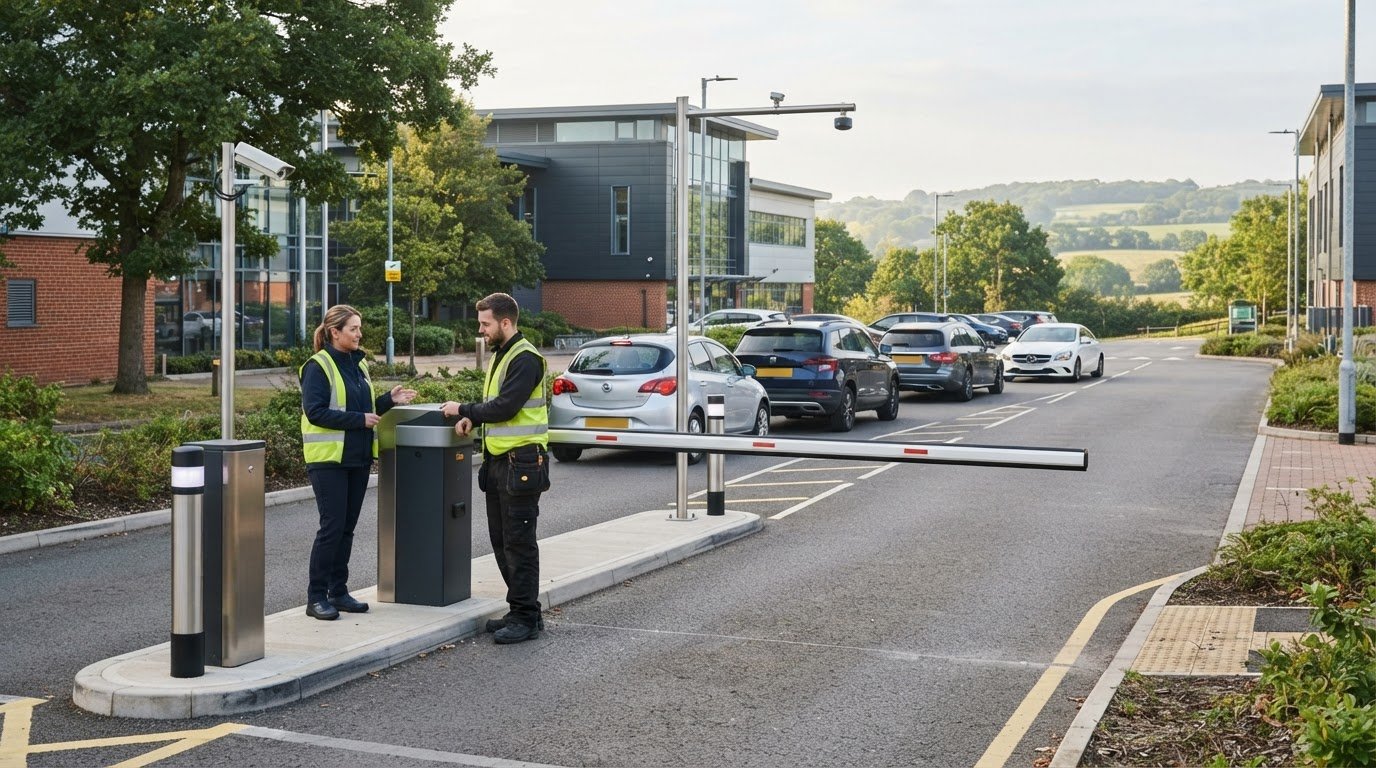
What if the barrier best suited to your car park is not the one with the fastest opening time, but the one that fits its entrance, traffic flow and access requirements? Choosing reliable automatic barriers for car parks Hertfordshire operators can depend on more than the equipment itself. Site managers should also consider how faults, queues and unsuitable installation could affect daily operations.
Dependability starts with understanding how the entrance is used. Vehicle volumes, available space and the needs of staff, visitors or the public all influence the choice of barrier and access control. Careful installation, commissioning and planned maintenance also matter throughout the system’s life.
This guide explains how to assess those requirements and compare installers using practical reliability and lifecycle criteria. It covers entrance layout and vehicle flow, access control options such as ANPR, and questions to ask about installation, commissioning and ongoing maintenance. From site assessment to long-term care, you’ll have a clearer framework for choosing a system that supports dependable access at your Hertfordshire car park.
Key Takeaways
- Define what reliable automatic barriers for car parks Hertfordshire means for your site, including safe operation and suitable access for its users.
- Record operating hours, peak periods, vehicle types and user groups before discussing barrier requirements with an installer.
- Compare suppliers on site suitability, access-control options, system integration, commissioning and planned maintenance, not equipment specifications alone.
- Ask who is responsible for the survey, design and testing, and what operating guidance you’ll receive at handover.
- Use commissioning and scheduled maintenance to support dependable operation, while recognising that planned care cannot rule out every fault.
What makes an automatic car park barrier reliable in Hertfordshire?
A reliable barrier operates consistently and safely in the conditions it was selected for, while supporting the way people enter and leave the car park. That means matching the equipment to the entrance width, available stopping space, expected traffic and access arrangements. A system suited to a quiet staff car park may not be right for a busy managed car park with visitor access and concentrated arrival periods.
The equipment is only one part of reliability. Installation quality, correct commissioning and planned maintenance all influence performance over time. A barrier arm system uses a powered arm that rises to let vehicles pass. An automatic gate opens across the entrance, typically by sliding or swinging. The layout and available movement space help determine which option is practical.
Which Hertfordshire car parks need an automatic barrier?
Automatic barriers may suit commercial premises, managed parking and sites that need to control staff or visitor vehicle access. Start by distinguishing between restricting vehicle entry and deciding who is authorised to enter. The second requirement may call for access control alongside the barrier, such as a suitable reader or ANPR, rather than a barrier alone.
Map the site’s opening hours, user groups and peak arrival periods. Consider whether visitors need instructions or assistance, and whether traffic arrives in short, busy waves or steadily throughout the day.
What does a reliable barrier system need to do?
The system should suit the site’s expected use and operating conditions, without creating avoidable delays or confusing users. The specification should account for vehicle detection, the chosen access controls and clear instructions at the entrance. Drivers, for example, need to know where to stop and what action is required before the barrier opens.
Reliability is a whole-system outcome. A suitable barrier can still cause disruption if it is poorly positioned, incorrectly commissioned or difficult to use. Access-control equipment also needs to fit the way the car park is managed. Planned maintenance helps keep the system in serviceable condition, but cannot guarantee that faults will never occur.
For reliable automatic barriers for car parks Hertfordshire operators, start with the site’s actual requirements rather than a preferred product. Assessing the layout, vehicle flow and access needs gives an installer a sound basis for proposing and commissioning a suitable system.
How should you assess car park traffic, layout and barrier requirements?
A structured site assessment gives an installer the information needed to recommend a suitable system. Before requesting a proposal, record how the car park operates and what its entrance must accommodate. This helps connect the equipment and access controls to real site conditions, rather than relying on specifications alone.
- Site use: Note operating hours, user groups and whether the car park serves staff, visitors, customers or the public.
- Traffic: Record busy arrival and departure periods, typical traffic flow and the types of vehicles using the entrance.
- Entrance geometry: Measure the available width and note approach angles, sightlines, stopping space and room for equipment to operate.
- Controls: Decide whether the priority is restricting entry or authorising different users. Consider how visitors will request access.
- Support: Identify existing infrastructure that may need review, and ask how commissioning and planned maintenance will be handled.
Include site plans or photographs if available, but don’t treat them as a substitute for an on-site review. Ground conditions, existing services and the relationship between vehicle and pedestrian routes can affect the design. A professional assessment is especially useful where space is restricted or the entrance needs to connect with existing access-control equipment.
How do vehicle flow and entrance layout affect barrier choice?
Consider how vehicles arrive, queue and leave, including whether entry and exit movements could conflict. Check that drivers can see the barrier and any instructions in good time, and that waiting vehicles won’t obstruct a road or pedestrian route. The position of a control point, such as a staffed entrance, also affects how drivers interact with the system. Have a site assessment confirm that the proposed configuration suits the layout before settling on it.
Which access controls should a Hertfordshire site consider?
Staffed operation can provide direct oversight, while credentials may suit sites with defined groups of regular users. An intercom gives visitors a way to request access, and ANPR may be appropriate where number-plate-based access suits the site’s management arrangements. The right choice depends on who needs entry, when they arrive and how the car park is administered.
For practical context on equipment selection, see this guide to professional commercial speed gates and barriers. For powered-gate safety considerations, consult the Health and Safety Executive guidance, which covers design, installation and maintenance.
These assessment points help define the brief for reliable automatic barriers for car parks Hertfordshire sites. Links Integrated Systems supplies and installs barriers and access-control systems in Hertfordshire. You can review its barrier and access-control solutions when planning a project.
How can you compare automatic car park barrier systems and suppliers?
Compare each proposal against your site assessment, not just the headline equipment specification. An arm length, opening speed or control feature only matters if it suits the entrance geometry, traffic pattern and operating needs. Ask suppliers to distinguish confirmed details from assumptions that still need a site survey or technical check.
What should a barrier-system comparison include?
Use the same checklist for every supplier. This helps show whether a proposal covers the whole system, from access decisions through to commissioning and ongoing care.
| Comparison area | What to check |
|---|---|
| Site suitability | Does the proposed system fit the entrance, vehicle flow, available space and expected usage identified in the assessment? |
| Controls and detection | Are vehicle detection and user controls clearly described? Ask how access overrides and faults would be handled. |
| Integration | Will the barrier exchange signals with existing access-control equipment? Confirm any required connections with CCTV or ANPR. |
| Commissioning | What functional tests are included, who carries them out, and what records or handover documents will be provided? |
| Maintenance | What planned maintenance is available, what does it cover, and how should faults be reported and managed? |
Compare proposals based on the evidence they provide. A supplier should explain the survey scope, design decisions, and responsibilities for installation and testing. Request clear documentation of the equipment and agreed configuration, test results, operating instructions and maintenance arrangements. If any of these points are unclear, ask for written confirmation before comparing the proposal with alternatives.
How should you assess access-control integration?
Start with the day-to-day process. Establish whether staff use existing credentials, visitors need to request entry, or number-plate recognition is required. Then ask how the barrier will receive an access decision from the relevant system, and what happens if equipment loses communication or a user needs an authorised override. CCTV may support site monitoring, but confirm whether it needs to interact with access control or simply operate alongside it.
For further detail, see this guide to integrating CCTV with access control systems. The right configuration depends on the site. No barrier technology is universally best or most reliable. Suitability comes from matching the design, controls and support arrangements to the requirements.
For operators comparing reliable automatic barriers for car parks Hertfordshire, a clear written proposal makes decisions easier to assess. Check what is included, what remains to be verified, and how commissioning and planned maintenance will support the system after installation.

What should Hertfordshire buyers ask an automatic barrier installer?
A clear proposal should explain how the installer will move from understanding the site to delivering a system that has been tested and is ready for use. Ask direct questions and request written answers, particularly where responsibilities are shared between the installer, site team and other suppliers. This makes it easier to compare proposals on delivery and support, not just equipment.
What should a site survey and installation proposal cover?
Check that the survey considers traffic patterns, entrance layout, existing controls and the site’s operating priorities. Ask who is responsible for turning those findings into a design, and which details are confirmed or subject to further investigation. The proposal should describe the intended system and identify assumptions that could affect the final specification.
Before appointing an installer, ask:
- What will the survey record about vehicle movements, queues, sightlines and pedestrian routes?
- How will the proposed barrier and controls suit the site’s operating requirements?
- What existing equipment or infrastructure needs checking, and who will confirm compatibility?
- How will installation be coordinated with car park access and normal business operations?
For a commercial site, ask how the installer will communicate planned disruption and what arrangements are needed to manage vehicle access during the work. If a supplier has completed similar commercial projects, request relevant references and ask which aspects are comparable to your site. References offer useful context, but are not a substitute for a site-specific proposal.
How can you judge commissioning and ongoing support?
Ask the installer to explain commissioning before work starts. Find out who carries out the checks, what functional and safety checks are included, and how the results will be recorded. At handover, the responsible site team should receive clear instructions on using the controls, normal operating procedures and what to do if the system behaves unexpectedly.
Clarify the scope and frequency of any planned maintenance arrangement. Ask what is inspected, how visits are arranged, who to contact to report a fault and what response arrangements are included. Don’t assume maintenance terms include emergency or out-of-hours support. Ask the supplier to confirm the service scope in writing.
These questions help Hertfordshire buyers assess whether a supplier can support the full project lifecycle for reliable automatic barriers for car parks Hertfordshire sites. Links Integrated Systems supplies, installs, commissions and maintains barriers and access-control systems. Discuss a barrier assessment for your Hertfordshire site to explore the requirements and project pathway.
How do commissioning and maintenance keep car park barriers dependable?
Installation is not the end of the project. Commissioning checks whether the installed system operates as agreed and gives the site team a clear basis for using it. Planned maintenance then provides a structured way to inspect the equipment and note changes in its condition. Neither commissioning nor maintenance can guarantee that faults won’t occur, but both help managers understand how the system is performing and what needs attention.
What should happen during barrier commissioning and handover?
The installer should test the system against the agreed design and the site’s operating requirements. Checks should cover the barrier’s operation, vehicle detection and controls, as well as connected systems where they form part of the installation. Any unexpected behaviour should be investigated and resolved or clearly recorded before handover.
Handover should give the people responsible for the car park the information they need to operate the system appropriately. Ask for instructions on normal use, relevant controls and agreed access procedures, as well as system information that will help with future servicing. Confirm who attended the handover and where commissioning records are stored.
What should a planned barrier maintenance arrangement address?
Maintenance should reflect the installed system and how the site uses it. Ask the provider to define the inspection scope, proposed visit arrangements and the records you’ll receive. Clarify how staff should report faults, who receives the report and what response arrangements are included. Don’t assume a planned maintenance arrangement includes emergency or out-of-hours support.
Keep a simple operational log alongside maintenance records. Note recurring issues such as inconsistent detection, control difficulties or interruptions to normal operation, along with when they occur and any relevant site conditions. This information can help a maintenance provider investigate patterns and assess whether the system or its operation needs review.
For sites seeking reliable automatic barriers for car parks Hertfordshire, commissioning and planned maintenance are practical parts of the reliability picture, not a promise that breakdowns are impossible. Links Integrated Systems supplies, commissions and maintains barriers and access-control systems. To discuss your site’s design, commissioning or maintenance requirements, speak to Links Integrated Systems about car park barriers.
Plan a dependable barrier system for your car park
Choosing reliable automatic barriers for car parks Hertfordshire sites starts with understanding how each entrance is used. Assess traffic flow, layout and user groups before comparing equipment or access controls, then check that the proposed system fits those requirements. A clear survey, defined installation and commissioning responsibilities, and useful handover information provide a sound foundation.
Reliability also depends on what happens after installation. Agree the scope of planned maintenance, how visits are arranged and how staff should report faults. Keeping operational and service records can help identify recurring issues and inform future decisions.
Links Integrated Systems supplies, installs and commissions barriers and access-control systems, with scheduled system maintenance among its services. The company serves Hertfordshire, London, Kent, Surrey and Essex. If you’re planning a new installation or reviewing an existing setup, discuss a reliable car park barrier solution for your site. A considered assessment is a practical first step towards a system suited to your car park’s needs.
Frequently Asked Questions
What is the most reliable type of automatic barrier for a car park?
There isn’t one barrier type that is most reliable for every car park. Rising-arm barriers are commonly used, but suitability depends on entrance width, vehicle flow, expected use and available space. Reliable automatic barriers for car parks Hertfordshire sites need to be specified for their conditions, with suitable vehicle detection and controls. Installation, commissioning and planned maintenance also contribute to dependable operation, so compare the complete system rather than relying on a single equipment feature.
How do I choose a car park barrier installer in Hertfordshire?
Choose an installer who can explain how the site survey informs the design, what installation and commissioning include, and what documentation and handover you’ll receive. Ask how planned maintenance is arranged and request references for comparable commercial sites where available. Make sure the proposal clearly identifies assumptions and responsibilities. Links Integrated Systems supplies, installs and commissions barriers and access control, and serves Hertfordshire, London, Kent, Surrey and Essex.
Can an automatic car park barrier work with ANPR or access control?
Yes, a barrier can form part of a system using ANPR or access control, provided the equipment is compatible and configured for the site’s needs. ANPR may support number-plate-based access, while credentials can suit regular users. Ask the installer how the barrier receives an access decision, what happens if connected equipment is unavailable, and how the complete arrangement will be tested during commissioning. The right approach depends on user groups and car park management.
How often should an automatic car park barrier be serviced?
There isn’t one service interval that suits every installation. Ask the installer to recommend a planned schedule based on the equipment, its operating conditions and how frequently the barrier is used. Confirm what inspections include, how findings are recorded and when follow-up work may be recommended. Keep a log of faults or recurring operating issues between visits. Scheduled maintenance supports ongoing care, but cannot guarantee that faults will never occur.
What happens if an automatic car park barrier stops working?
Follow the site’s operating and safety procedures, and contact the nominated maintenance provider to report the fault. Don’t force the barrier or attempt repairs unless you’re authorised and competent to do so. Ask the installer in advance how vehicles should be managed, whether an approved override is available, and what response arrangements apply. Confirm the reporting route and service scope in writing. Don’t assume support is available outside the agreed arrangements.
Do I need a site survey before installing a car park barrier?
A site survey is strongly recommended before specifying a barrier. It allows the installer to assess entrance dimensions, vehicle movements, queue space, sightlines, pedestrian routes and existing access-control equipment. These details can affect the system design and installation requirements. Ask for the resulting proposal to distinguish confirmed site information from assumptions or items that need further investigation. A survey helps ensure the recommendation reflects the actual car park rather than a generic equipment specification.
Can a car park barrier be added to an existing access-control system?
It may be possible, but compatibility needs to be checked before work is specified. The installer should review the existing equipment and confirm how it will communicate with the barrier, how access permissions will operate and what happens if a connection fails. Ask whether changes to the current system are required and how the integrated setup will be tested. Commissioning should confirm that the agreed access process works as intended for staff and visitors.