
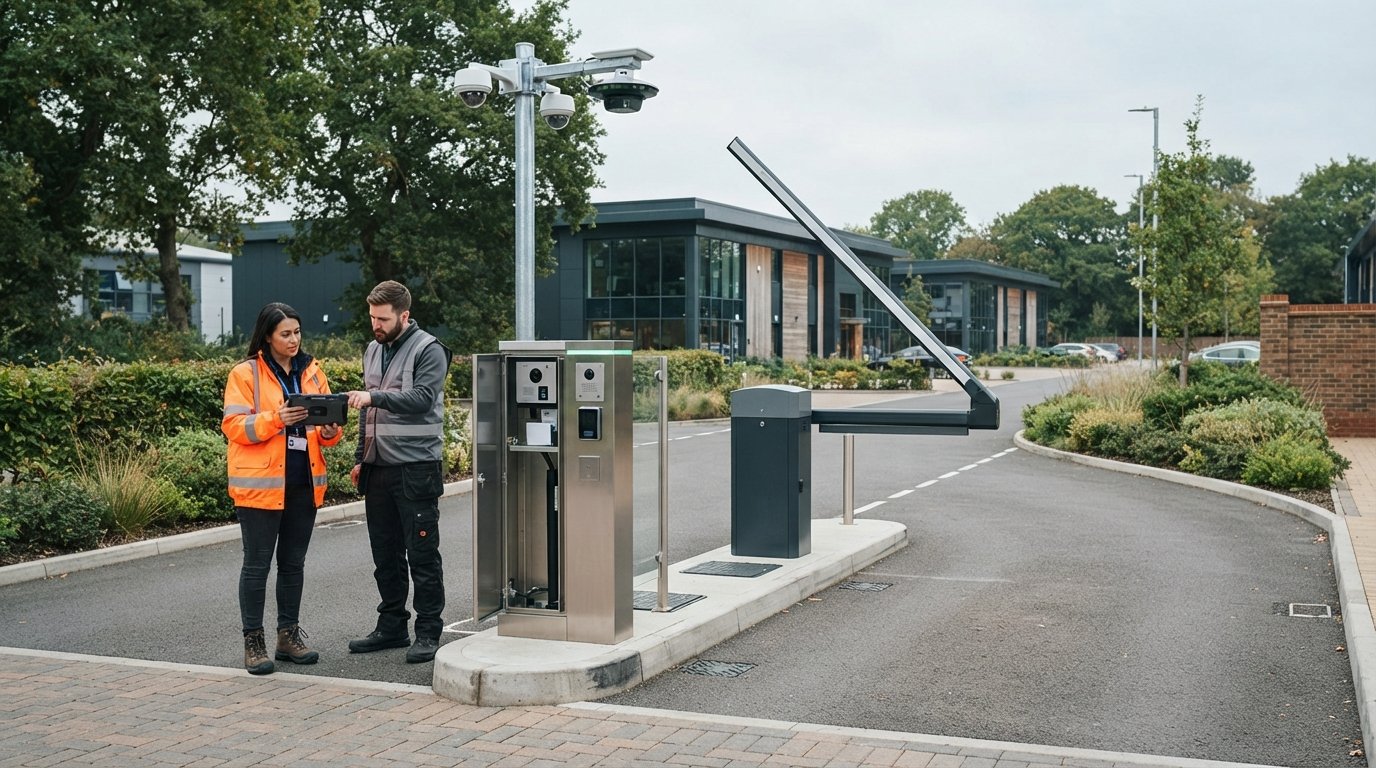
A commercial barrier is no longer merely a physical deterrent; it is a critical component of your building’s digital and security infrastructure. For many site managers, the reality of automatic barrier installation Hertfordshire projects often involves the frustration of unreliable hardware that causes morning tailbacks or systems that refuse to talk to existing access control networks. You recognise that a failure at the perimeter is a failure of the entire security strategy, leading to unnecessary downtime and potential safety risks.
This 2026 specification guide ensures you move beyond simple hardware procurement to master the technical requirements of professional system integration. We’ll provide the clarity needed to implement a secure, automated perimeter that utilises IP intercoms and HD CCTV for seamless visitor management. By focusing on professional commissioning and UK safety standards, you can transition from reactive maintenance to a stable, long-term solution. We will explore the essential integration strategies and maintenance protocols that define a truly resilient commercial entrance.
Key Takeaways
- Learn how to transition from standalone hardware to a fully integrated digital perimeter that enhances both site security and operational efficiency.
- Discover the specific technical criteria for automatic barrier installation Hertfordshire projects, including how to select boom lengths and opening speeds for high-traffic environments.
- Understand the critical role of IP-based integration, linking your barriers to access control and HD CCTV systems for automated vehicle management.
- Master the installation lifecycle by identifying essential site survey requirements and the importance of professional commissioning to meet UK safety standards.
- Ensure long-term system reliability through a structured maintenance programme designed to prevent mechanical failures and sensor misalignment.
Strategic Benefits of Automatic Barrier Installation in Hertfordshire
Commercial landscapes across Hertfordshire are evolving, with logistics hubs and corporate parks requiring more sophisticated perimeter controls than ever before. Choosing a professional automatic barrier installation Hertfordshire provider ensures that your site is protected by a system designed for high-frequency use and technical resilience. These installations serve as a primary deterrent against unauthorised access, whilst simultaneously providing a structured point of entry for authorised personnel and visitors.
Beyond simple security, modern automatic boom barriers offer a professional aesthetic that reinforces your brand’s commitment to safety and precision. By replacing manual processes with automated hardware, businesses reduce the risk of human error and potential liability issues associated with unregulated vehicle movements. This approach moves the perimeter from a passive fence line to an active management tool.
Securing Hertfordshire’s Growing Business Districts
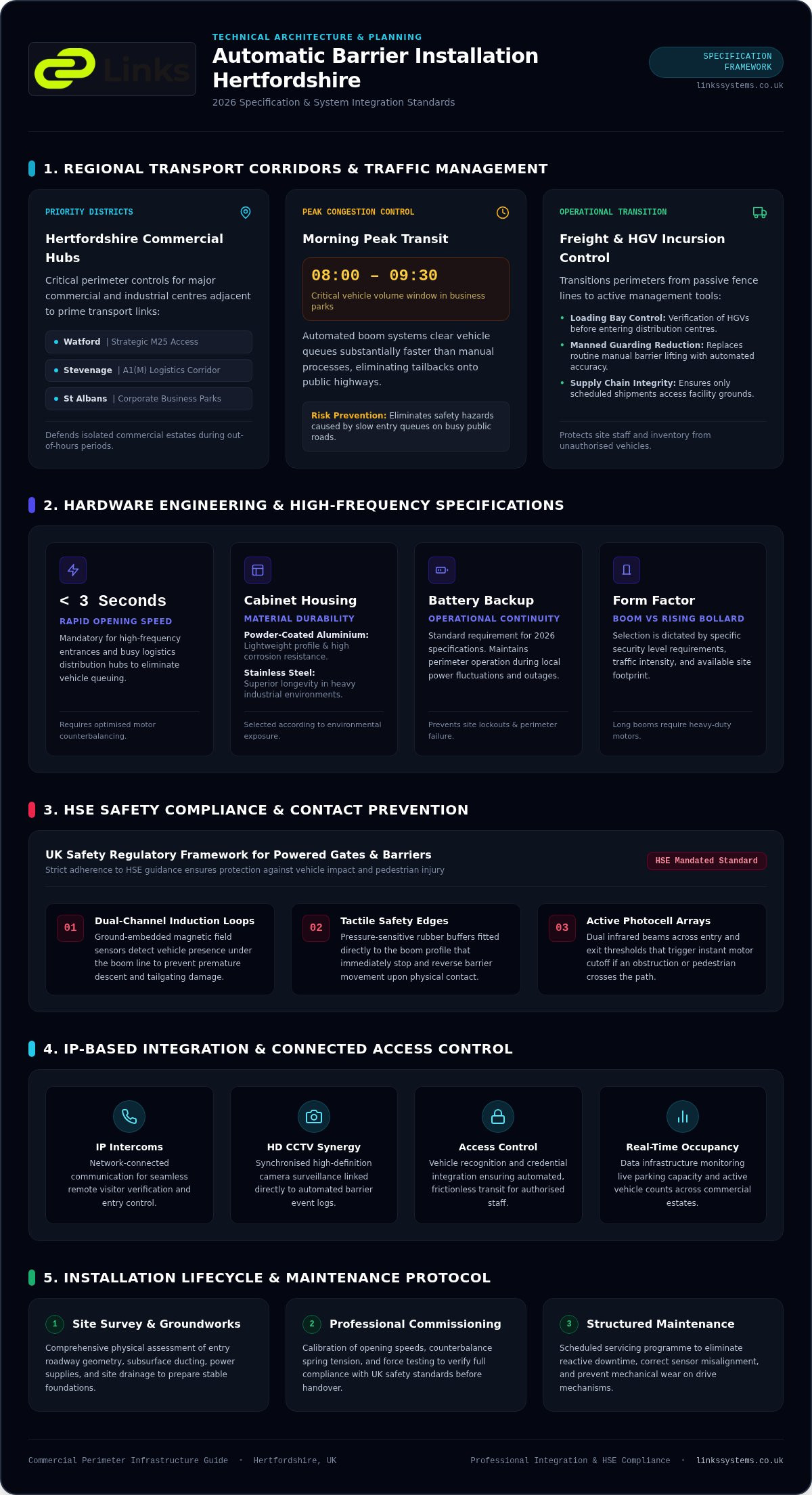
Business districts in Watford, Stevenage, and St Albans face unique challenges due to their proximity to major transport links like the M25 and A1(M). These sites often house high-value assets and sensitive data, making them targets for opportunist crime. A robust barrier system acts as a psychological and physical deterrent, effectively discouraging unauthorised entry in isolated commercial estates where natural surveillance might be low during out-of-hours periods.
For distribution centres and logistics hubs, the ability to manage delivery vehicle access is paramount. Barriers integrated with IP technology allow for the verification of HGVs before they enter the loading bays, ensuring that only expected shipments are processed. This level of control is essential for maintaining the integrity of the supply chain and protecting site staff from unauthorised vehicle incursions.
Operational Efficiency and Traffic Control
One of the most immediate benefits of an automated system is the reduction of congestion during peak commuting hours. Hertfordshire business parks often experience significant traffic volume between 08:00 and 09:30. A slow or manual entry process can quickly cause tailbacks onto public highways, creating safety hazards and frustrated employees. Automated systems process vehicles significantly faster than manned gates, maintaining a steady flow without compromising security protocols.
This automation also offers a clear financial advantage by reducing the reliance on constant manned guarding at every entry point. Whilst security personnel remain valuable for complex tasks, the routine task of opening and closing gates is handled more reliably and cost-effectively by hardware. In 2026, automatic barriers act as the intelligent front-end of a site’s data infrastructure, synchronising vehicle recognition with real-time occupancy monitoring to ensure frictionless transit.
Selecting the Right Barrier Specification for Your Site
Specifying hardware for an automatic barrier installation Hertfordshire project requires a precise understanding of site-specific traffic patterns. High-frequency entrances, such as those in busy distribution hubs, demand barriers capable of rapid opening speeds, often under three seconds, to prevent vehicle queuing. The choice of boom length must be balanced against these speeds; longer booms require more robust motors and sophisticated counterbalancing to maintain operational stability over thousands of cycles.
Material durability is equally critical. Whilst powder-coated aluminium offers excellent corrosion resistance and a lightweight profile, stainless steel cabinets provide superior longevity in harsh industrial environments. For 2026 reliability, integrated battery backups are now a standard requirement; they ensure the perimeter remains operational during local power fluctuations, maintaining security continuity. All installations must strictly adhere to HSE safety guidance for powered gates and barriers, incorporating dual-channel induction loops, safety edges, and photocells to prevent accidental contact with vehicles or pedestrians.
Boom Barriers vs. Rising Bollards
The decision between a traditional boom and rising bollard installation Hertfordshire often depends on the required security level and the available footprint. Boom barriers are the preferred choice for high-volume traffic management due to their high visibility and rapid duty cycles. Conversely, rising bollards offer a discrete visual impact and significantly higher impact resistance, making them ideal for anti-ram protection at high-security corporate headquarters where aesthetics and fortification are equally valued.
Heavy-Duty Specifications for Industrial Sites
Industrial sites require hardware rated for 100% duty cycles, meaning the motor and control logic are designed to operate continuously without overheating. This is vital for Hertfordshire’s logistics sectors where vehicle movements occur around the clock. Weatherproofing is another major consideration; internal components must be protected by high IP-rated enclosures to withstand the UK’s damp climate and temperature shifts. Investing in high-quality internal gearboxes and brushless motors reduces mechanical wear, extending the system’s lifecycle and reducing the total cost of ownership. If you are currently evaluating your site’s needs, speaking with an experienced integrator can help prevent costly hardware mismatches.
Integrating Access Control and CCTV with Automatic Barriers
The efficacy of a modern perimeter depends on its ability to communicate with your wider security network. A standalone gate is a vulnerability; a networked gate is a data point. When planning an automatic barrier installation Hertfordshire project, the integration of IP-based infrastructure is what transforms basic hardware into a sophisticated management tool. This process must align with the DHF TS 013 code of practice, ensuring that all electronic control components are commissioned to the highest technical standards for both safety and data integrity.
Linking your barriers to commercial access control systems allows for a unified approach to site entry. Instead of managing separate databases for gate fobs and building badges, a single credential can grant access from the outer perimeter to the inner office. Synchronising these barrier events with HD CCTV systems provides a comprehensive visual audit of every vehicle movement. If a barrier is triggered, the associated camera can automatically bookmark the footage, allowing security teams to review high-definition evidence of entry and exit events without manual searching.
IP-Based Intercoms and Visitor Management
IP video intercoms provide a vital layer of verification for visitors who don’t possess permanent access credentials. These systems allow reception or security teams to manage barriers from any networked location, whether they’re at a central desk in St Albans or monitoring a site remotely. High-definition visual verification ensures that staff can identify drivers and inspect vehicle contents before granting access, significantly reducing the risk of unauthorised entry. This streamlined process maintains the integrity of the perimeter whilst providing a professional, frictionless experience for legitimate visitors and contractors.
ANPR and Data-Driven Security
Automatic Number Plate Recognition (ANPR) represents the pinnacle of efficiency for frequent site users and logistics partners. By white-listing known vehicle registrations, barriers can operate autonomously, logging every arrival and departure with millisecond precision. This data is invaluable for security audits and operational planning, providing clear insights into site occupancy and peak traffic times. Integrating this vehicle data into wider physical security integration platforms ensures that your perimeter works in harmony with intruder detection and building management systems, creating a truly resilient commercial environment.
The Installation Process: Planning, Groundworks, and Commissioning
A successful automatic barrier installation Hertfordshire project begins long before any hardware arrives on site. It starts with a meticulous site survey to identify underground utility constraints, such as gas mains or fibre optic cabling, which are prevalent in Hertfordshire’s developed business corridors. Identifying these obstacles early prevents costly delays and safety hazards during the excavation phase. Unlike temporary “rapid deployment” options that lack permanent stability, a professional commercial installation relies on deep concrete foundations and dedicated ducting for both power and high-speed data cables.
Once the groundworks are cured and the cabinet is secured, qualified engineers handle the mechanical assembly and electrical termination. This phase ensures that the boom is perfectly balanced and the motor is calibrated for the specific duty cycle of the site. Every connection, from the main power supply to the low-voltage control circuits, must be executed with precision to ensure long-term reliability in the UK’s varied climate. The goal is a system that operates silently and effectively under constant load.
Hertfordshire Site Surveys and Planning Compliance
Navigating local planning requirements is a prerequisite for any permanent perimeter structure. In many Hertfordshire commercial zones, specific aesthetic or height restrictions may apply to barrier cabinets and booms. Beyond planning, a comprehensive risk assessment is mandatory to determine the necessary safety devices, such as dual-height photocells or pressure-sensitive edges. Ensuring the installation meets UK safety standards, specifically BS EN 12453, is not just about compliance; it’s about protecting your organisation from liability and ensuring the safety of all site users.
Professional System Commissioning
Commissioning is the most critical stage of the lifecycle, where the system is transformed from a collection of parts into a functional security asset. Our engineers conduct rigorous force testing to ensure the barrier stops and reverses upon contact, preventing injury or vehicle damage. This phase also involves calibrating integrated IP CCTV systems to ensure a clear, unobstructed view of the barrier lane for 24/7 monitoring. We focus on the precision of the sensor alignment to eliminate false triggers that can disrupt traffic flow.
The process concludes with a formal handover, including staff training on system operation and manual override procedures for emergency scenarios. This ensures your team is confident in managing the equipment from day one. If you are planning a new perimeter project, contact our technical team for a professional site assessment to ensure your infrastructure is built for the 2026 standard.
Professional Maintenance: Ensuring Long-Term Reliability
Securing your perimeter through a professional automatic barrier installation Hertfordshire project is only the first stage of a long-term security strategy. In high-traffic commercial environments, the mechanical and electronic stress placed on barrier hardware is constant. Without a structured maintenance programme, even the highest specification systems can succumb to premature wear, leading to costly traffic tailbacks and security breaches. Reliability is built on the foundation of preventative care, ensuring that every component operates within its designed tolerances.
Effective maintenance involves a dual approach: mechanical servicing and digital optimisation. Engineers must conduct regular lubrication of pivot points and check belt tension to prevent motor strain. Simultaneously, the alignment of safety sensors and photocells requires precise recalibration to maintain compliance with UK safety standards. In 2026, this also extends to software. Regular firmware updates for integrated access control and IP intercoms are vital to protect against digital vulnerabilities and ensure seamless communication across your site’s IP infrastructure.
Developing a Preventative Maintenance Programme
Service intervals must be tailored to the specific traffic volume of your site rather than following a generic annual schedule. A logistics hub operating 24/7 in Watford will require more frequent inspections than a corporate office in St Albans. Identifying early signs of wear, such as unusual mechanical noise or slight delays in boom response, allows for repairs before a total system failure occurs. This proactive model ensures the system remains compliant with evolving health and safety regulations, protecting your organisation from liability whilst extending the overall lifespan of the hardware.
Why Links Integrated Systems is the Preferred Hertfordshire Partner
With over 40 years of industry experience, Links Integrated Systems projects an image of stability and technical mastery. We understand that high-level stakeholders and project managers value precision over hyperbolic promises. Our approach is methodical, moving from the initial design and commissioning through to a dedicated long-term maintenance partnership. We don’t just install hardware; we manage the full lifecycle of complex, integrated security infrastructures. By choosing a partner with a deep-rooted local presence and a commitment to proven, high-quality solutions, you gain the peace of mind that your perimeter remains secure, functional, and compliant for years to come.
Future-Proofing Your Commercial Site Infrastructure
Establishing a secure and efficient entrance requires moving beyond simple hardware procurement. By prioritising technical integration and adhering to professional commissioning standards, you ensure your perimeter remains a resilient asset rather than a potential point of failure. Success in automatic barrier installation Hertfordshire projects depends on synchronising physical barriers with IP video intercoms and HD CCTV to create a unified, data-driven security posture.
Links Integrated Systems provides the deep-rooted stability and expertise needed to handle these complex requirements. With 40 years of industry experience, we operate as specialists in professional commissioning and integrated IP security infrastructure. Our methodical approach moves your project from initial design through to long-term maintenance, ensuring your site remains compliant and operational. We invite you to Contact Links Integrated Systems for a Professional Barrier Specification to discuss your specific site needs. We look forward to helping you establish a dependable and secure environment for your business operations in 2026 and beyond.
Frequently Asked Questions
Do I need planning permission for an automatic barrier in Hertfordshire?
Planning permission requirements in Hertfordshire often depend on the barrier’s height and its proximity to a public highway. Whilst some installations fall under permitted development, most commercial sites should consult their local planning authority in Watford, Stevenage, or St Albans before commencing. We recommend a professional site survey to ensure the proposed structure aligns with local visual and safety regulations, preventing potential enforcement issues once the system is operational.
How much does a commercial automatic barrier installation cost?
The investment for an automatic barrier installation Hertfordshire project varies based on the technical specification rather than just the hardware alone. Factors influencing the final requirement include the necessary boom length, the motor’s duty cycle for high-traffic areas, and the complexity of integrated IP intercoms or HD CCTV. Groundworks and the necessity for specific safety sensors also play a role. We provide bespoke specifications tailored to the operational demands and security risks of your site.
What happens to the barrier during a power cut or emergency?
Professional systems incorporate a manual override facility, typically a keyed release mechanism, to allow for operation during a total power failure. For many 2026 commercial specifications, we can integrate battery backup units that provide several hours of continued automated service. This ensures that your perimeter remains secure and traffic flow isn’t interrupted during local electrical faults, whilst also allowing for emergency services access as dictated by your site’s fire safety strategy.
Can I integrate my existing access control with a new barrier?
Integration with existing access control is almost always possible through standard communication protocols or IP-based networking. Our engineers specialise in linking new hardware with legacy systems to ensure a unified user experience for staff and visitors. This often involves synchronising the barrier with your central security database, allowing for seamless entry via existing credentials. We assess your current infrastructure during the design phase to determine the most stable integration path.
How often should a commercial barrier be serviced?
Service intervals are determined by the volume of vehicle movements and the environmental conditions of the site. High-traffic logistics hubs may require quarterly inspections to maintain mechanical integrity, whilst smaller office parks might only need bi-annual servicing. Regular maintenance is a statutory requirement under UK health and safety law to ensure that all safety devices, such as force sensors and photocells, remain fully functional and compliant with DHF TS 013 standards.
Is ANPR (Automatic Number Plate Recognition) worth the investment for my site?
ANPR is a highly effective investment for sites managing frequent authorised visitors or logistics fleets. It eliminates the need for manual logging and reduces congestion at the entry point by automating the verification process. Beyond efficiency, it provides a robust data trail for security audits and occupancy monitoring. For sites with high vehicle turnover, the reduction in manned guarding reliance often provides a clear long-term operational advantage for the business.
What safety features are mandatory for automatic barriers in the UK?
Mandatory safety features include dual-height photocells, induction loops, and pressure-sensitive safety edges to prevent contact with pedestrians or vehicles. Every installation must undergo rigorous force testing to comply with BS EN 12453 standards. These devices ensure the boom stops or reverses if an obstruction is detected. Professional commissioning is essential to calibrate these sensors correctly, protecting the organisation from liability and ensuring the physical safety of everyone using the site entrance.
How long does the installation process typically take?
The duration of an installation depends on the complexity of the groundworks and the level of system integration required. The process follows a structured timeline, involving the excavation of foundations, laying ducting for power and data, and allowing sufficient time for concrete to cure. Once the hardware is physically secure, the final stages of electrical termination, IP system integration, and safety commissioning are completed. We plan each phase meticulously to minimise disruption to your daily operations.