
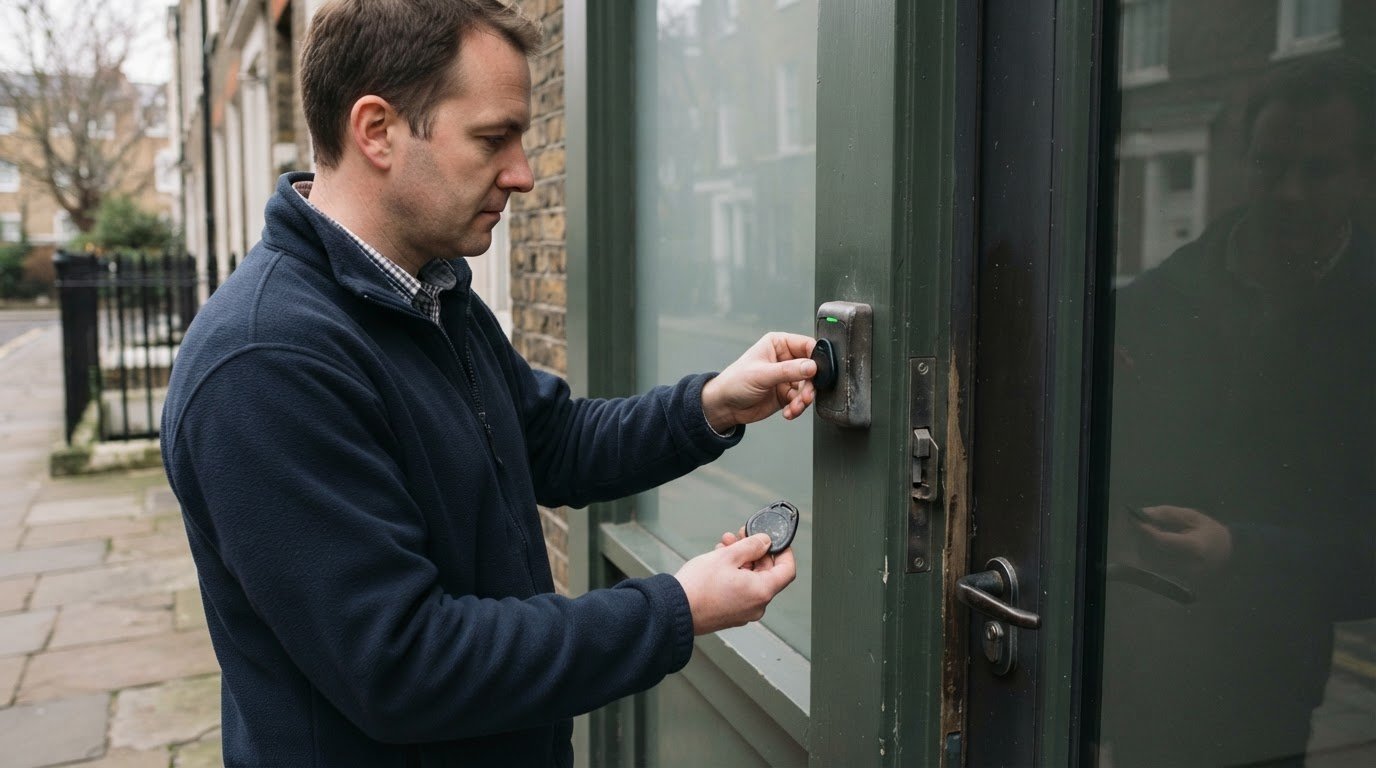
Replacing a fob doesn’t automatically mean replacing the building’s entry system. If you’re replacing an old key fob system in London, first establish whether the problem is a lost or faulty fob, or a limitation with the access-control equipment. A compatible replacement credential may restore access, while changing the wider system is a separate project.
It’s understandable to want a clear idea of the cost before deciding what to do. The price depends on the fob type and whether it can be added to the existing system or requires more involved work. Vehicle dealership prices relate to car keys, not building access credentials. This guide explains how traditional, remote and smart fobs differ, what affects replacement costs, and when a fob can be replaced without changing the entry system.
Key Takeaways
- Separate car-key prices from building-access fob costs, then consider what the fob type and required programming mean for the replacement.
- Identify whether the credential is traditional, remote, smart or keyless, as its operating method affects how it interacts with the entry system.
- A lost or faulty fob does not automatically mean replacing the whole system; a compatible replacement may restore access.
- Choose like-for-like replacement when the existing setup meets your needs, and consider an access control upgrade when building requirements have changed.
Replacement key fob costs and dealer comparison
Costs depend on whether you mean a vehicle key or a building-access credential. London car-key prices offer a comparison, but they are not prices for replacing building fobs.
Replacement costs and wait times
These figures concern vehicle keys, not commercial access-control fobs.
Timing also differs: an auto locksmith can usually provide a replacement car key within 24 hours, while a dealership may take up to a week. Mobile locksmith services may involve cutting and programming; compare the quoted work and collection or attendance arrangements, not just the headline pricing.
Fob formats and compatibility
Building credentials can be cards or fobs. Some operate by radio within a limited range; others need to be swiped or activated with a button. A 125 kHz frequency is one example identified for fob duplication, but frequency alone doesn’t establish compatibility.
Before duplicating a credential, identify its format and how the existing reader accepts it. Complex or encrypted models may need extra processing or a replacement receiver module. A replacement that matches the casing but not the system’s credential format won’t restore access. The existing controller and reader matter as much as the fob itself.
Installer selection and quote checks
Choose an access-control installer serving London, Kent, Surrey, Hertfordshire and Essex whose quote clearly separates credential supply, programming, receiver work and testing. For an existing building, ask for the migration steps: record authorised users and permissions, programme replacement credentials, test access points, then remove lost credentials where the system allows.
For electronic doors, the design must account for fire safety and building requirements, especially how doors behave on escape routes. The quote should explain the release arrangements and how they suit the door’s purpose. A like-for-like credential replacement is different from changing readers or migrating the whole access-control system, so ensure the stated scope matches the work required.
Traditional, remote, smart and keyless fob types
Fob labels describe how a credential works, not whether it fits every reader. For a building, distinguish a card or fob presented to a reader from a remote that communicates wirelessly. Some electronic fobs use a radio transmitter within a certain range; others require a swipe or button press.
Traditional access credentials are usually presented directly to a reader. A remote fob sends a signal, while a smart or keyless credential provides access without a conventional cut key. These terms can overlap, so identify the actual credential and reader rather than relying on appearance. Electronic fobs can be harder to copy than standard keys.
Signal identification is a practical first step. A specialist can identify the operating format and frequency; 125 kHz is one frequency used by some fobs. Frequency alone doesn’t prove compatibility, because the reader and access-control system must also recognise the credential. For example, a remote that unlocks a vehicle isn’t automatically suitable for a building door.
Remote key fob replacement also depends on the cause of failure. If a vehicle fob stops working, try replacing its battery first. If that doesn’t restore operation, replacement may involve programming as well as the physical fob. In London, distinguish this vehicle repair from replacing a building credential, even when both are called key fobs.
Some keyless vehicle fobs stay in a pocket or bag during use, while building credentials may need to be presented or activated. Before arranging a duplicate, match the replacement to the existing system’s format and function. This helps avoid choosing a fob that looks right but cannot unlock the intended door.
Replacing a fob without replacing the entry system
A lost or faulty credential does not automatically require a new entry system. Standard remotes or RFID fobs can be cloned and tested within 15-30 minutes.
Like-for-like replacement or system upgrade
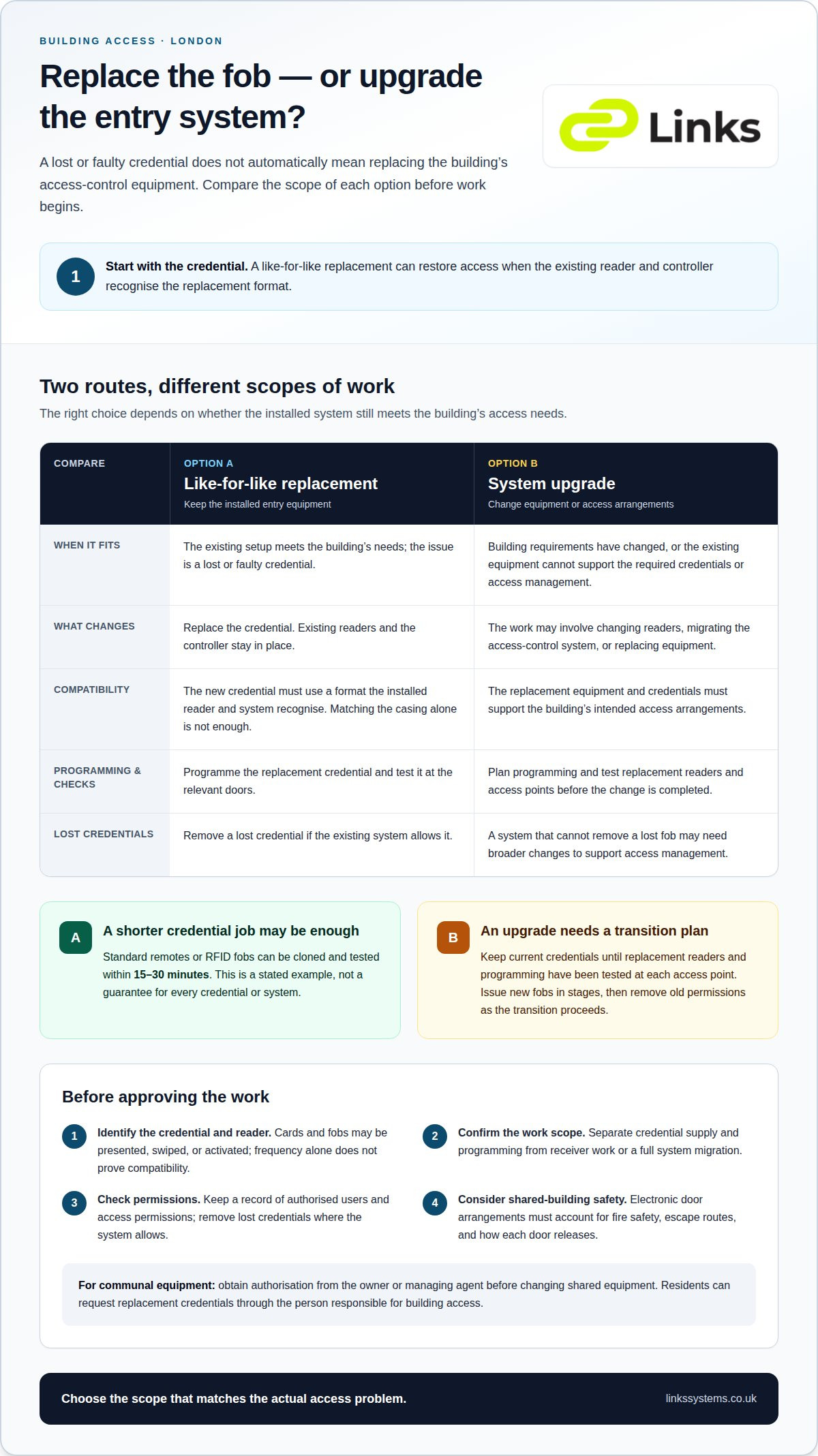
A like-for-like replacement keeps the existing readers and controller in place. The new credential must use a format the installed system recognises, then be programmed and tested at the relevant doors. Replacing one resident’s fob is different from changing the electronic equipment serving every entrance.
For a communal system, obtain authorisation from the owner or managing agent before changing shared equipment. Residents can request a replacement credential through the person responsible for building access. An upgrade is the broader option when the existing system no longer supports the required access arrangements.
Risks of an obsolete key fob system
An obsolete system can make routine changes harder. For example, a lost fob may remain usable if the controller cannot remove that credential. The building also needs a clear record of active users and permissions, so access reflects current occupancy rather than former residents.
Electronic fobs may use different formats, and an incompatible replacement won’t work with the existing reader. A system that cannot support the required credentials or access management may need more than replacement fobs. Assess whether the installed equipment can still perform the building’s access tasks.
To keep entry available during an upgrade, plan the work around the existing system. Retain current credentials until replacement readers and programming have been tested at each access point. Then issue new key fobs in stages and remove old permissions as the transition proceeds. This gives residents a clear route through the change, rather than leaving everyone locked out during a single cutover.
Vehicle key fobs involve a different process: an auto locksmith may need to programme the remote and immobiliser. That vehicle-specific work does not replace a communal building entry system. Keeping the cases separate helps establish whether the need is one replacement credential or a change to shared access equipment.
Should I upgrade to a modern access control system or replace like-for-like?
Choose like-for-like replacement when the existing readers and controller still meet the building’s access needs. Replacing one damaged credential is a smaller change than altering how several entrances are managed. The decision depends on system condition, credential compatibility and whether the building’s access requirements have changed.
Assess an upgrade when the current system can’t support required changes. Examples include difficulty removing access for former residents, managing different permissions or adding access points. A replacement fob won’t resolve limitations in the controller or readers. An upgrade involves reviewing the wider system and planning how its equipment and credentials will work together.
Compare the options against practical questions:
- Current operation: Do existing credentials work reliably at each door?
- Access changes: Can authorised users and permissions be updated when occupancy changes?
- Compatibility: Will replacement credentials work with the installed readers and controller?
- Scope: Does the work cover one credential, selected equipment or the whole system?
For a like-for-like job, the scope should identify the replacement credential and programming required. For an upgrade, it should describe the equipment being changed, how users and permissions will transfer, and how access will be tested before handover. This distinction helps building managers compare the work included, rather than treating every fob issue as a full-system replacement.
Consider a block where one resident has lost a fob but the other credentials and doors work as intended. Replacing that credential may address the immediate need. If the building cannot manage access changes effectively, reviewing the wider system may be more appropriate. The right route depends on the building’s requirements, not the label attached to the old fob.
For a structured review of system requirements and upgrade scope, discuss an access-control upgrade.
Links Integrated Systems: System Maintenance & Commissioning
Links Integrated Systems can assess whether an access issue calls for system maintenance or a wider access-control change. Its System Maintenance & Commissioning service supports a structured review of existing security infrastructure, including how access equipment operates and whether it meets the building’s requirements.
If a like-for-like fob replacement won’t address limitations across doors or entrances, an Access Control System may be more suitable. Links Integrated Systems also supplies and installs IP Video Intercom Systems, which can form part of a coordinated building access arrangement. The appropriate scope depends on the existing equipment and the site’s access requirements.
For a considered review of your building’s access system, contact Links Integrated Systems to discuss the next step.
Plan access around the building’s next stage
If you’re replacing an old key fob system in London, consider how the building will be used beyond the immediate fault. Planned changes to entrances, visitor handling or staff movement can affect the project scope. Taking these needs into account helps align access arrangements with building operations.
Links Integrated Systems supplies Access Control Systems, IP Video Intercom Systems and Speed Gates & Barriers. These can form part of an access arrangement planned around the site’s needs, rather than being treated as isolated equipment choices. Note which entrances are affected, who manages permissions and whether the work concerns one access point or a wider improvement. These details can make the next discussion more focused.
To take the next step for your building, contact Links Integrated Systems. A clear conversation can help you move towards an access solution suited to the site.
Frequently Asked Questions
Can you do my fob?
For a commercial building in London, Kent, Surrey, Hertfordshire or Essex, Links Integrated Systems can assess the access-control system behind the fob. Describe which entrance is affected, whether other credentials still work and whether the issue concerns one user or several. This helps distinguish a credential problem from a wider system requirement. Vehicle fobs are separate: car remotes and building credentials interact with different equipment, so a vehicle key issue needs a vehicle-specific solution.
Can you programme my blank key fobs?
A blank building fob can be programmed only if its credential format is compatible with the installed access system. The building’s access manager should establish whether the blank is intended for that system and whether the user is authorised. A fob intended for another property, for example, may not be recognised by the reader. The key consideration is system compatibility, not simply whether the fob is new.
Can you replace a smart key or keyless entry fob?
A smart key or keyless vehicle fob differs from a commercial building-access credential. Vehicle replacement may involve the car’s electronic security and immobiliser, so the vehicle make, model and key type matter. Links Integrated Systems focuses on physical security systems for buildings, including access control. If the issue concerns a property entrance rather than a vehicle, describe the affected door and access arrangement.
How much does a key fob cost?
For a building-access fob, the price depends on the work involved and is provided after a quote request. Factors include whether the requirement is one credential or wider equipment work, the fob format, programming and any reader or controller changes. A vehicle key price is not a reliable guide to a communal access credential because the equipment and work differ.
My key fob was lost or stolen. What should I do?
Tell the building’s managing agent or access administrator promptly, and identify which entrances the fob could open. Ask them to disable its permissions if the system supports that function, then arrange an authorised replacement. For example, a fob that opens shared doors should be treated as a building-access issue, not just a missing personal item. Record any temporary access arrangements for affected users.
What does it cost to replace an old key fob access system in London?
For a business replacing an old key fob system in London, the price depends on the work involved and is provided after a quote request. The scope may cover credentials alone or changes to readers, controllers and connected access equipment. The number of affected entrances, compatibility with existing hardware and any user-permission migration all shape the work required. A defined scope helps distinguish replacement from a wider upgrade.