
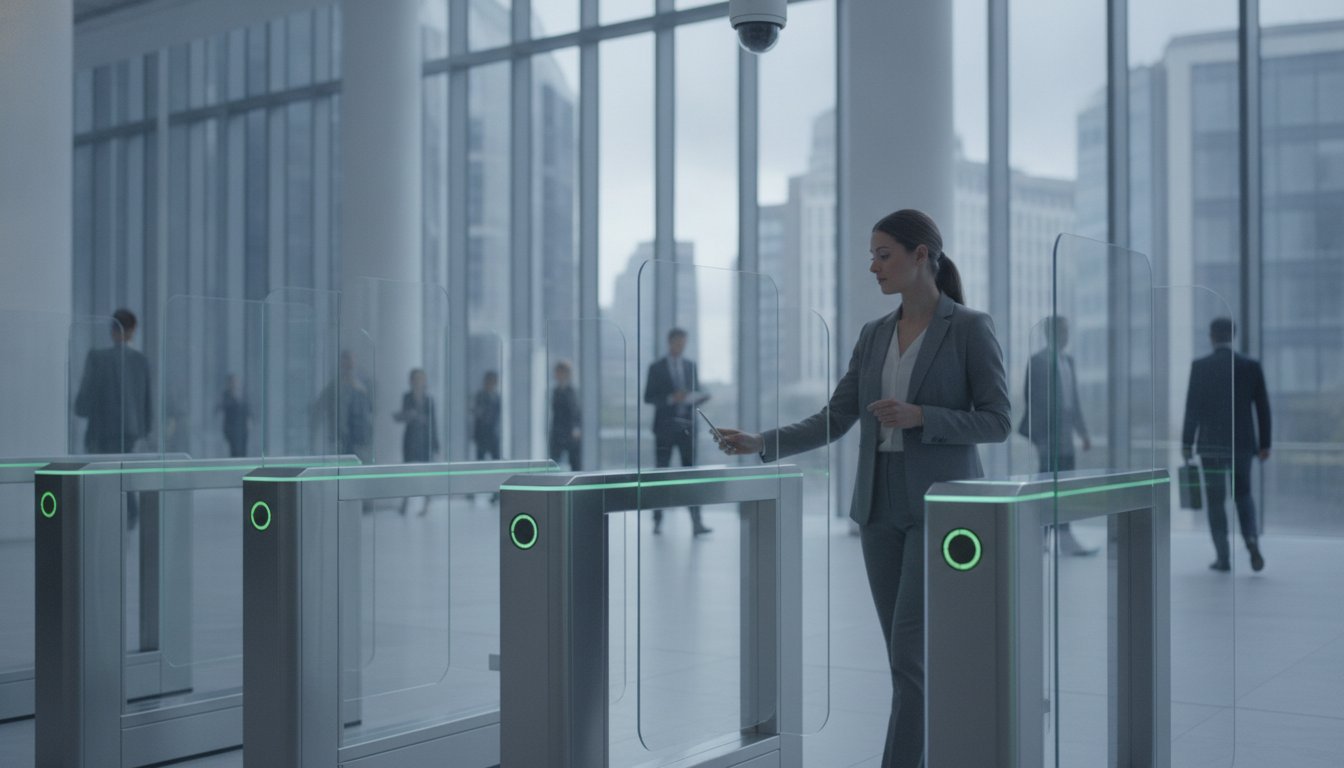
Managing three different software platforms just to let a visitor through the front door isn’t efficient; it’s a drain on your operational resources. You’ve likely experienced the frustration of hardware that fails because it wasn’t commissioned correctly, or the headache of trying to coordinate between multiple installers who don’t share a common goal. Achieving a seamless physical security system integration shouldn’t be a complex puzzle. It’s about creating a unified environment where your access control, speed gates, and IP CCTV work together as a single, cohesive unit.
We understand that reliability and peace of mind are your primary requirements when securing a high-level commercial facility. You need a system that doesn’t just look impressive on a specification sheet but performs consistently under the pressure of daily pedestrian flow. This article outlines how to unify your disparate security components into a single, reliable ecosystem. We’ll explore the importance of professional commissioning and the role of structured maintenance in ensuring long-term stability, whilst helping you achieve a streamlined interface that simplifies visitor management for good.
Key Takeaways
- Transition from fragmented, standalone security platforms to a unified, centralised management ecosystem for superior operational control.
- Identify the core technical components, such as speed gates and access control, required for a robust physical security system integration.
- Recognise why professional commissioning is the essential foundation for preventing hardware fatigue and ensuring long-term system reliability.
- Optimise pedestrian flow and visitor management within commercial lobbies through precise hardware specification and initial site assessments.
- Establish the key criteria for selecting a specialist integrator in London and the South East with the expertise to handle complex technical requirements.
What is Physical Security System Integration for Commercial Sites?
Physical security system integration is the technical process of connecting disparate hardware components, such as speed gates, IP CCTV, and access control, into a centralised management platform. Historically, commercial facilities operated with siloed systems where the intercom didn’t speak to the barrier, and the CCTV recorded independently of access events. This fragmentation creates security gaps and operational delays. Today, the industry has shifted towards unified ecosystems where every piece of hardware works in concert, providing a single point of truth for security personnel.
High-traffic environments, particularly within London’s commercial office developments, demand this level of synchronisation. Managing a lobby with thousands of daily movements requires more than just high-quality hardware; it requires those systems to be intelligently linked to prevent bottlenecks. It’s vital to distinguish between simple software-level overlays and actual physical hardware synchronisation. While many platforms offer a dashboard, true integration involves the professional commissioning of the physical links between devices to ensure they respond to real-world triggers in real-time.
This sophisticated approach often incorporates Physical Security Information Management (PSIM), a category of software designed to integrate multiple unconnected security applications and devices. By utilising these frameworks, facility managers can control their entire security estate through a single interface, rather than toggling between standalone monitors and control panels.
The Core Objectives of Integrated Security
Centralising data is the primary goal for any modern facility. When your IP HD CCTV and access control systems are linked, security teams can immediately verify an unauthorised entry attempt with a live video feed, significantly improving situational awareness amongst staff. Organising pedestrian flow also becomes an automated process. By linking access control systems directly to speed gates, you ensure that only authorised personnel move through specific zones without the need for constant manual intervention. Furthermore, IP video intercom systems enhance visitor management by allowing for seamless visual and audio verification before a guest even enters the building.
Benefits for Facility Managers and Stakeholders
For facility managers, the most immediate benefit is the reduction of operational friction. You can maintain high security standards whilst improving the daily experience for tenants and visitors. Streamlining maintenance is another critical advantage. Rather than managing several different contractors for separate systems, an integrated approach allows for a single, comprehensive maintenance schedule for all physical security assets. This steady, proactive model ensures long-term reliability and helps the building remain in full compliance with UK building regulations and insurance requirements.
Core Components of an Integrated Physical Security System
A robust security ecosystem is built upon several critical hardware pillars. While software provides the management interface, the physical components perform the heavy lifting of deterrence and detection. Successful physical security system integration ensures that these pillars communicate without latency, creating a responsive environment that adapts to real-time events. This synergy prevents the common issue of “siloed” data, where a security breach might be recorded by one system but ignored by another.
Access control systems act as the central authority of the site. This “brain” processes credentials and authorises movement across various zones. When linked with IP video intercom systems, security teams can manage visitors with high-fidelity audio and video, ensuring that only verified individuals reach the internal barriers. Implementing robust physical security protective measures requires this layered approach, where each component validates the other and provides multiple points of verification.
Speed Gates and Pedestrian Barriers
Speed gates and barriers serve as the primary physical threshold in commercial lobbies. These units must communicate instantly with access readers to facilitate a seamless entry experience for authorised staff. In high-traffic London developments, specifying hardware capable of handling high-volume pedestrian flow is essential to prevent congestion during peak morning hours. The choice of hardware directly impacts the “friction” felt by employees as they enter the building.
Safety is as important as security. Integrated speed gates must be hard-wired into the building’s fire alarm system. This ensures a fail-safe release in the event of an emergency, allowing barriers to open automatically for rapid evacuation. If you are currently planning a new installation, our team can assist with professional hardware specification to ensure your site remains both secure and compliant.
High-Definition IP Video Surveillance
IP HD CCTV provides the necessary visual verification for every access event. When integrated, a camera can be programmed to trigger a high-priority recording or an alert if a barrier is forced or if a “tailgating” incident is detected. This creates a searchable log where video clips are directly linked to specific access logs, allowing security managers to review incidents in seconds rather than hours.
The clarity provided by HD systems is vital for forensic investigations and supporting insurance claims. Strategic positioning is key. Cameras should be mounted to provide clear, unobstructed views of facial features at entry points, whilst also offering a wider perspective of the surrounding area. This dual-layered coverage ensures that no movement goes unrecorded and provides a comprehensive visual audit trail of the facility’s perimeter.
The Process of Designing a Unified Security Ecosystem
Designing a unified security ecosystem requires a methodical approach that moves from high-level site assessment to granular hardware specification. A successful physical security system integration isn’t achieved by chance; it’s the result of precise planning that accounts for every vulnerability and traffic pattern within a commercial lobby. We begin by identifying the specific requirements of the facility, ensuring that the network architecture is robust enough to handle the high bandwidth demands of IP HD CCTV and real-time access data without latency.
Stakeholder collaboration is equally vital. Security design must align with architectural aesthetics, particularly in high-profile London developments where the reception area serves as a statement of corporate identity. By involving security specialists early in the design phase, we ensure that hardware like speed gates and intercoms are integrated into the fabric of the building rather than appearing as an afterthought. This collaborative process ensures that technical requirements never compromise the visual integrity of the site.
Developing a Bespoke Specification
Generic “off-the-shelf” solutions often fail to meet the complex requirements of modern London skyscrapers. These environments require a bespoke specification that balances stringent security protocols with the need for a welcoming, professional atmosphere. The primary objective is clear: to create a secure, frictionless entry experience that reinforces the building’s professional identity whilst maintaining uncompromising safety standards. This requires selecting hardware that isn’t just compatible on paper but has been proven to perform in high-pressure, high-volume environments.
Managing Pedestrian and Vehicle Flow
Effective flow management relies on the seamless synchronisation of physical barriers with commercial access control systems. During peak morning hours, even a three-second delay in barrier response can lead to significant lobby congestion and tenant frustration. We plan for these peak-time traffic spikes by specifying high-speed actuators and responsive readers that keep people moving without compromising security checks.
This level of control extends to the site perimeter. By using IP video intercoms, security teams can manage delivery drivers and external contractors without compromising the building’s integrity. These systems allow for visual verification and direct communication from a centralised security centre, ensuring that every entry event is authorised and recorded. This structured approach to flow management prevents bottlenecks and maintains a steady, secure environment for all building users.
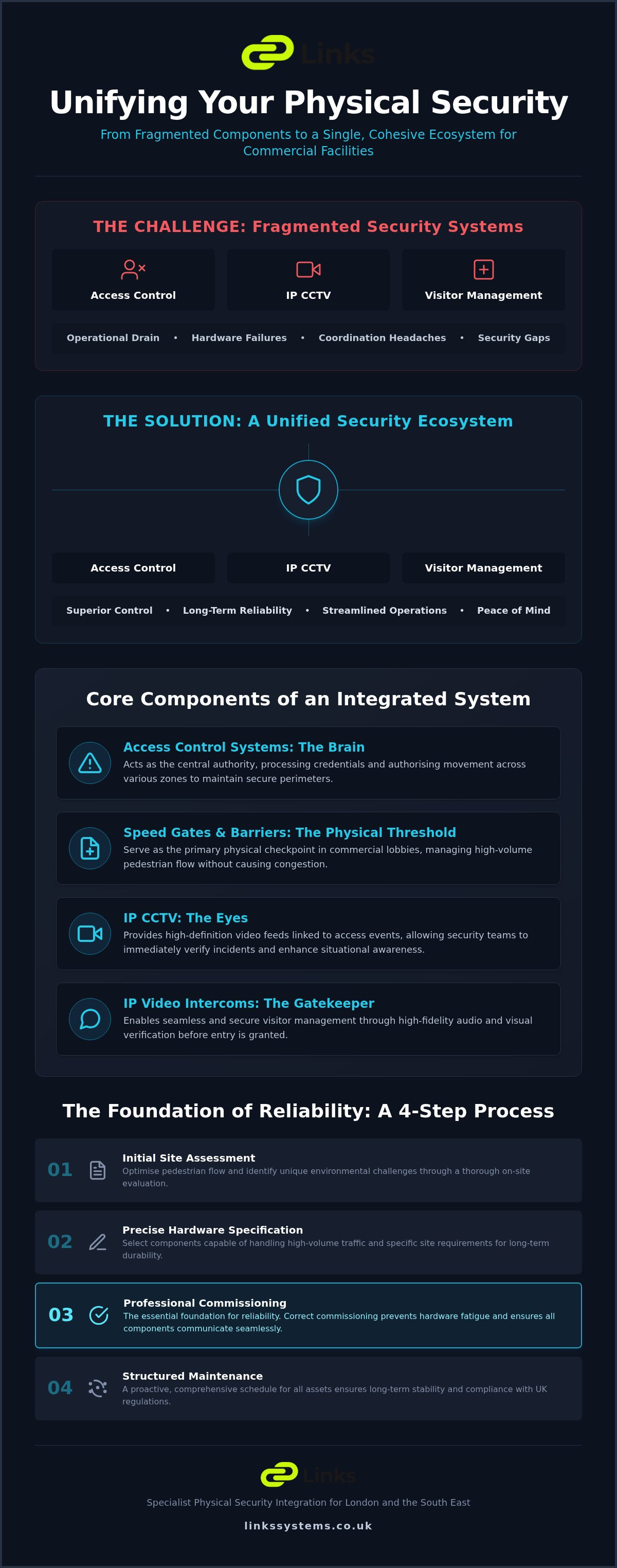
Professional Commissioning and Maintenance: The Foundation of Reliability
Commissioning is the precise bridge between a physical installation and an operational security ecosystem. It represents the most critical phase of physical security system integration, as it ensures that every hardware component performs according to its design specification. When commissioning is overlooked or rushed, the risks are immediate and costly. Hardware fatigue occurs when speed gates aren’t calibrated correctly, whilst poorly configured sensors lead to persistent false alarms and system downtime. These issues don’t just compromise security; they erode the trust of the building’s occupants.
Testing under real-world loads is essential for long-term stability. A system might appear functional during a quiet weekend test, but it must be capable of handling the intense pressure of a London office’s morning peak. This methodical approach to physical security system integration identifies potential technical bottlenecks before they impact your daily operations. We ensure that all firmware and software integrations are tested against these high-volume scenarios, providing the peace of mind that comes from a truly reliable system.
The Commissioning Checklist
A thorough checklist is the foundation of a successful handover. We rigorously test fail-safe and fail-secure modes for all integrated barriers to ensure they respond correctly during fire alarms or power failures. We also verify the synchronisation between intercom calls and CCTV recording triggers. This ensures that every visitor interaction is visually captured and logged within the centralised platform. Finally, we conduct a structured system handover, providing the necessary staff training to ensure your security team can manage the platform with confidence from day one.
Long-Term Maintenance Strategies
Long-term reliability is achieved through proactive, scheduled inspections. Moving parts in high-use speed gates require regular lubrication and alignment to prevent mechanical wear and ensure pedestrian safety. There is also immense value in integrating CCTV with access control systems to enable remote diagnostics. This allows for the early identification of technical anomalies amongst your hardware assets, often before they lead to a system failure. Backed by 40 years of industry experience, our maintenance programmes are designed to protect your investment for the full lifecycle of the project.
If you require a specialist to oversee the technical performance of your facility, you can contact us for professional commissioning and maintenance support.
Selecting a Physical Security Integrator in London and the South East
Selecting the right partner for your project requires a focus on technical depth and local knowledge. High-level commercial developments in London and the South East present unique challenges, from managing high-volume pedestrian traffic to adhering to strict building regulations. A specialist integrator must possess a proven track record in these environments, demonstrating the ability to handle complex physical security system integration without compromising on reliability. Choosing a partner with local expertise in Kent, Surrey, and Essex ensures that they understand the specific logistical and operational requirements of sites within these regions.
The most effective security outcomes are achieved through a comprehensive, end-to-end service model. Rather than coordinating between disparate installers, facility managers benefit from a single point of contact who manages the design, supply, and professional commissioning of all hardware assets. This full-lifecycle approach eliminates the risks associated with fragmented installations and ensures that the final ecosystem is cohesive. A non-transactional partnership focused on long-term reliability is essential for maintaining the integrity of your security infrastructure over several decades.
Why Links Integrated Systems?
We provide a composed, trust-based approach to complex physical security challenges, drawing upon over 40 years of industry experience. Our expertise is rooted in the design and supply of robust hardware, with a particular focus on professional commercial speed gates and barriers. We don’t simply deliver equipment; we ensure its operational stability through meticulous commissioning and structured maintenance programmes.
Our reputation is built on being a dependable pillar for project managers and stakeholders who value precision. By focusing on the relationship between physical hardware and centralised management platforms, we provide a steady hand to guide you through the technical requirements of modern facility protection. This dedication to hardware reliability ensures that your security ecosystem remains functional and responsive under the pressure of daily use.
Next Steps for Your Security Project
Initiating a consultation for your London or Hertfordshire development is a straightforward process designed to establish your specific operational needs. To prepare for a professional specification, we recommend reviewing your current site requirements and identifying any existing technical bottlenecks. Our team is available to conduct a detailed review of your current infrastructure and propose a unified solution that enhances both security and pedestrian flow. To move your project forward, consider the following steps:
- Define your primary objectives: Identify the specific traffic patterns and vulnerabilities within your lobby or perimeter.
- Audit existing assets: Determine which legacy systems require replacement or integration into a new IP-based platform.
- Schedule a technical review: Arrange for a site assessment to discuss hardware compatibility and network architecture.
- Establish a maintenance plan: Ensure your project includes a long-term strategy for hardware longevity and firmware updates.
Securing the Future of Your Commercial Facility
Achieving a seamless security environment requires moving beyond standalone platforms towards a unified ecosystem. Successful physical security system integration depends on the precise synchronisation of speed gates, access control, and IP CCTV, ensuring they function as a single, responsive unit. By prioritising professional commissioning and a bespoke design process, you eliminate operational friction and ensure your facility remains safe for all users.
With over 40 years of industry-leading experience, we provide a steady hand for complex technical requirements. As specialists in London and the Home Counties, we handle the full lifecycle of your project, from initial design and supply to expert commissioning and maintenance. This comprehensive approach ensures that your security infrastructure is built for long-term reliability and peace of mind.
If you’re ready to unify your site’s defences, we’re here to help you navigate the process with precision. Contact Links Integrated Systems for professional security integration and ensure your commercial facility is protected by a system that performs without compromise.
Frequently Asked Questions
What is the role of a physical security system integrator?
A physical security system integrator manages the design, supply, and technical synchronisation of disparate hardware components into a unified ecosystem. They ensure that speed gates, access control, and CCTV communicate without latency or data silos. By acting as a single point of professional contact, the integrator eliminates the technical gaps often found in fragmented installations. This oversight is essential for complex commercial sites requiring high reliability and precise commissioning.
Can I integrate my existing CCTV with new speed gates?
Existing IP HD CCTV can usually be integrated with new speed gates, provided the hardware supports standard communication protocols. Successful physical security system integration allows your cameras to act as a visual trigger for access events, such as recording when a barrier is forced. We assess your legacy hardware to ensure compatibility before designing a synchronised link that significantly enhances your site’s overall situational awareness.
How long does the commissioning process take for a commercial site?
The duration of the commissioning phase depends on the complexity of the hardware ecosystem and the number of integration points. For a standard commercial lobby, the process typically takes several days to ensure every fail-safe and communication trigger is rigorously tested. We conduct these tests under real-world loads to prevent future system downtime. A detailed timeline is established during the design phase to ensure minimal operational disruption.
Why is maintenance critical for integrated access control systems?
Maintenance is essential because integrated systems rely on the constant synchronisation of both mechanical and digital components. High-use speed gates and barriers experience physical wear that can lead to hardware fatigue if not inspected regularly. Proactive servicing ensures that firmware remains updated and that communication links between the access control “brain” and the physical barriers remain stable. This steady approach protects your long-term investment and prevents unexpected failures.
What are the benefits of IP-based video intercom systems?
IP-based video intercom systems provide high-fidelity visual and audio verification of visitors before they enter the building’s secure perimeter. These systems integrate directly with your centralised management platform, allowing security teams to manage entry requests from any networked workstation. This improves visitor management efficiency whilst providing a clear audit trail of all communication events. It’s a critical component for maintaining high security standards in modern commercial developments.
Does physical security integration help with building compliance?
Integrated systems significantly assist with building compliance by providing a centralised log of all access events and system performance data. This is particularly relevant for meeting UK building regulations and insurance requirements that demand robust audit trails. By unifying your hardware, you ensure that safety protocols, such as fire alarm links, are consistently applied across the site. Professional commissioning provides the documented proof that your systems meet these mandatory standards.
How do integrated systems handle emergency evacuations?
Integrated systems handle emergencies by hard-wiring physical barriers and speed gates directly into the building’s fire alarm system. Upon activation, the integrated platform triggers a fail-safe release, ensuring all barriers open automatically to facilitate a rapid, unobstructed evacuation. This automated response eliminates the need for manual intervention during a crisis. We test these fail-safe modes during the commissioning phase to ensure they operate correctly under all power conditions.
What areas do you cover for security system installation?
We provide comprehensive security system design, supply, and commissioning services across London and the South East. Our team has extensive experience working on commercial sites throughout the Home Counties, including Kent, Surrey, Essex, and Hertfordshire. This local expertise allows us to respond effectively to the logistical requirements of major office developments and high-profile corporate facilities. We focus on building long-term, trust-based partnerships with clients across these regions.