
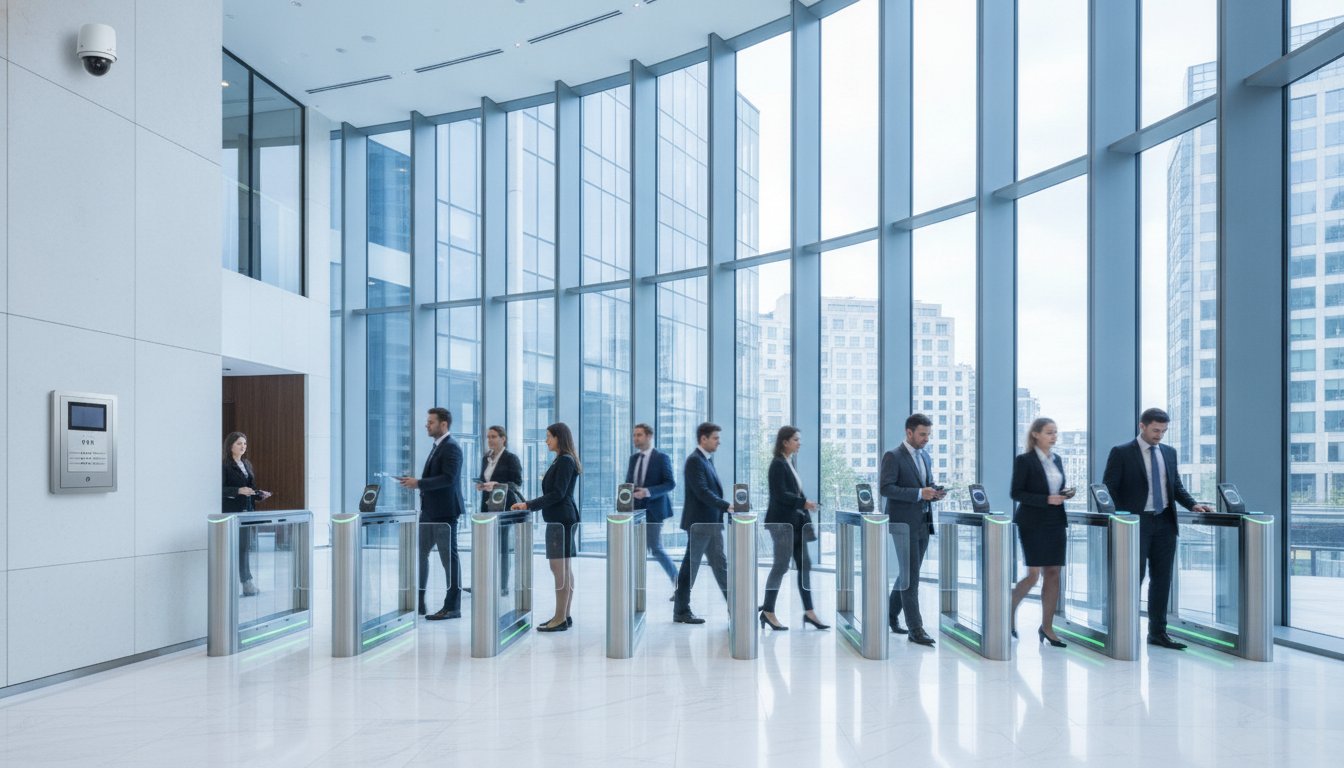
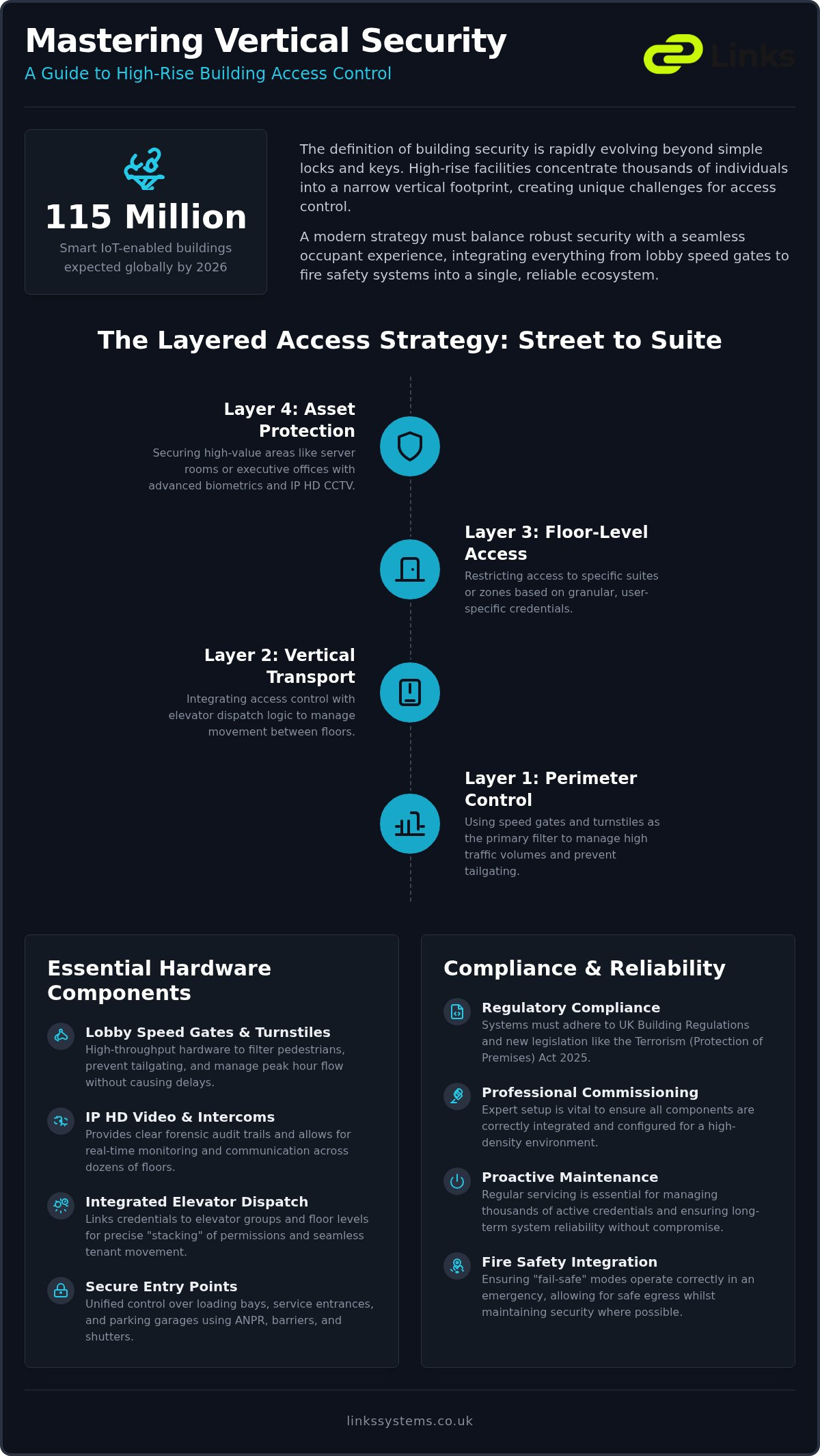
With the number of smart IoT-enabled buildings globally expected to reach 115 million by the end of 2026, the definition of building security is moving rapidly beyond simple locks and keys. You likely understand the daily pressure of managing high-rise building access control in a facility where hundreds of tenants and visitors arrive simultaneously. It’s a delicate balance to prevent tailgating in a crowded lobby whilst ensuring that fire safety protocols and elevator systems remain fully integrated. Maintaining a secure perimeter shouldn’t come at the expense of a smooth occupant experience.
This guide provides the professional assurance you need to master these vertical complexities. You’ll learn how to implement a security strategy that prioritises both technical precision and long-term reliability. We’ll explore the specific requirements for modern speed gates, the necessity of high-definition IP video intercoms, and how new regulations like the Terrorism (Protection of Premises) Act 2025 influence your system design. By focusing on a methodical approach to commissioning and maintenance, you can ensure your building remains a secure and stable environment for every occupant.
Key Takeaways
- Understand how vertical security differs from traditional horizontal layouts, specifically the complexities of “stacking” permissions within a single structure.
- Learn to implement a layered high-rise building access control strategy that secures everything from lobby speed gates to integrated elevator dispatch systems.
- Identify the essential hardware required for high-occupancy environments, including IP HD CCTV for forensic audit trails and high-throughput turnstiles.
- Discover how to maintain strict compliance with UK Building Regulations and fire safety standards whilst ensuring “fail-safe” modes operate correctly.
- Recognise why professional commissioning and proactive maintenance are vital for managing thousands of active credentials without compromising system reliability.
Understanding Vertical Security: The Unique Challenges of High-Rise Buildings
High-rise buildings present a unique topological challenge for security managers. Unlike a single-storey office or a sprawling industrial campus, a skyscraper concentrates thousands of individuals into a narrow vertical footprint. In this environment, high-rise building access control is defined as the management of movement across both vertical and horizontal planes within a single, complex structure. It isn’t merely about unlocking a front door; it’s about choreographing the flow of people through a series of increasingly restricted zones while maintaining operational efficiency.
One of the most significant technical hurdles is the concept of “stacking.” In a multi-tenant high-rise, security teams must manage granular permissions that change floor by floor. A staff member working for a firm on the 10th floor has no legitimate reason to access a private data suite on the 45th floor. This requires a sophisticated database where credentials are tied to specific elevator groups and floor levels. To achieve this level of precision, modern physical security measures must move beyond standalone hardware and into fully integrated, IP-based ecosystems. These systems centralise data from across dozens of floors, allowing for real-time monitoring and instant credential revocation from a single interface.
Managing Multiple Entry Points and Loading Bays
Effective high-rise building access control requires a unified approach to various entry points that extend far beyond the main reception desk. A secure perimeter must account for:
- Main Lobbies: High-throughput speed gates that filter pedestrians without causing delays during peak hours.
- Loading Bays and Service Entrances: Integrated barriers and heavy-duty shutters that manage the constant flow of delivery vehicles and contractors.
- Parking Garages: Automatic Number Plate Recognition (ANPR) systems linked to tenant profiles for seamless entry.
Centralising these inputs into a 24/7 security centre ensures that response teams have a complete picture of building occupancy and can identify anomalies across different zones instantly.
The Density Factor: Balancing Security with User Experience
Density is the primary operational pressure in vertical environments. During the morning peak, a poorly designed system creates bottlenecks that frustrate tenants and compromise safety. Vertical security is the coordination of lobby hardware and elevator logic. By using mobile credentials or RFID tags, tenants can move from the speed gate to their specific floor without ever touching a communal surface. This seamless transition is essential for tenant retention in premium commercial hubs. High-capacity IP systems allow for this frictionless flow whilst maintaining the rigid audit trails required for modern compliance and forensic reporting.
The Layered Access Strategy: Securing High-Rise Environments from Street to Suite
Effective high-rise building access control relies on a defence-in-depth model. This layered strategy ensures that even if one barrier is bypassed, subsequent filters remain in place to protect occupants and assets. Because of the unique challenges of high-rise security, these layers must be technically linked to prevent gaps in the audit trail. A fragmented system where the lobby does not communicate with the lifts creates vulnerabilities that are difficult to manage in a high-occupancy building.
The first layer is the perimeter. In a busy commercial lobby, speed gates and turnstiles serve as the primary filter. They prevent tailgating whilst allowing high volumes of authorised personnel to pass through quickly. Once past the lobby, the second layer focuses on the vertical lift. This is where the access control system integrates with the elevator dispatch logic to control movement between floors. The third layer involves floor-level restrictions, where access is limited to specific suites or zones based on the user’s credentials. Finally, the fourth layer provides asset protection for high-value areas like server rooms or executive offices. This often involves a combination of IP HD CCTV and biometrics to ensure only verified individuals enter sensitive spaces.
Elevator Integration: The Heart of Vertical Access
Integrating access control with elevator systems is a technical necessity for modern skyscrapers. Destination Control Systems (DCS) allow the building to group passengers going to the same floor, which reduces wait times and improves energy efficiency. From a security standpoint, the technical bridge between the access control database and the lift controller ensures that a floor button only becomes active if the user has the correct permissions. You can restrict floor access based on the time of day, ensuring that certain zones remain locked during out-of-office hours whilst allowing authorised personnel entry at scheduled times.
IP Video Intercoms for Visitor Management
Managing guests in a vertical environment requires a high level of coordination. IP video intercom systems provide high-definition visual verification, allowing receptionists or tenants to see and speak with visitors before granting access. Modern systems allow tenants to issue temporary QR codes or mobile credentials to guests. These credentials can be programmed to work with both the lobby speed gates and the elevator system, creating a seamless journey from the street to the suite. For those looking to upgrade their current infrastructure, professional system maintenance and commissioning ensures these complex integrations remain reliable over the long term.
Essential Hardware Components for Modern High-Rise Access Control
The physical components of a security system are the first line of defence in any vertical environment. Selecting the right hardware for high-rise building access control requires a deep understanding of both building aesthetics and technical performance. This selection process should always be preceded by a thorough High-Rise Security and Risk Assessment to identify specific vulnerabilities within the structure. For long-term viability, prioritising open-protocol hardware is essential. It ensures your system remains flexible and isn’t locked into a single manufacturer’s proprietary ecosystem as technology evolves towards 2026 standards.
Credentials have also evolved significantly for 2026. Whilst traditional RFID cards remain common, there is a clear shift towards mobile Bluetooth access and biometric options. These user-friendly credentials improve the tenant experience whilst providing a higher level of security. Mobile systems allow for the instant issuance and revocation of permissions, which is critical when managing the high turnover of staff and contractors typical in large commercial hubs. Many organisations are now adopting cloud-based access control systems for business to centralise credential management across multiple floors and sites from a single, unified interface, eliminating the administrative burden of maintaining ageing on-site servers.
Selecting Speed Gates for Corporate Lobbies
In premium London developments, the lobby serves as a statement of brand identity. Speed gates must balance this aesthetic requirement with rigorous security height and throughput capabilities. When specifying hardware, look for advanced tailgating detection and reliable emergency breakout modes to ensure occupant safety during an evacuation. Compliance with EN 17352:2022 is now a baseline requirement for pedestrian entrance control. For a detailed breakdown of hardware options, consult our Professional Commercial Speed Gates & Barriers specification guide.
The Role of IP HD CCTV in High-Rise Security
High-definition surveillance is no longer optional for high-rise building access control; it’s a vital component for forensic audit trails. IP HD CCTV systems allow security teams to monitor blind spots in stairwells and lift lobbies that often go overlooked. Modern video analytics can automatically detect suspicious behaviour or abandoned objects, triggering alerts before an incident escalates. By integrating these video feeds with access events, you can instantly verify who is entering a zone. This creates a complete picture of building activity, combining visual evidence with digital credentials to provide peace of mind for both management and tenants.
Compliance and Fire Safety: Integrating Life Safety with High-Rise Access
In a vertical environment, the intersection of security and life safety is where technical precision becomes most critical. High-rise building access control must be designed to prioritise human life above all else, ensuring that security measures do not become obstacles during an emergency. This requires a seamless technical link between the building’s fire alarm system and the access control hardware. Achieving this balance involves adhering to strict UK Building Regulations whilst maintaining a robust defence against unauthorised entry.
Managing emergency egress through stairwells presents a specific challenge in high-occupancy sites. Whilst these routes must remain secure against external threats, they must also allow for rapid evacuation. This necessitates the installation and regular testing of emergency release buttons, often referred to as green break-glass units, and fire interfaces. A failed interface is a significant liability, which is why professional commissioning is vital to ensure that every door in the chain behaves correctly when a signal is received from the fire panel.
Fire Alarm Integration and Fail-Safe Protocols
When a fire alarm is activated, the access control system must immediately trigger its pre-programmed “fail-safe” modes. In the UK, BS 7273-4 dictates that electronic locking mechanisms on escape routes must release automatically upon fire alarm activation to ensure unobstructed egress for all occupants. This fail-safe state means the door becomes unlocked when power is removed or a signal is sent. In contrast, fail-secure hardware remains locked when power is lost, which is typically reserved for high-value internal assets that are not part of a designated escape route.
Secured by Design and High-Rise Assets
For modern commercial developments, meeting the Police Preferred Specification, known as Secured by Design (SBD), is a mark of professional excellence. This standard focuses on the physical security of the building’s shell and the reliability of its electronic systems. When evaluating access control companies, property managers should look for partners who understand these specific UK standards and the insurance requirements that often accompany them. Professional installation ensures that your high-rise building access control system is not only secure but also fully compliant with the rigorous demands of local authorities and industry bodies. To ensure your facility remains fully compliant with these life safety requirements, you should consider a professional system maintenance and commissioning schedule.
Professional Commissioning and Maintenance: Ensuring High-Rise Reliability
The successful deployment of high-rise building access control culminates in the commissioning phase. This is the stage where technical design meets the rigours of real-world operation. Without professional commissioning, even the most advanced hardware remains a potential liability rather than a secure asset. Links Integrated Systems draws on 40 years of industry experience to ensure that every component, from lobby speed gates to complex elevator interfaces, functions as a single, cohesive unit before the building goes live. Our approach prioritises technical precision to provide the peace of mind that high-level stakeholders and project managers require.
Managing a database for a London skyscraper involves coordinating thousands of active credentials across multiple tenant organisations. This density requires a methodical approach to data integrity and system logic. A well-commissioned system doesn’t just grant access; it provides property managers with the granular data needed to track building occupancy and monitor traffic patterns in real time. This level of oversight is essential for maintaining the stability and security of premium commercial hubs. We focus on creating a seamless technical environment where data flows reliably from the street to the highest floor.
The Commissioning Process for Large-Scale Systems
A thorough commissioning process involves testing every individual reader, barrier, and camera interface against the original project specification. We verify that fail-safe protocols operate correctly and that the database correctly maps permissions across every vertical layer. This ensures that a tenant’s credential only activates the specific floors they are authorised to visit. For those managing complex sites in London and the South East, following a structured Access Control Installers Checklist is the best way to ensure no technical detail is overlooked during the final handover. We provide detailed reporting at this stage to confirm every integrated link is fully operational.
Ongoing Maintenance and Technical Support
High-traffic environments place immense physical strain on access control hardware. Neglecting regular maintenance for speed gates or barriers can lead to mechanical failure at peak times, causing significant disruption to tenant flow and lobby security. IP-based systems also require consistent software and firmware updates to protect against emerging vulnerabilities and ensure compatibility with the latest mobile credentials. A proactive maintenance contract ensures 24/7 uptime and protects your long-term capital investment. Because our solutions are inherently integrated, our maintenance visits cover the full lifecycle of your IP CCTV, intercoms, and access systems. If you require expert guidance on securing your vertical environment, contact Links Integrated Systems for a professional security consultation.
Securing the Future of Vertical Infrastructure
Managing a skyscraper’s security requires more than just high-quality hardware; it demands a unified strategy that links every floor and entry point. We have explored how a layered approach, from lobby speed gates to destination control elevators, ensures that high-rise building access control remains both rigid and efficient. By prioritising compliance with UK fire safety regulations and investing in professional commissioning, property managers can transform a complex technical challenge into a reliable, long-term asset.
Links Integrated Systems brings 40 years of industry expertise to the most demanding commercial environments. As specialists in London and the South East, we understand the precision required to manage thousands of credentials whilst maintaining 24/7 uptime through rigorous maintenance and IP video integration. Our team is dedicated to providing the stability and technical foresight your project deserves. We provide the comprehensive commissioning and maintenance services necessary to protect your building’s occupants and reputation.
Request a Professional Consultation for Your High-Rise Security Project to ensure your vertical security is handled by a seasoned industry partner. We look forward to helping you build a safer, more resilient environment for your tenants.
Frequently Asked Questions
What is the best type of access control for a high-rise building?
The most effective high-rise building access control is an integrated IP-based system that synchronises lobby hardware with elevator logic. These systems allow for granular permission stacking across multiple floors and tenants. By centralising data, security teams can manage thousands of credentials whilst maintaining a single, reliable audit trail for the entire vertical structure.
How does access control integrate with high-rise elevators?
High-rise elevators integrate with access control via a technical bridge to the lift’s Destination Control System. When a tenant scans their credential at a lobby speed gate or lift terminal, the system identifies their authorised floors and assigns an elevator car. This prevents unauthorised floor access and improves building efficiency during peak morning hours.
Are speed gates necessary for high-rise lobby security?
Speed gates are essential for managing the high-volume pedestrian flow typical of commercial skyscrapers. They provide a physical barrier that prevents tailgating whilst allowing authorised staff to pass through quickly. Modern designs also incorporate sensors to detect unauthorised entry attempts, which is vital for maintaining a secure perimeter in busy London lobbies.
Can I use mobile phones for high-rise access control in 2026?
Mobile credentials using Bluetooth or NFC technology are a standard feature for high-rise building access control in 2026. They offer a more secure and user-friendly alternative to traditional RFID cards. Tenants can use their smartphones to move from the lobby to their office suite, whilst managers can issue or revoke digital keys instantly via the cloud interface.
What happens to the access control system during a fire alarm in a high-rise?
During a fire alarm activation, the access control system must trigger fail-safe protocols to unlock all doors on designated escape routes. This ensures that occupants can evacuate the building without obstruction. In the UK, these integrations must comply with BS 7273-4 standards to ensure that life safety is always prioritised over security during an emergency.
How much does it cost to install access control in a commercial skyscraper?
Installation costs for a commercial skyscraper depend on the total number of doors, the complexity of elevator integration, and the choice of hardware. Factors such as the building’s age and the existing data infrastructure also influence the final investment. It is best to consult with a specialist to develop a detailed specification tailored to your building’s unique requirements.
What is the difference between an intercom and an access control system?
An IP video intercom system is primarily used for communication and visitor verification at entry points. In contrast, an access control system manages the ongoing movement of authorised tenants using credentials like cards or mobile keys. Whilst they serve different functions, they are often integrated to provide a seamless experience for both guests and regular occupants.
How often should a high-rise access control system be maintained?
High-rise systems should undergo professional maintenance at least twice a year to ensure hardware reliability and compliance with safety standards. This includes testing emergency release buttons and inspecting speed gate mechanisms. Software and firmware should be updated more frequently to protect against security vulnerabilities and ensure the system remains compatible with the latest mobile devices.