

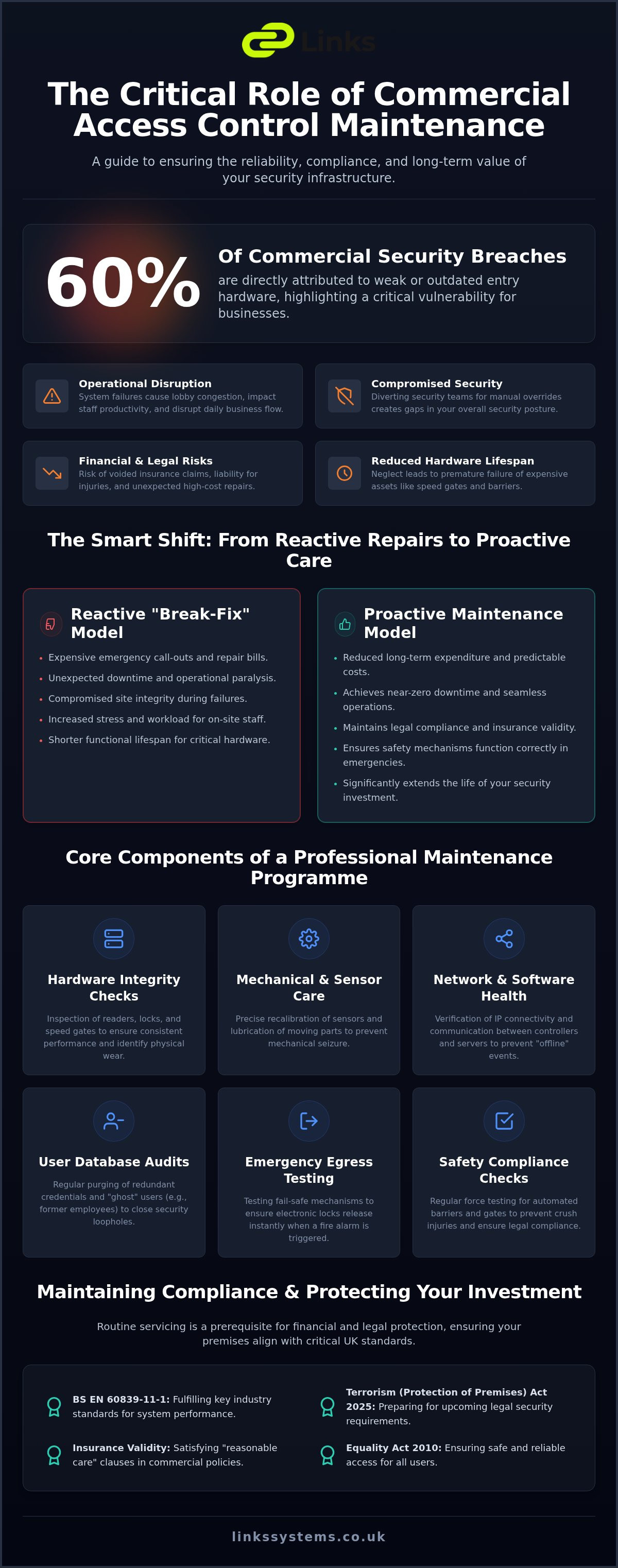
Did you know that over 60% of security breaches in commercial buildings are directly attributed to weak or outdated entry hardware? It’s a sobering statistic that highlights a common vulnerability in modern business infrastructure. You’ve likely experienced the frustration of a congested lobby during unexpected system downtime or felt the weight of liability when questioning if your emergency exits will truly release during a fire drill. These aren’t just minor inconveniences; they’re significant risks to your operational continuity and legal standing.
Discover how to ensure the long-term reliability and compliance of your security infrastructure through professional commercial access control system maintenance and commissioning. This guide provides a clear roadmap to achieving zero-downtime operations whilst ensuring your site remains fully aligned with UK safety standards, including BS EN 60839-11-1 and the Terrorism (Protection of Premises) Act 2025. We’ll examine how a methodical approach to hardware care prevents unpredictable repair bills and extends the functional lifespan of your speed gates and barriers.
Key Takeaways
- Learn how a preventative approach to security infrastructure protects pedestrian flow and prevents the operational paralysis caused by sudden system failures.
- Understand the multi-layered requirements of commercial access control system maintenance, from physical hardware integrity to secure IP connectivity across your security subnet.
- Discover why moving away from a reactive “break-fix” model reduces long-term expenditure and significantly extends the functional lifespan of expensive speed gates and barriers.
- Identify the critical regulatory standards, including BS EN 60839 and the Equality Act 2010, necessary to maintain legal compliance and insurance validity for your premises.
- Explore the importance of professional commissioning and tailored maintenance programmes for high-traffic sites across London, Kent, Surrey, and the South East.
Why Routine Maintenance is Critical for Commercial Security
Effective Access control systems are the backbone of modern site management. However, installing high-quality hardware is only the first step. Professional commercial access control system maintenance is a preventative discipline, not a reactive one. It’s about identifying mechanical fatigue or software lag before they manifest as a total system failure. By treating security infrastructure as a living asset, businesses move away from the “break-fix” cycle that often results in expensive emergency call-outs and compromised site integrity.
The operational consequences of hardware failure are immediate. In a high-traffic London office, a malfunctioning speed gate doesn’t just cause a minor delay; it creates significant lobby congestion that impacts staff productivity and visitor perception. When entry points fail, security teams are often diverted from their primary duties to manage manual overrides. This shift creates gaps in your overall security posture whilst increasing the daily stress on your front-of-house staff. It’s a ripple effect that starts at the door and touches every part of the business day.
Beyond daily operations, routine servicing is a prerequisite for financial and legal protection. Most UK commercial insurance policies include “reasonable care” clauses. If a breach occurs and it’s found that the security hardware hadn’t been maintained to industry standards, insurers may reduce or refuse payouts. Regular maintenance extends the lifecycle of your hardware, allowing you to defer major capital expenditure and keep your estate running efficiently for years. It’s a methodical approach that ensures your initial investment continues to provide value long after the installation date.
Mitigating Liability and Safety Risks
Security isn’t just about keeping people out; it’s about ensuring they can get out safely during an emergency. Fail-safe mechanisms must be tested to ensure electronic locks release instantly when the fire alarm is triggered. For sites with automated barriers or gates, regular force testing is essential to prevent crush injuries and ensure compliance with safety regulations. Building managers have a non-delegable duty of care to ensure that all electronic locking and egress systems operate safely and reliably under both normal and emergency conditions.
Protecting Your Investment in High-End Hardware
High-end assets like speed gates and barriers contain complex mechanical parts and sensitive optical sensors. These components require more frequent attention than a standard wall-mounted reader. Dust and debris can easily cloud sensors, leading to false alarms or “tailgating” errors that undermine your security protocol. Scheduled commercial access control system maintenance allows for the precise recalibration of these sensors and the lubrication of moving parts. This proactive care is significantly more cost-effective than replacing an entire motor or control board after a preventable mechanical seizure.
Essential Components of a Professional Maintenance Programme
A comprehensive approach to commercial access control system maintenance must address the entire security ecosystem, from physical hardware to the logic of the security subnet. In high-density environments like London office blocks, physical wear is accelerated by constant use. Engineers must verify IP connectivity across the network to ensure that communication between door controllers and the central server remains uninterrupted. This technical oversight prevents “offline” events where doors may fail to log entries or, worse, revert to a default state that compromises site security.
Beyond the physical components, a professional programme includes a thorough audit of the user database. Redundant credentials and “ghost” users, such as former employees or contractors who still have active profiles, represent a significant security loophole. Regularly purging these entries is as critical as fixing a broken lock. For those seeking detailed standards on these processes, the National Protective Security Authority provides a guide on Professional Commissioning and Maintenance which outlines the rigorous checks required for high-security environments.
Hardware Inspection: Readers, Locks, and Speed Gates
Testing RFID and biometric readers is essential to maintain consistent read-ranges and processing speeds. If a reader begins to struggle with credential recognition, it leads to tailgating risks as staff hold doors open for one another. Mechanical components, including strike plates and magnetic locks, require periodic lubrication and alignment to prevent sticking. For sites using commercial speed gates, technicians must calibrate the motor drive and safety beams. This ensures the glass wings or barriers operate with precision, stopping immediately if an obstruction is detected to prevent injury or equipment damage.
Integrated Systems: Intercoms and CCTV Alignment
Modern security relies on the seamless interaction between different technologies. Technicians must verify that IP video intercom systems trigger the correct door release and that the audio-visual feed is clear. It’s equally important to ensure that CCTV cameras are correctly synchronised with access event logs, allowing for accurate timestamping of every entry. Integrated systems ensure that security personnel can instantly cross-reference visual evidence with electronic logs, significantly reducing the time required to identify the root cause of an unauthorised entry attempt. If you haven’t reviewed your integration logic recently, it may be time to consider professional system maintenance and commissioning to ensure your infrastructure remains robust.
Preventative Maintenance vs. Reactive Repairs: A Cost-Benefit Analysis
Adopting a “break-fix” mentality often seems like a cost-saving measure, but it usually results in higher long-term expenditure. When a system is left to run until failure, the eventual repair bill isn’t just the price of a spare part. It includes the cost of emergency labour, the disruption to business operations, and the potential compromise of site security. Professional commercial access control system maintenance shifts this burden from unpredictable crisis management to a stable, fixed-cost model that protects your bottom line.
A preventative approach ensures that minor mechanical misalignments or software glitches are rectified before they escalate into hardware failure. This discipline significantly reduces the frequency of major system overhauls. Instead of replacing an entire controller or motor drive every five years, regular servicing can extend that lifecycle to a decade or more. For building stakeholders, this provides the “professional assurance” that their security infrastructure is a dependable asset rather than a liability waiting to happen. Predictable budgeting through fixed-term service agreements allows estate managers to allocate resources with precision, avoiding the shock of unbudgeted five-figure repairs.
Analysing the ROI of Scheduled Servicing
The return on investment for scheduled servicing is most apparent when compared to the cost of a single day of system downtime. If a main entrance speed gate fails during the morning rush, the resulting congestion doesn’t just annoy staff; it creates a genuine safety risk and halts productivity. These failures damage visitor perception and suggest a lack of care in facility management. Additionally, maintaining rigorous service records is essential for Compliance and Regulatory Standards. These logs provide the evidence required to satisfy “reasonable care” clauses in insurance policies, which can be the deciding factor in a successful claim after a security incident.
The Problem with Reactive Repairs
Reactive repairs are inherently inefficient and often lead to operational paralysis. In the current security landscape, waiting for a component to fail before ordering a replacement can result in extended lead times for specialist parts, leaving your building vulnerable for weeks. There’s also the growing risk of hardware obsolescence. Without regular firmware updates and hardware checks as part of your commercial access control system maintenance, an older system may suddenly become incompatible with modern encrypted fobs or mobile credentials. Reactive fixes also tend to address symptoms rather than causes. A technician might replace a blown fuse without identifying the underlying power surge issue, leading to a repeat failure. Methodical maintenance identifies these systemic vulnerabilities early, ensuring the continued stability of your security environment.
Compliance and Regulatory Standards for UK Access Systems
Adhering to British Standards is a non-negotiable aspect of responsible site management. BS EN 60839-11-1:2013 sets the benchmark for electronic access control system performance, and ongoing commercial access control system maintenance is the only way to verify that your installation continues to meet these rigorous criteria. Beyond technical performance, the Equality Act 2010 mandates that entry points must not become obstacles for those with disabilities. A poorly maintained automated door or speed gate that requires excessive force or fails to remain open long enough can lead to legal challenges. Regular servicing ensures that your hardware remains inclusive and legally compliant.
Data protection is another critical layer of modern compliance. Under UK GDPR, the access logs and biometric data captured by your systems are considered personally identifiable information. If a system is not properly maintained and updated, vulnerabilities in the software could lead to data breaches. Integrating maintenance with “Secured by Design” requirements further reinforces your commitment to police-preferred specifications, creating a robust security posture that deters criminal activity whilst protecting user privacy.
Fire Safety and Emergency Egress Compliance
Safety protocols dictate that electronic locking systems must never impede an emergency evacuation. Mandatory testing of “Green Break Glass” units and fire alarm interfaces is a core component of any professional service visit. Local authority inspectors frequently scrutinise maintenance logs to ensure that automated escape route doors have received their annual certification. Without a documented history of these tests, building managers face significant legal exposure in the event of an incident. A methodical approach to testing ensures that fail-safe mechanisms operate exactly as intended during a crisis.
Insurance Requirements for Commercial Properties
Insurers often view professional maintenance as a prerequisite for coverage, particularly for high-security barriers and gates. If a security breach occurs through a neglected entry point, the risk of claim rejection is high. Maintaining a digital audit trail of all service activities provides the necessary evidence to prove that you’ve taken all reasonable steps to secure the premises. This documentation is vital during annual insurance reviews or following a site audit. To ensure your site meets these stringent requirements, consider a tailored system maintenance and commissioning programme that provides the professional assurance your stakeholders expect.
Professional Commissioning and Maintenance with Links Integrated Systems
Links Integrated Systems operates as a dedicated service partner, providing the technical expertise required to manage the full lifecycle of your security infrastructure. We believe that effective commercial access control system maintenance begins long before the first service visit. It starts with a methodical approach to design and installation, ensuring that every component is selected for its reliability and compatibility with your existing IP framework. By positioning ourselves as a steady, experienced guide, we help project managers and estate owners avoid the pitfalls of fragmented security planning.
Our tailored maintenance programmes for commercial speed gates are specifically designed for the high-traffic environments found throughout London and the Home Counties. We understand that these systems are complex mechanical and electronic assets that require more than just a surface-level check. Our engineers focus on the precision recalibration of hardware and the verification of IP logic, providing the stability and peace of mind that comes from knowing your site is protected by a proactive service model. This deep-rooted stability is backed by over 40 years of industry experience in handling complex technical requirements.
Specialist Commissioning: The Foundation of Reliability
We treat commissioning as a critical final step in every project, not merely a formality. This phase allows us to stress-test system points and perform load-balancing to ensure the network can handle peak-time traffic without latency or failure. A system that hasn’t been properly commissioned is a system destined to fail under pressure. Our process includes the delivery of comprehensive handover documentation and structured staff training, ensuring your team understands the operational nuances of the hardware. This rigorous standard of planning transforms a collection of components into a resilient, long-term security solution.
Local Expertise Across London and the South East
Our commitment to the local area is a cornerstone of our service model. With dedicated engineers based across Kent, Surrey, Hertfordshire, and Essex, we provide a responsive presence that national contractors often struggle to match. A local partner understands the specific logistical and security challenges of the capital, from the unique requirements of heritage buildings to the demands of modern skyscrapers. We prioritise quality and long-term relationships over rapid, transactional interactions, ensuring your commercial access control system maintenance is handled with precision.
If you’re looking for a dependable specialist to oversee your security infrastructure, enquire about our professional maintenance and commissioning services today.
Future-Proofing Your Security Infrastructure
Maintaining a secure and compliant commercial site requires more than just high-quality hardware; it demands a disciplined approach to ongoing care. By prioritising commercial access control system maintenance, you move beyond the risks of unpredictable downtime and potential liability. A methodical servicing programme protects your investment whilst ensuring your premises remain fully aligned with UK safety standards and insurance requirements. It’s the difference between managing a crisis and managing an asset.
Links Integrated Systems brings over 40 years of specialist experience in London and the Home Counties to every project. We provide expert commissioning of integrated speed gates and IP security, ensuring your infrastructure is built on a foundation of technical precision and reliability. Secure your premises with a professional maintenance contract from Links Integrated Systems to ensure your operations remain stable and your stakeholders remain protected. Investing in a proactive partnership today ensures the long-term resilience of your estate for years to come.
Frequently Asked Questions
How often should a commercial access control system be maintained?
Commercial systems generally require professional servicing at least twice a year to ensure continued reliability. For high-traffic environments in London, quarterly inspections are often necessary to manage the accelerated wear on mechanical components. Regular commercial access control system maintenance ensures that small misalignments in strike plates or sensor drifts are corrected before they cause a total system failure. Adhering to a scheduled frequency also satisfies the “reasonable care” requirements often found in commercial insurance policies.
What is the difference between system commissioning and regular maintenance?
Commissioning is the rigorous validation process performed during the final phase of installation to ensure the system meets the original design specification. It involves stress-testing the IP network and load-balancing traffic. In contrast, regular maintenance is the ongoing, preventative care of the hardware and software. Whilst commissioning sets the benchmark for performance, maintenance ensures that the system continues to operate at that peak level throughout its functional lifecycle, preventing hardware degradation and unexpected downtime.
Does my access control system need to be linked to the fire alarm?
Yes, integrating your access system with the fire alarm is a critical safety requirement for most UK commercial buildings. In the event of an alarm, the fire interface must automatically release all electronic locks on designated escape routes to allow for an unhindered evacuation. This fail-safe operation is a core focus during professional inspections. Engineers test the “Green Break Glass” units and the relay interface to ensure compliance with BS 7273-4 standards and local fire regulations.
Can our on-site FM team perform access control maintenance?
Whilst on-site facilities management teams can perform basic visual checks, technical commercial access control system maintenance should be handled by qualified security specialists. Specialist engineers possess the diagnostic tools and software access required to perform deep-level audits of the security subnet and motor calibrations for speed gates. Attempting complex repairs without specific hardware training can lead to warranty invalidation or, more critically, the failure of life-safety mechanisms during an emergency event on the premises.
What happens to my access control system during a power cut?
Most professional installations include a battery backup system, or Uninterruptible Power Supply (UPS), which maintains operation during short-term outages. Once backup power is exhausted, locks revert to their hardware default: “fail-safe” doors unlock for safety, whilst “fail-secure” doors remain locked to protect high-value assets. Maintenance visits include testing the health of these batteries and verifying that the system’s power-loss behaviour aligns with your site’s specific fire safety and security protocols for maximum protection.
Are there specific UK standards for maintaining speed gates and barriers?
Automated speed gates and barriers are subject to specific safety standards, including BS EN 16005 for power-operated pedestrian doors. These standards mandate regular “force testing” to ensure that the barriers do not pose a crush risk to users. Maintenance must be performed by competent persons who can document that the safety sensors and motor limits meet the required thresholds. This documentation is essential for demonstrating compliance during health and safety audits or professional insurance reviews.
How do firmware updates affect my physical security hardware?
Firmware updates are essential for maintaining the security and functionality of your IP-based hardware. These updates often contain critical patches that address vulnerabilities in the communication protocol between readers and controllers. Beyond security, firmware refreshes can improve biometric recognition speeds or enable compatibility with new mobile credential types. Professional maintenance programmes include the managed deployment of these updates to ensure your system remains robust against modern threats without causing unnecessary operational downtime for your staff.
What information should be included in a professional maintenance log?
A professional maintenance log should provide a comprehensive audit trail of every service activity. It must include the date of the visit, the name of the attending engineer, and a detailed list of all tests performed, such as fire alarm interface checks and battery health readings. Any hardware adjustments, parts replaced, or software updates applied should be clearly documented. This log serves as vital evidence for regulatory compliance, insurance validity, and long-term estate planning for your commercial property.