
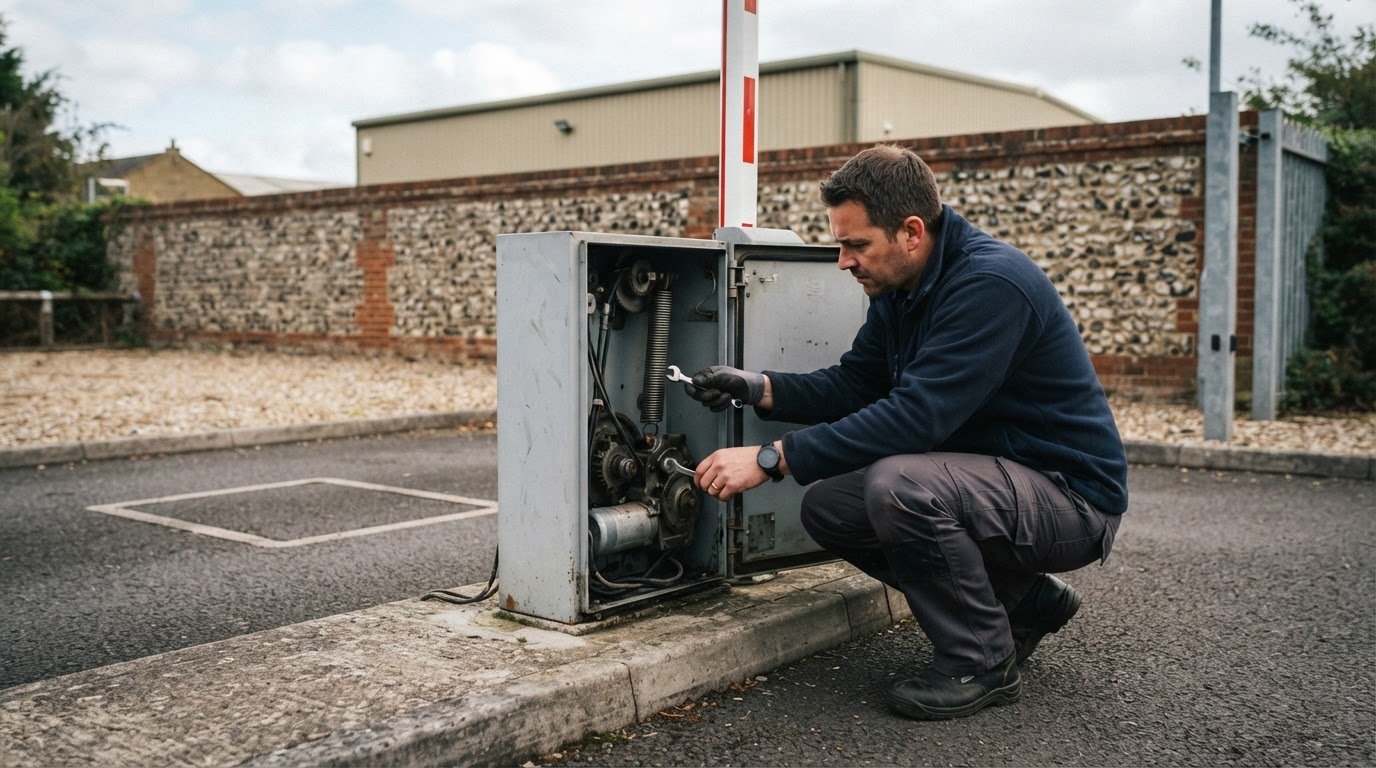
A barrier fault can disrupt site access and leave staff managing entry manually. Automatic barrier repair in Canterbury may involve diagnosing the fault, repairing the equipment and planning maintenance to support reliable operation. Faults that affect access or site security may need prompt attention.
When a barrier stops responding or operates inconsistently, it helps to know what to expect. The right repair depends on the fault, the barrier’s condition and its connection to access control. This guide explains what repairs and maintenance can involve, how to approach faults that affect site operations and what influences the work required.
You’ll also learn how a specialist can support the wider access system, from diagnosing a barrier fault to maintaining security equipment. Whether you’re dealing with an immediate problem or planning routine maintenance, this guide outlines practical next steps for your site.
Key Takeaways
- Understand how fault diagnosis, repair work and planned maintenance can help keep an automatic barrier operating reliably.
- Learn what information helps describe an urgent fault and how its effect on access shapes the response.
- See which factors matter when choosing a barrier repair specialist in Canterbury, including the system’s condition and access-control setup.
- Find out why identifying a barrier’s make, model and symptoms helps technicians assess repair options and ongoing maintenance needs.
Repair and maintenance services in Canterbury
Barrier work can include fault diagnosis, component repairs and planned maintenance. The right approach depends on the equipment’s condition, how it is used and how it connects to site access.
On-Site Repair or Replacement
A technician can assess whether an on-site repair is practical or replacement makes more sense. A damaged cable or control fault, for example, may require different work from a badly worn barrier arm. The assessment should consider the fault, the component’s condition and whether the barrier can operate safely after repair. Replacement may be considered if essential parts are damaged or reliable operation cannot be restored.
Choosing a Canterbury Repair Company
When choosing a company for a Canterbury site, look for experience with automatic barriers and their connected controls. Describe the symptoms, such as intermittent movement or the arm stopping halfway, and explain how the fault affects access. Ask for a clear description of the proposed work. Applicable UK safety requirements depend on the installation and its use, so repairs should preserve safe operation, including effective controls and stopping behaviour.
Common Faults and Warning Signs
Note how the barrier behaves before arranging an assessment. Slow movement, unusual noise, an unresponsive control or stopping in the wrong position can point to a mechanical, electrical or control fault. Record when the problem occurs and whether it is consistent. These details help a technician investigate the issue without assuming a cause.
No single maintenance interval suits every barrier. Plan service timing around the manufacturer’s guidance, how often the equipment operates, site conditions and any changes in performance. A service may include inspection, adjustment and operational checks. Canterbury vehicle servicing, including automatic gearbox servicing, relates to cars, not access barriers, so garage schedules and starting prices do not establish barrier maintenance requirements.
Emergency repair assistance
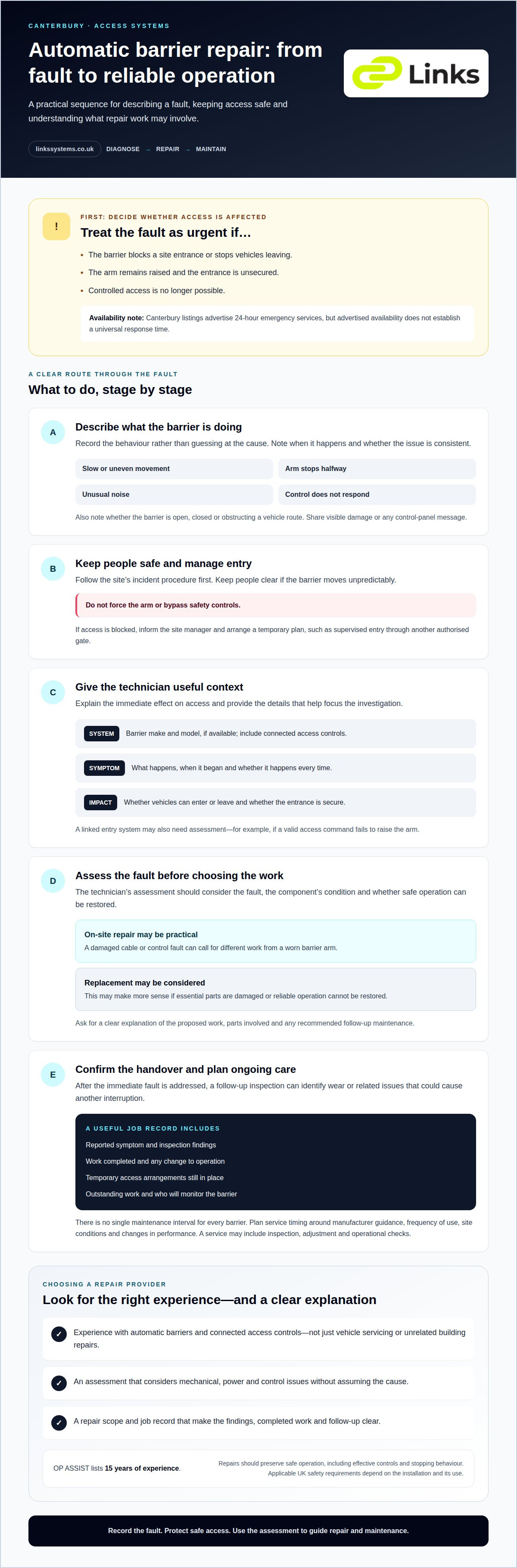
Treat a barrier fault as urgent if it blocks a site entrance, leaves the arm raised or prevents controlled access. Canterbury listings advertise 24-hour emergency services, but advertised availability does not establish a universal response time. Explain the immediate effect clearly, such as vehicles being unable to leave or an entrance remaining unsecured.
Follow the site’s incident procedure first. Keep people clear of a barrier that moves unpredictably, and don’t force the arm or bypass safety controls. If the entrance is blocked, inform the site manager and arrange a temporary access plan, such as supervised entry through another authorised gate. Record when the fault began and any changes in the barrier’s behaviour.
- Describe the symptom: the arm is stuck, moves unevenly or fails to respond.
- Note whether the barrier is open, closed or obstructing a vehicle route.
- Share any visible damage, unusual noise or control-panel message with the repair technician.
These details help a technician assess the fault and plan diagnostic checks. A barrier that stops halfway, for example, may need checks of its movement and controls, while visible impact damage calls for inspection of the affected components. Repair work may restore operation or identify parts for replacement. After the immediate fault is addressed, a follow-up inspection can identify wear or related issues that may cause another interruption.
Keep a record of the fault, the work completed and any changes to the access procedure. This gives the site team a useful reference if the same symptom returns, and helps plan maintenance around the barrier’s actual condition. For ongoing care, barrier system maintenance can form part of a structured approach to keeping access equipment in service.
When comparing repair providers, ask what information they need before attending and how they will communicate findings after inspection. OP ASSIST lists 15 years of experience. A clear handover should also identify any temporary access arrangements still in place, outstanding work and who will monitor the barrier until normal operation is confirmed.
Which companies repair automatic barriers in Canterbury, Kent?
Automatic barrier repairs in Canterbury are carried out by specialist contractors who work with vehicle entrances, access controls and site security equipment. Look for a company whose work covers your barrier and its controls, rather than a general vehicle garage. A fault involving both a barrier arm and a linked entry system, for example, may require both to be assessed.
Use these points to assess a potential repair company:
- Confirm its work includes automatic barriers, rather than vehicle servicing or unrelated building repairs.
- Explain the barrier make and model, if available, and describe the fault and its effect on site access.
- Ask how the proposed assessment will distinguish a mechanical fault from a power or control issue.
- Request a clear explanation of the repair scope, any parts involved and recommended follow-up maintenance.
A contractor experienced with integrated access equipment can consider how the barrier interacts with its control system. If a valid access command fails to raise the arm, for instance, diagnosis may need to cover both the barrier and the signal reaching it. Clear details about the fault help focus the investigation.
Before work begins, agree how the repair will be described and recorded. A useful job record notes the reported symptom, inspection findings, completed work and any changes to operation. If the barrier sometimes stops midway, describe that specific behaviour rather than simply calling it “broken”. This makes the issue clearer and gives the site team a reference if it happens again.
Choosing a company also means considering what your site needs after the immediate fault. A repair may resolve the current problem, while maintenance can address wear found during inspection. At a complex entrance, consider whether the barrier and its access-control connection can be assessed together. This helps define a practical scope, from diagnosis to ongoing equipment care, without assuming every fault requires a new barrier.
Which automatic barrier brands and models can local technicians repair?
The barrier’s brand alone does not determine whether it can be repaired. A technician needs to identify the model, investigate the fault and assess the equipment’s condition. Barriers from the same manufacturer can have different controls or component designs, so diagnosis should focus on the system installed at your site.
A useful assessment follows a clear sequence:
- Identify the manufacturer and model from the equipment label or installation records.
- Describe the fault, such as an arm that stops partway or a control that doesn’t respond.
- Inspect the barrier’s mechanical and electrical components to locate the cause.
- Consider how the barrier connects with access controls and other site equipment.
An arm that fails to move, for example, could indicate a problem with the barrier mechanism, its power supply or the control signal. The visible symptom is a starting point, not proof that a particular component has failed. Inspection helps identify the cause and establish whether repair is suitable.
The model’s age and condition also matter. Wear, previous repairs and the state of its components can affect the work required. If a part needs attention, the assessment should identify what is affected and how it relates to the barrier’s operation. That is more useful than choosing a repair based on brand alone.
For a site with several entrances, record each barrier’s make and model separately. A service record that connects the equipment identity with its symptoms and repair history helps technicians assess repeat faults and plan maintenance. If you’re reviewing an existing installation or need support with a barrier system, discuss your barrier requirements.
Links Integrated Systems: Speed Gates & Barriers
Links Integrated Systems supports commercial sites with Speed Gates & Barriers and related access systems. If a fault affects an entrance or the equipment needs planned attention, the company’s maintenance and commissioning services can support the system throughout its lifecycle.
A barrier may also depend on connected access controls, intercoms or CCTV. Considering these systems together helps show how the entrance works as a whole, rather than treating each component in isolation. The appropriate work depends on the equipment and the site’s requirements.
If your Canterbury site needs barrier repairs, maintenance or support with a wider access system, contact Links Integrated Systems to discuss your requirements.
Plan the next step for your site
Use a barrier fault as an opportunity to review how people and vehicles move through your site. Changes to traffic flow, entry procedures or staff responsibilities may affect how the entrance needs to operate. Defining these requirements helps shape a practical plan.
For automatic barrier repair in Canterbury, consider how the barrier fits into your wider security arrangements. Links Integrated Systems provides Speed Gates & Barriers, Access Control Systems and IP Video Intercom Systems for commercial and professional environments. These systems can support coordinated entry when equipment and user access need to work together.
Before arranging automatic barrier repair in Canterbury, define your site’s priorities, the equipment involved and the outcome you need. This gives the discussion a clear starting point, whether you’re addressing a fault or planning changes to an access system.
Contact Links Integrated Systems to discuss your requirements and take the next step with confidence.
Frequently Asked Questions
Do Canterbury automatic barrier repair firms offer 24/7 emergency call-outs?
Some Canterbury repair listings advertise emergency assistance, but round-the-clock call-outs aren’t universal. Check the stated service hours before relying on emergency attendance, especially if a fault affects access outside normal working hours. Links Integrated Systems provides barrier systems and maintenance, but doesn’t offer 24/7 emergency call-outs. For an urgent fault, follow your site’s access and safety procedures while arranging suitable assistance.
How much does automatic barrier repair cost in Canterbury?
Repair costs depend on the fault and the work required, so there is no single price for every barrier. An assessment may consider the system’s condition, affected components, parts needed and installation complexity. Links Integrated Systems provides a quote based on the individual case. A clear description of the fault helps define the scope of work.
What is the typical response time for barrier repairs in Canterbury?
There is no single response time for every Canterbury barrier repair. Timing depends on factors such as the fault’s effect on site access, the equipment’s location and the work needed to assess it. An entrance that cannot operate presents a different situation from an intermittent fault. When arranging repair assistance, describe the symptoms and the barrier’s current operating state.