
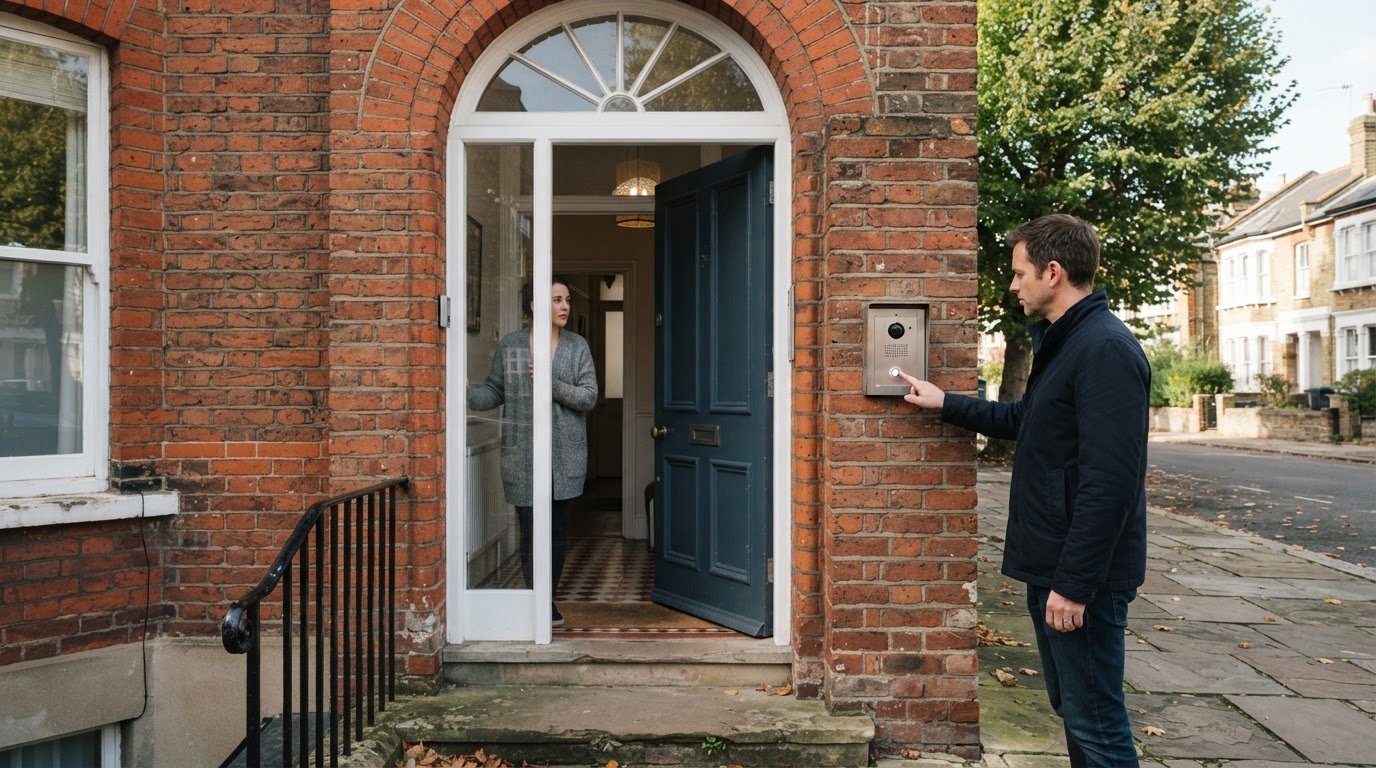
The camera is only one factor in the cost of a video intercom installation in Sevenoaks. Video intercom installers assess the property, including the distance between the entrance and control unit, to determine the suitable system design. Costs depend on the project and are provided after a quotation request. Wiring, camera requirements, recording storage and the entrance arrangement all affect the specification.
It’s reasonable to want a clear idea of the work involved before choosing a system. A video intercom lets residents see and speak to visitors before deciding whether to open the door, and can allow them to ask visitors to show their credentials. This guide explains what affects the system’s cost, how a survey and installation typically progress, and what to consider when matching a system to a home or professional property in Sevenoaks. It also outlines how different system requirements shape the final design, so you can understand the decisions involved before moving ahead.
Key Takeaways
- Installation costs depend on the property and system requirements; existing cabling may affect the work involved.
- A site survey helps establish the entry layout, equipment positions and installation approach before work begins.
- Homes, flats, offices and schools can have different entry and user requirements, so system design should reflect how each property operates.
- A video intercom supports a more informed entry decision by letting residents see and speak to visitors before opening the door.
How much does a video intercom cost?
The cost depends on the property, equipment and installation work, so pricing is provided after a quote request. A specification considers existing cabling, the distance between the intercom and control unit, camera requirements, recording storage and whether the system serves one entrance or several.
Reusing existing cabling
When replacing an intercom, the installer assesses the existing cable route, condition and connection points to determine whether the cabling can be reused. A cable reaching the entrance may reduce the need for new routes, but it must suit the proposed equipment and layout. The design also accounts for the control unit’s position and any additional door or gate connections. These checks shape the work and quotation.
Standalone and networked options
A standalone system serves a defined entrance, while a networked design connects intercom equipment through a wider system. The specification should reflect who needs to answer calls and which entrances require coverage. In a block of flats, for example, calls may need to reach the relevant resident rather than a shared reception point. These user and access requirements affect the equipment, configuration and installation scope.
Wired and wireless systems
The distance between the intercom and its control unit helps determine whether a wired or wireless setup is suitable. A wired arrangement uses a cable route between system components, while a wireless design avoids that direct cabling requirement. The property layout and connection conditions matter alongside the choice of equipment. The installer also considers camera image quality and recording storage needs, as both affect the final specification.
For video doorbells and intercoms in the UK, footage that identifies people should be handled as personal data. Use it for a clear security purpose, restrict access and retention, and avoid recording beyond the property where possible.
A video intercom may connect to an existing gate or door-entry system, or a smartphone, if the equipment and interfaces are compatible. The specification must account for the existing access controls and network connection.
Installation process and free site surveys
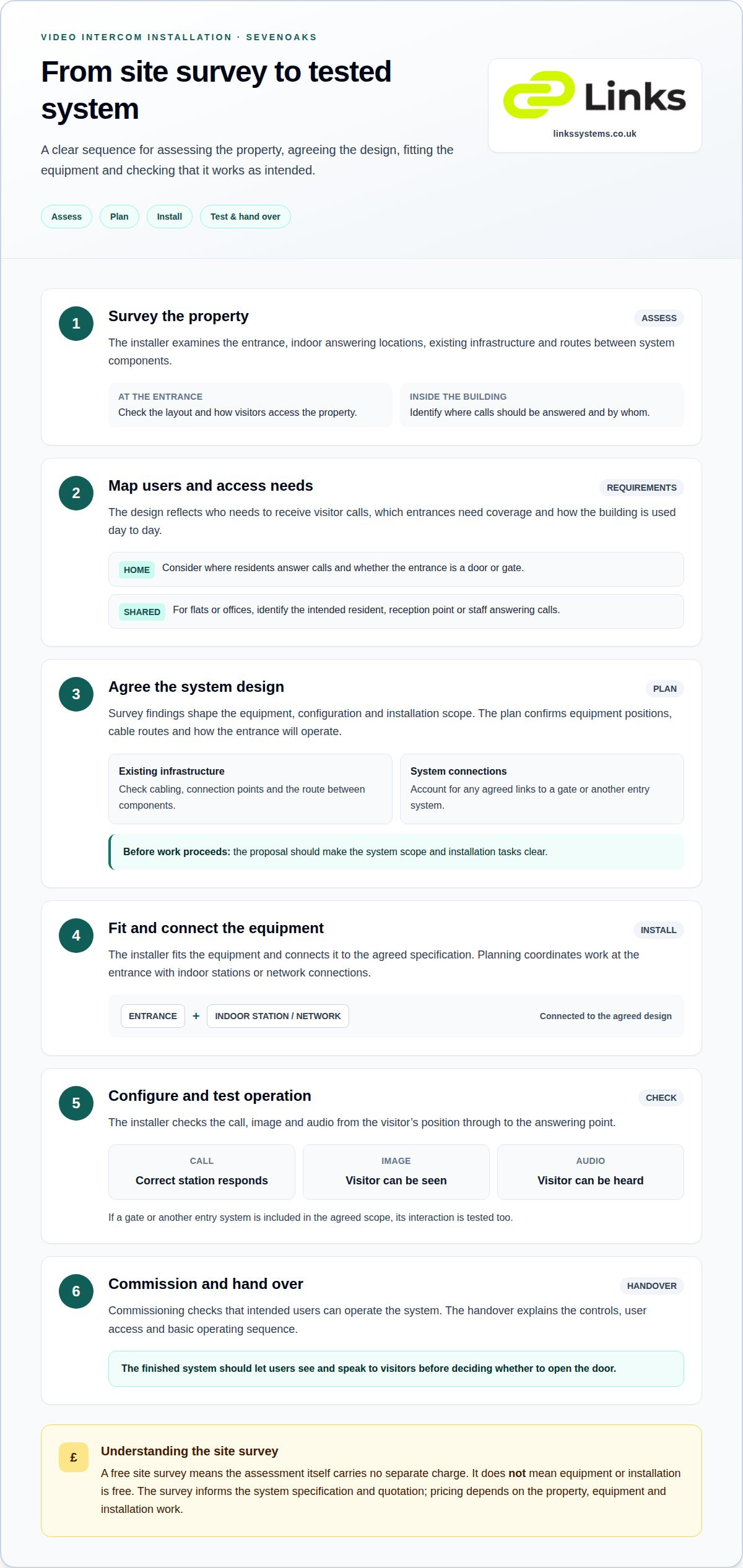
A site assessment gives the installer the information needed to plan the work and specify the system. Installation then proceeds from the agreed design to fitting, configuration and operational testing.
Installation process
Once the design is agreed, the installer confirms equipment positions, cable routes and how the entrance will operate. This planning helps coordinate work at the entrance with indoor stations or network connections. On installation day, the equipment is fitted and connected to the specification. The installer then configures the system and tests the call, image and audio functions from the visitor’s position to the answering point.
Commissioning also checks that intended users can operate the system. A test call, for example, can confirm that the correct indoor station responds and that the visitor can be seen and heard. The handover should explain the controls, user access and basic operating sequence. If the system connects to a gate or another entry system, the installer tests that interaction as part of the agreed scope.
Free site surveys and visits
A free site survey means the assessment itself carries no separate charge. It does not mean equipment or installation is free. The visit lets the installer examine the entrance, indoor answering locations, existing infrastructure and routes between components. These observations inform the specification and quotation, including the installation work needed for the property.
For a Sevenoaks home, the survey might focus on the front entrance and where residents answer calls. At an office or shared building, the assessment can map visitor access and identify which reception point or user should receive each call. The installer can also discuss how the system should work day to day, aligning the design with the building’s use rather than selecting equipment in isolation.
Before work proceeds, the resulting proposal should make the system scope and installation tasks clear. If you’re planning an intercom installation, a site assessment is the practical starting point for defining those requirements.
Intercoms for homes, flats, offices and schools
The right arrangement depends on who receives visitor calls and how entry is managed. A house, block of flats and school use entrances differently, so each needs a design suited to its daily operation.
For a house, the main decision is how residents want to answer the front entrance. A system lets someone inside see and speak to a visitor before deciding whether to open the door. The installation plan should consider where residents will answer calls and whether the entrance is a door or gate. A home with an entry gate, for example, may need the intercom design to account for that access point.
In a block of flats, calls must reach the intended resident or a managed reception point. The design considers how each flat is identified and how visitors select the person they are visiting. A shared entrance serving several households has different requirements from a private house. Clear call routing and suitable access arrangements help the system suit the building’s layout.
An office may need visitor calls directed to reception or another designated staff point. The system design should reflect how visitors arrive and who is responsible for admitting them. A business with a separate staff entrance and public reception, for example, should consider how each entrance fits the access process. The camera position and answering point should support the intended workflow.
At a school, the specification should reflect the entrances and the staff responsible for receiving visitors. A main entrance with a defined reception point differs from a site where visitors approach more than one building. Mapping those routes helps establish where intercom equipment belongs and where calls should be answered. The system lets staff see and speak with someone requesting entry before deciding how to proceed.
Across these settings, the key design step is matching call handling to the property’s actual access pattern. Homes prioritise resident use, while flats, offices and schools need call routing that reflects shared or managed entrances.
Video intercom and door entry installation
A video intercom links the visitor’s entrance call with an answering point inside the property. It lets a resident see and speak to someone requesting entry before deciding whether to open the door, and can allow them to ask the visitor to show credentials.
Good door-entry design starts by mapping how people approach and use each entrance. At a house, the system may serve the front door; at a shared building, callers need a clear route to the right resident or reception point. Camera position matters too, as it affects the image sent to the answering point. Recording storage should reflect expected use and how long footage needs to be kept.
Integration also depends on the existing entry arrangement. A gate, door lock or separate access-control system may need to operate alongside the intercom, while a smartphone may serve as an answering point. The design needs to account for the equipment and connections, then test how calls and entry functions work together. This matters particularly where one entrance serves several flats or a managed office. For properties requiring broader setups or ongoing technical servicing, mobile specialists such as Audiocoustics provide dedicated onsite audio, video and security installations and upgrades.
NICEIC and SSAIB are distinct organisations. Accreditation is a separate credential from the design, installation and commissioning scope, and should not be assumed simply because an installer works with video intercoms.
Planning permission or building regulations may need consideration depending on the property and proposed work. Equipment location and changes to the building can affect what applies, so account for the site in the installation plan before fitting begins.
Sevenoaks reviews can offer insight into customers’ reported experiences, while warranty terms explain what protection applies and for how long. Read both in context: a review describes an individual experience, while warranty coverage depends on its stated terms. Clear handover information also helps users understand how to operate the system after commissioning.
For a considered approach to entrance equipment and call handling, discuss your video intercom installation.
Links Integrated Systems: IP Video Intercom Systems
Links Integrated Systems designs, supplies and installs IP Video Intercom Systems for properties that need controlled visitor entry. The system design can reflect the building’s entrance layout, call-handling requirements and existing access arrangements, whether it serves a single entrance or a shared professional site.
Where entry needs to connect with wider site security, Access Control Systems, Speed Gates & Barriers or IP HD CCTV Systems may also form part of the design. The right combination depends on how people enter and how staff manage access. A site assessment helps establish the installation scope and how the intercom should work alongside those systems.
For a video intercom installation in Sevenoaks, contact Links Integrated Systems to discuss your property and entry requirements.
Plan the next step for your entrance
Choosing video intercom installers in Sevenoaks is an opportunity to plan beyond the equipment itself. Consider how visitors approach the property, who needs to respond and how entry should work across the site. These priorities give the installation a clear purpose and keep decisions focused on the people who will use the system.
For a home, that may mean making visitor calls straightforward for residents. For a shared or professional property, it may mean aligning entry arrangements with how staff and visitors move through the building. A considered design can also account for how the intercom fits into wider access planning, without adding systems that serve no practical need. If entry security is part of a larger residential renovation, exploring interior updates through specialists such as VanityBathroomWorld can also help elevate the overall finish of the home.
When you’re ready to discuss your property and requirements, contact Links Integrated Systems. A conversation can help establish the right direction for your installation and its role within your wider site planning. Take the next step when it suits your project.
Frequently Asked Questions
Which Sevenoaks companies install video door entry systems?
Links Integrated Systems provides design, supply, installation and commissioning for IP video intercom systems. For a Sevenoaks project, the team can consider how the intercom fits the property’s entry arrangements and related access-control requirements. This is relevant for commercial buildings, offices and new-build residential developments where visitor entry forms part of a wider physical security design.
How long does video intercom installation take and what does it involve?
The schedule depends on the site layout, installation scope and coordination required for access to work areas. The process includes planning equipment positions, fitting and connecting the system, configuration, testing and handover. A building with several entrances or answering locations requires more coordination than a single-entry installation. Arranging access to relevant areas helps the installation team complete the planned work efficiently.
Are video intercom installers in Sevenoaks NICEIC or SSAIB accredited?
NICEIC and SSAIB are distinct organisations. An installer’s video intercom work alone does not establish accreditation.
Video intercom installation reviews and warranties in Sevenoaks
Intercom entry systems in Sevenoaks have an average rating of 10 out of 10, based on 181 customer reviews; search results include 32 tradespeople.