
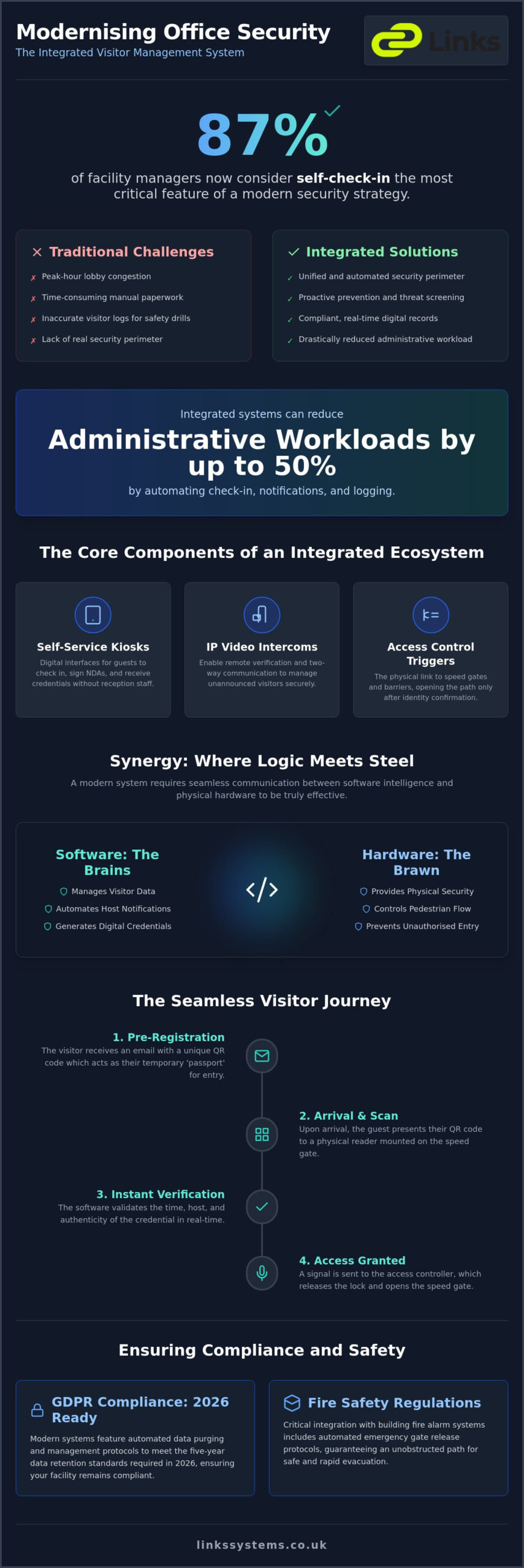
Did you know that 87% of facility managers now consider self-check-in the most critical feature of a modern security strategy? Managing a busy lobby often feels like a losing battle against peak-hour congestion and manual paperwork. You likely recognise the frustration caused by inaccurate visitor logs during fire drills or the difficulty of distinguishing between short-term contractors and VIP guests. Implementing a robust visitor management system for office buildings is no longer just about digital logs; it’s about creating a unified security perimeter.
We’ll demonstrate how to synchronise digital registration software with physical hardware like speed gates and IP intercoms to create a professional, compliant environment. You’ll learn how these integrations can reduce administrative workloads by up to 50% whilst ensuring your data retention meets the five-year standards required in 2026. We’ll examine the technical steps needed to move beyond simple documentation toward a model of proactive prevention using automated host notifications and AI-powered threat screening.
Key Takeaways
- Understand how a modern visitor management system for office buildings transitions from manual logs to a digital ecosystem integrated with physical access control hardware.
- Learn how digital credentials, such as QR codes, interact with speed gates and IP intercoms to provide a seamless, secure entry process for guests and contractors.
- Discover the critical balance between lobby aesthetics and robust security when managing high-traffic volumes in multi-tenanted commercial properties.
- Ensure your facility remains compliant with 2026 GDPR standards and fire safety regulations through automated data purging and emergency gate release protocols.
- Recognise why professional commissioning and methodical maintenance are vital for guaranteeing the long-term reliability of your integrated security infrastructure.
What is a Visitor Management System for Office Buildings?
A Visitor management system represents a comprehensive framework for identifying, tracking, and managing guest access within a commercial facility. In the past, this process relied on paper logbooks and manual badges, which offered little in the way of actual security. Today, the industry has transitioned toward integrated digital ecosystems that provide enhanced security and real-time data. This shift is vital for modern Smart Building environments, where security data informs building performance and occupancy analytics.
Whilst software provides the user interface, the physical entry point remains the most critical component. A visitor management system for office buildings is only as effective as the physical barriers it controls. Without a speed gate or barrier, a digital registration is merely a record of intent rather than a tool for access control. Robust systems ensure that only verified individuals can move past the lobby, creating a secure perimeter that protects both staff and assets.
The Core Components of an Integrated System
A complete system relies on several interconnected layers to function reliably. It’s not just a single piece of software but a combination of hardware and digital interfaces. The primary components include:
- Self-service kiosks: These digital registration interfaces allow guests to check in, sign non-disclosure agreements, and receive credentials without taxing reception staff.
- IP Video Intercoms: These systems allow for remote verification and two-way communication, ensuring that security teams can see and speak with visitors before granting access.
- Access control triggers: These are the technical links that interface with speed gates or barriers, physically opening the path once a visitor’s identity is confirmed.
Software vs. Hardware: Why You Need Both
It’s a common mistake to view visitor management as a purely software-based solution. Software manages the data, handles host notifications, and generates digital credentials like QR codes. However, hardware provides the actual physical security and pedestrian flow control. You need both to create a functional system. Software handles the logic; hardware provides the physical resistance needed to prevent unauthorised tailgating or entry into sensitive zones. Seamless communication between these two layers is the hallmark of a professionally commissioned system, ensuring that data and physical movement are always in sync.
The Synergy Between Visitor Software and Access Control Hardware
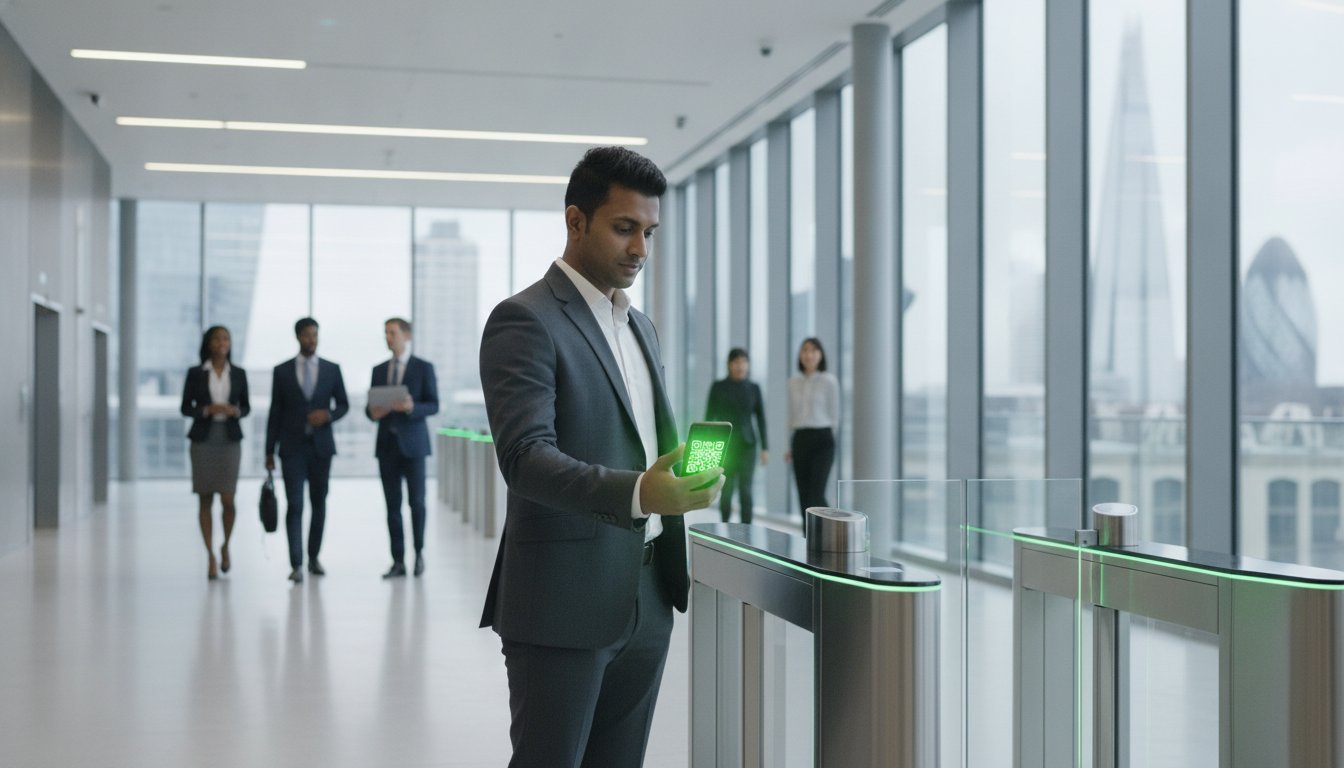
Many digital platforms focus heavily on the user interface, yet the true value of a security strategy lies in how that data triggers physical movement. A visitor management system for office buildings must bridge the gap between a digital check-in and a physical entry. When a visitor receives a QR code via email, that code becomes their temporary passport. Physical readers mounted on speed gates or barriers scan this credential. If the software validates the time and host, it sends an immediate signal to the access control controller to release the lock or open the gate. It’s where logic meets steel.
Linking these digital logs with IP HD CCTV systems provides a comprehensive visual audit trail. If a security alert occurs, you can instantly pull the footage associated with that specific visitor’s entry time. This integration supports Safer, Smarter Operations by ensuring every digital record has a corresponding visual confirmation. Real-time monitoring allows security teams to spot anomalies, such as tailgating, the moment they happen.
IP Video Intercom Integration
Unannounced guests or delivery drivers don’t always arrive with a pre-registered code. IP Video Intercoms are essential for managing these exceptions. They allow receptionists to verify the individual visually before manually overriding the barrier. In multi-tenant buildings, these systems route calls directly to the specific office being visited. This ensures the correct host takes responsibility for the guest. It also acts as a vital secondary verification layer for high-security zones where a simple QR code might not be sufficient for entry.
Automating Pedestrian Flow with Speed Gates
High-traffic lobbies often suffer from congestion during morning peaks. By Managing Pedestrian Flow in London Office Buildings, you can separate permanent staff from guests. Speed gates can be programmed to respond differently to various credentials. Staff might use RFID cards for instant access, whilst visitors use QR codes that only work for a single entry and exit. This automation keeps the lobby moving whilst maintaining a secure perimeter. Ensuring these complex integrations work reliably requires expert commissioning. You might consider a professional review of your current Access Control Systems to identify potential integration gaps.
Evaluating Visitor Management Options for High-Traffic Lobbies
Selecting the right visitor management system for office buildings involves more than just picking a software interface. It requires a thorough assessment of your facility’s specific traffic patterns and occupancy levels. A small boutique office may focus on a personalised guest experience, but a multi-tenanted skyscraper must prioritise raw throughput and hardware durability. The volume of footfall during peak morning hours dictates the necessary speed and reliability of the physical barriers you install. If the hardware can’t keep up, security is often compromised to ease the flow.
A high-quality visitor management system for office buildings must offer seamless integration with existing Building Management Systems (BMS). This connectivity allows security data to inform other building functions, such as adjusting climate control based on real-time occupancy. Scalability is another vital factor; your chosen infrastructure should accommodate future growth in tenant numbers without requiring a full system replacement. Balancing a professional first impression with robust security ensures the lobby remains welcoming yet impenetrable to unauthorised individuals. It’s about creating a frictionless journey from the street to the desk.
Criteria for London Corporate Environments
London’s commercial centres demand hardware that can handle the high-speed requirements of peak-hour commutes. When thousands of employees and guests arrive simultaneously, even a minor delay at a speed gate can lead to lobby congestion. You should choose speed gate designs that match modern lobby interiors whilst maintaining high-security standards. Managing multiple entry points across a large site requires a centralised system that synchronises data instantly. This prevents a single-use credential from being used at more than one entry point.
Security Screening and Compliance
Modern systems contribute to a 40-50% reduction in front-desk administrative workload by automating essential compliance tasks. During the registration process, visitors can be required to complete automated NDA signings or safety briefings before they are granted access. This proactive screening includes real-time blacklisting, where the system alerts security teams immediately if a restricted individual attempts to check in. Maintaining a clear, digital audit trail is essential for insurance purposes and security audits, providing a verifiable record of every person on the premises.
Compliance, GDPR, and Fire Safety Standards
Implementing a visitor management system for office buildings requires a rigorous approach to both digital data protection and physical safety protocols. In the current regulatory environment, compliance isn’t merely a software feature; it’s a technical requirement that must be embedded into your hardware layers. By 2026, the intersection of UK GDPR and building safety regulations has become more complex, requiring systems that are both resilient and transparent in how they handle sensitive information.
A professionally installed visitor management system for office buildings ensures that your facility meets the latest Secured by Design standards. This UK police initiative focuses on “designing out crime” through physical security and effective technology integration. When your visitor software communicates correctly with your access control hardware, you create a system that is both secure and fully auditable for insurance and regulatory purposes.
Data Privacy in the Modern Workplace
Managing guest information requires a delicate balance between high-level security and individual privacy rights. Whilst UK GDPR focuses on storage limitation, certain industries now face five-year data retention mandates to satisfy ITAR, GMP, or HIPAA standards. Modern systems automate this process by purging or archiving records once they reach a specific age, ensuring you don’t hold data longer than necessary. Best practices involve encrypting visitor data at the point of entry and providing clear privacy notices on registration kiosks, ensuring guests understand how their movement is tracked and stored.
Evacuation Readiness and Physical Safety
During a fire emergency, a digital log is only useful if it’s instantly accessible and the path to safety is clear. Integrated systems generate real-time “on-site” reports that fire wardens can access from mobile devices at muster points, providing an accurate head-count of guests and contractors. Beyond data, the physical hardware must be configured for emergency release. In the UK, fire regulations typically require speed gates to be “fail-safe”, meaning they automatically retract or unlock when the fire alarm is triggered or power is lost. This is a critical distinction from “fail-secure” settings used for high-security internal doors, which remain locked during power failures.
Achieving this level of reliability depends on meticulous planning and professional commissioning. A system that fails to release during a drill or an actual emergency represents a significant liability. For long-term peace of mind and to ensure your hardware remains compliant with evolving safety codes, regular System Maintenance & Commissioning is essential to verify that all emergency overrides and data purging protocols remain fully operational.
Professional Installation and Maintenance: The Links Approach
A sophisticated visitor management system for office buildings requires more than just a software subscription. It demands a precise integration of physical hardware and digital logic. With 40 years of industry experience, Links Integrated Systems understands that the reliability of a security perimeter depends on the quality of the initial installation. We don’t view these systems as “plug and play” solutions. Instead, we treat them as critical infrastructure that must be methodically planned and executed to ensure long-term stability.
Our methodology follows a logical progression designed to eliminate technical gaps. We begin with a comprehensive site survey to identify the specific architectural requirements of your lobby. This is followed by a tailored design phase, professional installation, and a rigorous commissioning process. We serve clients across London, Kent, Surrey, and the Home Counties, providing a steady, experienced hand for complex technical requirements. Our goal is to move your facility from initial consultation to final sign-off with total transparency and precision.
The Importance of System Commissioning
Commissioning is the vital phase where the visitor software and the physical access control hardware are synchronised. It involves fine-tuning the interface between registration kiosks and the controllers that operate your speed gates. During this stage, we perform extensive testing to ensure that physical barriers respond instantly to valid credentials whilst maintaining strict safety standards. We also provide thorough training for your staff, ensuring they can manage the integrated platform effectively and respond to any alerts with confidence. This transition ensures that your security team is fully equipped to handle high-traffic volumes from day one.
Scheduled Maintenance for Long-Term Reliability
Preventative maintenance is essential for ensuring your security infrastructure never fails during critical business hours. In high-traffic commercial environments, the mechanical components of speed gates and the electronic sensors in IP intercoms face constant use. Regular inspections allow us to identify and resolve wear before it leads to system downtime. Our maintenance programmes include:
- Regular software and firmware updates to maintain 2026 compliance standards.
- Physical hardware inspections to ensure the mechanical integrity of barriers and gates.
- Testing of emergency release mechanisms to guarantee fire safety readiness.
- Calibration of IP HD CCTV and intercom links for continued visual clarity.
Maintaining a secure, professional environment requires a partner committed to the full lifecycle of your project. If you are ready to upgrade your facility’s security and efficiency, contact Links Integrated Systems for a professional security consultation. Our team is dedicated to providing the reliable, high-quality solutions that modern office buildings demand.
Securing Your Lobby for the Future
A modern visitor management system for office buildings is an essential investment in both security and operational efficiency. By synchronising digital credentials with robust physical hardware like speed gates and IP intercoms, you create a frictionless experience for guests whilst maintaining a secure perimeter. These systems ensure your facility remains compliant with the latest fire safety and data protection standards, providing the precise audit trails necessary for modern regulatory requirements.
Links Integrated Systems brings 40 years of expertise in physical security hardware to every project. We are specialist installers for London and the South East; we deliver bespoke integration for high-end commercial lobbies that require precision and reliability. Our methodical approach ensures your system is professionally commissioned and maintained for long-term performance. Enquire about our Integrated Visitor Management Solutions today to transform your building’s entrance into a secure, professional, and welcoming environment. We look forward to helping you achieve a safer, smarter workplace.
Frequently Asked Questions
How does a visitor management system integrate with existing speed gates?
Integration occurs via a technical signal sent from the visitor management software to the physical controller of the speed gate. Once a visitor scans their validated QR code or RFID badge at the reader, the system triggers the barrier to retract or swing open. This ensures that the digital check-in process directly governs physical access, creating a secure and automated entry point that doesn’t rely on manual intervention from reception staff.
Is a digital visitor log compliant with UK GDPR regulations?
A digital visitor management system for office buildings is fully compliant with UK GDPR provided it’s configured with automated data retention and purging protocols. Unlike paper logs, which are often visible to other guests, digital systems encrypt personal data and allow you to set specific expiration dates for records. This ensures you only hold visitor information for as long as necessary, meeting the privacy and security standards required in 2026.
What happens to the visitor management system during a fire alarm?
The system is designed to interface with the building’s fire alarm panel to trigger a fail-safe release of all integrated speed gates and barriers. This ensures all physical obstacles are cleared immediately to allow for a swift evacuation. Simultaneously, the software generates a real-time “on-site” report that fire wardens can access from mobile devices at muster points to verify that every guest and contractor is accounted for.
Can visitor management systems handle contractor inductions and safety briefings?
Yes, these systems can automate the induction process by requiring contractors to complete safety briefings or sign risk assessments during their digital check-in. The system won’t issue a physical or digital access credential until the induction is successfully finished. This provides facility managers with a verifiable audit trail, ensuring that everyone working on the premises has acknowledged the necessary health and safety protocols.
Do I need a receptionist if I have a self-service visitor kiosk?
You don’t strictly need a receptionist if you utilise a self-service kiosk, as the system can handle registration, badge printing, and host notifications automatically. However, many London corporate offices adopt a hybrid model where kiosks manage high-volume traffic whilst staff focus on VIP guest services. This approach reduces the administrative burden on front-of-house teams without losing the professional touch that a human presence provides in high-end lobbies.
How much does it cost to install a visitor management system in London?
The investment required for a visitor management system for office buildings depends on the number of entry points and the specific hardware chosen, such as speed gates or IP intercoms. Costs are also influenced by the complexity of the integration with your existing access control infrastructure. We recommend a professional site survey to assess your building’s layout and traffic patterns, allowing for a specification that matches your security needs and throughput requirements.
Can the system manage multiple entry points across different floors?
Centralised management systems are built to synchronise data across multiple entry points and floors in real-time. By utilising an IP-based network, the system ensures that a visitor’s credential is only valid at the specific gates they are authorised to use. This allows security managers to monitor and control guest movement throughout a multi-tenanted building from a single, unified interface, regardless of where the entry points are located.
What are the benefits of IP-based intercoms for visitor management?
IP-based intercoms provide high-definition video and audio for remote verification, which is vital for managing unannounced visitors or deliveries. These systems can route calls directly to a host’s desk phone or mobile device, ensuring that guests are announced quickly even if the host is away from their desk. They also integrate with HD CCTV systems to provide a visual audit trail, enhancing the overall security and professional appearance of the lobby.