
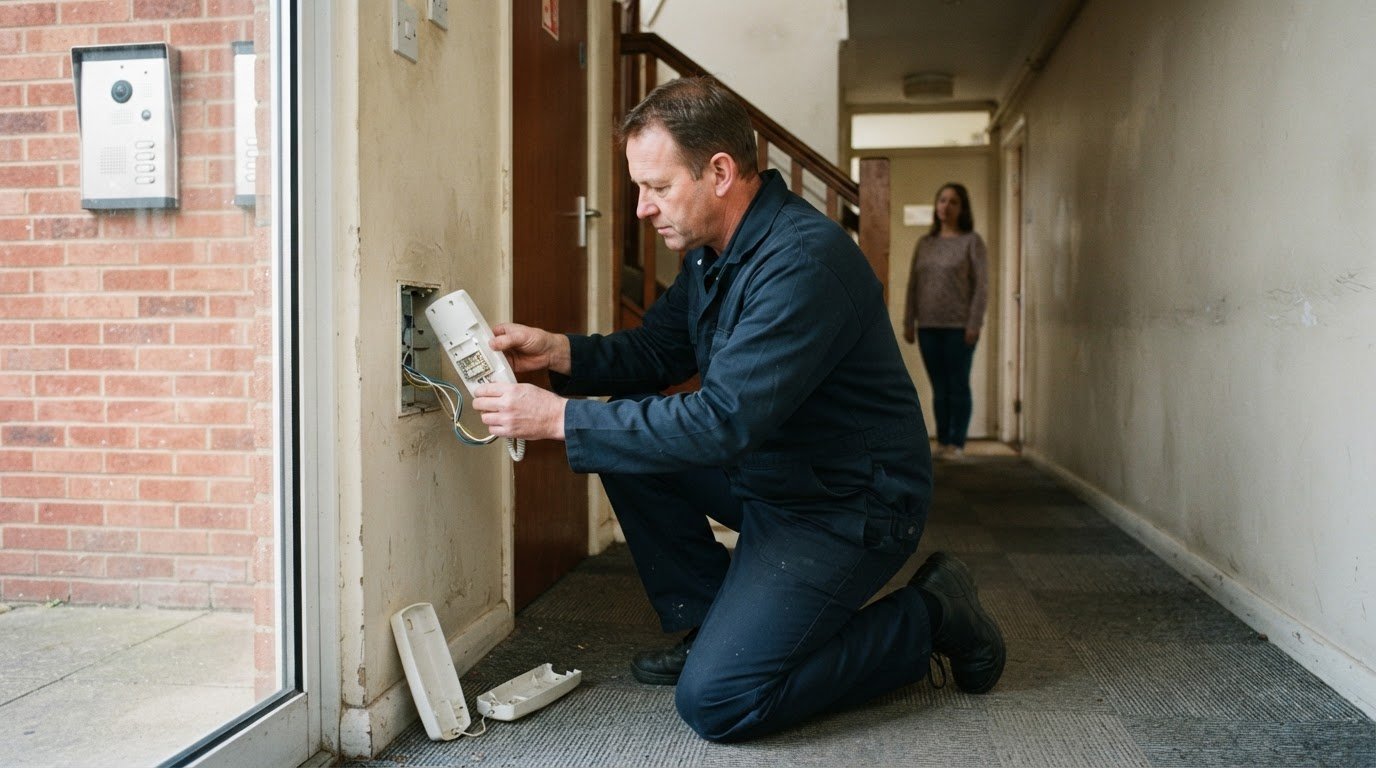
A failed handset doesn’t automatically mean the whole door entry system needs replacing. Video intercom repair in Stevenage can often restore an existing system, including one installed by another company. The repair may involve the entrance panel, handset, controller, cabling or power supply, depending on what’s causing the fault.
It’s understandable to want a clear answer before deciding whether to repair or replace equipment, particularly when residents, staff or visitors rely on the entrance. A professional assessment can identify affected components and whether the existing system is suitable for repair. This guide explains what video intercom repair in Stevenage may involve, how faults are assessed and what can influence the work. It also covers signs of a component fault versus a wider system issue, so you can understand the likely next steps.
Key Takeaways
- A faulty communal door-entry system may be repairable, even if another company installed it; diagnosis helps distinguish a local component fault from a wider system issue.
- Panel, handset and power-supply replacement depends on the fault and the equipment’s compatibility with the existing system.
- Assessment can include controllers, cabling and connections, as existing wiring may sometimes be suitable for reuse when upgrading from audio to video.
- Routine maintenance can help identify developing intercom faults, while a clear record of the symptoms and affected entrances helps focus the repair assessment.
Can you repair a faulty door entry system, including one you did not install?
Yes. Fault diagnosis can cover communal panels, flat handsets, controllers, cabling and power supplies. The affected entrance and equipment help identify the repair required.
Communal Entry System Faults
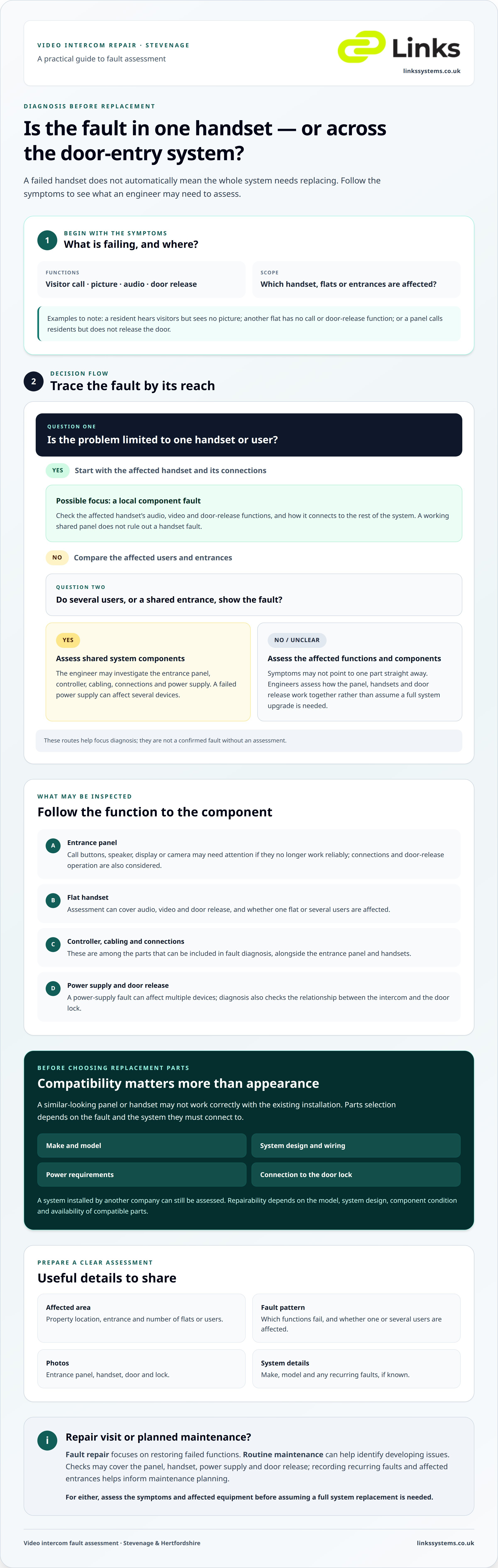
In flats and housing schemes, a fault may affect one handset or the shared entrance panel. For example, a resident may hear visitors but see no picture, while another flat may have no call or door-release function. Engineers assess symptoms across affected users and components to distinguish an individual fault from a shared system failure. This helps focus the repair on the panel, handset, controller or connection causing the problem.
Repairs to Existing Installations
A system installed by another company can still be assessed for repair. Its make, model, layout and component condition all inform diagnosis and parts selection. Engineers can examine how the entrance panel, handsets and door release work together instead of treating each device as a separate fault. In a communal property, details about which flats or entrances are affected help define the scope of the issue.
Local engineers can assess systems from different manufacturers; repairability depends on the model, system design and compatible parts. The brand and model details help identify suitable diagnostics and components.
Before hiring an intercom repair engineer, look for relevant training, practical experience with communal door-entry systems, credentials and customer reviews. Ask for evidence of appropriate insurance, including public liability cover, and confirm that the engineer’s experience matches the system’s requirements.
Photos can help prepare a repair quote. Provide images of the entrance panel, a handset, the door and lock, and details of the number of flats or users. These give engineers an initial view of the installation and equipment involved.
When CCTV is integrated with an intercom, visitors can be seen during calls before the entrance is released. ANPR may also be part of an access setup, but plate reading can be affected by vehicle speed, lane position, camera angle, lighting, weather and obstructions.
Replacement panels, handsets and power supplies
Replacing a component starts with identifying the fault and how it relates to the rest of the system. The panel, handset and power supply must be compatible with the existing installation.
Panel and Power Supply Replacements
An entrance panel may need replacement if its call buttons, speaker, display or camera no longer work reliably. Engineers assess the panel’s condition and connections, then consider how it interfaces with resident handsets and door release. A failed power supply can affect several devices, so diagnosis should establish whether the fault is local or system-wide. Matching replacement components to the installation helps maintain its operation.
Handset Replacement Options
A handset may be faulty even when the shared entrance panel still works. The engineer considers the existing system and the handset’s functions, including audio, video and door release. In a residential block, the fault may affect one flat or several users. Identifying the affected handsets helps determine whether replacement is local or another component needs attention.
Fobs need controlled handling when residents or staff change. During replacement, an engineer can assess the access-control arrangement and manage affected fob credentials as part of the system work. The property representative should identify which fobs need replacing or removing, so the engineer can distinguish them from active credentials. This keeps the task focused on the correct entrance and access system.
Before selecting replacement parts, engineers consider the make and model, wiring, power requirements and connection to the door lock. A panel or handset that looks similar may not function correctly if it is incompatible with the system. The same applies when a camera or visitor-call function is part of the installation.
For an installation review, IP video intercom systems can be assessed alongside existing access-control equipment. This helps establish whether targeted replacements suit the property or whether the wider system needs attention.
Security repair coverage in Stevenage and Hertfordshire
Video door-entry faults in Stevenage and Hertfordshire can affect one entrance or a wider property system. The repair scope depends on the equipment, symptoms and access required.
Stevenage and Regional Coverage
In Stevenage, faults can occur at a commercial entrance, apartment block or housing scheme. Across Hertfordshire, assessment also considers which doors, users and functions are affected. For example, a panel may call residents correctly but fail to release the door. Recording the affected entrance and function helps engineers define the work and limit disruption to other users.
Maintenance and Call-Out Cover
Planned maintenance and fault repairs serve different needs. Routine maintenance can identify developing issues before they become more serious, while a repair visit focuses on restoring failed functions. Checks may cover the panel, handset, power supply and door release. For a managed property, recording recurring faults and affected entrances helps inform maintenance planning and track the system’s condition over time.
Local Video Intercom Repairs
Video intercom repair services in Stevenage can assess faults affecting visitor calls, camera images, audio or door release. Repair companies serving the area can investigate the relevant components and explain the required work. The correct approach depends on whether symptoms affect one handset, a shared panel or several entrances, rather than assuming every fault needs a full system upgrade.
For an efficient assessment, provide the property location, system type and a concise description of the fault. Note whether the issue is constant or intermittent, which entrances are affected, and whether visitors can still call or release the door. A clear record helps engineers prepare for the visit and focus on the functions requiring attention.
Maintenance and commissioning can support reliable operation after a repair or system change. For example, a completed upgrade may require checks that calls, camera images and door release work together across the relevant entrances. The property layout, equipment condition and access arrangements shape the work and help minimise disruption during assessment and repair.
Panels, controllers, cabling and power supplies
A door-entry fault may originate in the entrance panel, controller, wiring or power supply. Engineers assess how each component affects access control and normal operation.
The panel handles visitor calls and may provide audio and video. A fault can affect camera images, sound or door release. Engineers assess the panel alongside connected equipment, since replacing one component without considering the system as a whole may leave the original fault unresolved. For a property in Stevenage or St Albans, the system layout and symptoms guide the investigation.
The controller coordinates signals between devices, including calls and release commands. If several handsets show similar problems, engineers can assess the controller and shared connections as well as the individual units. This helps establish whether the issue affects one device or the wider installation.
Cabling carries signals and, depending on the system, power between components. Engineers inspect its condition and connections when calls, images or release functions fail. Existing wiring may sometimes be reused when upgrading an audio intercom to video in Stevenage. Its suitability depends on the system and installation, so an assessment should consider the cable route and connected equipment.
A power-supply fault can interrupt several components. Engineers assess the supply as part of the system rather than assuming a blank panel or unresponsive handset has failed independently. They also consider how replacement parts will integrate with the existing panel, controller and handsets.
After repair or component replacement, checks can confirm that audio and video calls, access control and door release work together. This supports reliable operation and convenience for residents and visitors without treating every fault as a reason to replace the whole system. The appropriate work depends on the affected components and their compatibility.
For an assessment of these components, arrange an intercom system review.
Links Integrated Systems: IP Video Intercom Systems
Links Integrated Systems supports property teams assessing faults or planning changes to existing door-entry installations. Its IP Video Intercom Systems provide a video-entry solution, while system maintenance and commissioning support ongoing operation.
Turn to Links Integrated Systems when recurring faults, ageing equipment or an access-control change prompts a wider review. The assessment considers how the intercom, entrance and associated access-control equipment work together, helping identify whether repair, maintenance or a system change best meets the property’s needs.
To discuss your door-entry requirements, contact Links Integrated Systems.
Plan the next step for your entrance system
Use a repair assessment to consider how the entrance should serve the property over time. For a Stevenage site, that may mean prioritising dependable day-to-day access while planning future changes around residents, staff and visitors. The right approach depends on the building’s access requirements and whether its existing arrangement still meets them.
Links Integrated Systems provides IP Video Intercom Systems and Access Control Systems, as well as Speed Gates & Barriers for properties with broader entrance-management needs. For video intercom repair in Stevenage, discuss the fault and the property’s requirements with the team to identify a practical way forward, without assuming every system needs the same solution.
Take the next step when you’re ready: Contact Links Integrated Systems to discuss your door-entry requirements and move towards a considered solution.
Frequently Asked Questions
My intercom isn’t working. Can you help?
Yes. An engineer can assess a faulty door-entry system and identify whether repair or replacement is appropriate. Describe what happens when someone calls, whether the fault affects one resident or several, and whether the door release still works. For a managed building, arranging access to affected communal areas helps the engineer assess the installation and explain the next steps.
What is the video intercom repair call-out fee in Stevenage?
The call-out fee depends on the fault and work required, with pricing provided after a quote request. The assessment considers the affected equipment, system condition and repair needed. For example, a handset fault and a fault affecting a shared entrance panel may involve different work. Share the property and fault details when requesting a quote.
What is the average cost to repair a video intercom in the UK?
There isn’t one meaningful average cost for every video intercom repair. The price depends on the system and components involved, and is provided after a quote request. Factors include whether the fault concerns audio or video, how many handsets or screens are involved, the cable run and the door lock. These details shape the work required.
What are common video intercom faults and their causes?
Common symptoms include no call tone, unclear or absent video, poor audio, or a door release that doesn’t respond. A fault may originate in a handset, entrance panel, power supply, controller or connection. Intermittent performance can make diagnosis less direct. Note when the problem occurs and which users experience it to give the engineer useful context.
How does an engineer troubleshoot a video intercom before recommending a repair?
An engineer starts by recording the reported symptoms and identifying which entrances and users are affected. They then assess the relevant equipment and connections, testing functions such as the visitor call, audio, image and release command. Comparing results across affected devices helps locate the fault. The engineer can then explain repair or replacement options based on the findings.
How quickly can an intercom engineer attend in Stevenage?
Attendance timing is arranged around the fault details, site access and property location. A failed communal entrance may require different coordination from a handset issue inside one flat. When describing the fault, include whether the door can still be released, which entrance is affected and any access arrangements. This helps plan an appropriate visit without assuming a fixed response time.