
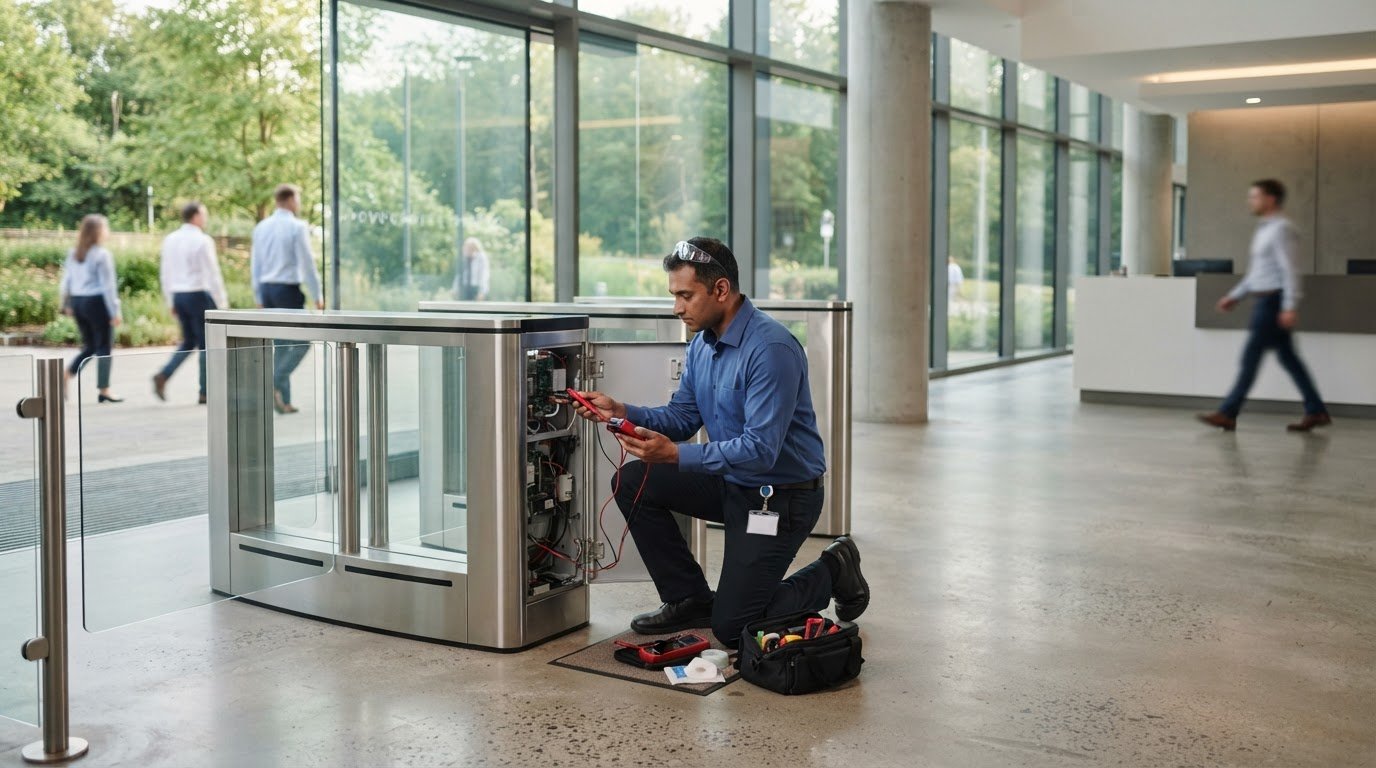
Plan turnstile maintenance services in Surrey around 1-2 visits a year, with additional visits where equipment is in heavy use. Regular servicing should cover inspections, cleaning, lubrication, mechanical and electrical checks, software updates and compatibility with access control systems.
A reliable turnstile does more than control an entrance. It helps manage pedestrian flow and supports the wider security system. Dust, wear, loose connections or poor adjustment can affect its operation, making planned maintenance an important part of managing a site.
This guide explains how often to arrange servicing, what checks suit different turnstile types and what a maintenance agreement can cover. It also outlines the factors that influence the right service plan, helping facilities and site managers make informed decisions about ongoing upkeep.
Key Takeaways
- Plan for 1-2 maintenance visits a year, with extra attention where turnstiles experience heavy use.
- Match inspection and cleaning checks to the gate type, including mechanical components, electrical connections and access-control integration.
- Use BS EN 12453, identified by the British Standards Institution as the UK gate automation safety standard, as a relevant reference when considering gate safety.
- Compare servicing agreements by the preventive visits and maintenance work they cover, then shape the plan around your site’s traffic and equipment.
Turnstile installation and maintenance
Turnstile installation starts with the site layout, pedestrian flow and access-control requirements. Maintenance checks the equipment, power supply and connection to the wider system.
Turnstile installation and repair
When planning an installation, consider the turnstile type, mounting position, power supply and access-control connection. Speed gates and barriers must also suit the entrance layout and expected pedestrian flow. For repairs, inspect the pedestal enclosure, mounting hardware and power supply, then identify loose or damaged components. Record the fault and work completed to help facilities teams spot recurring issues.
Maintenance checks can include removing dust and debris from the pedestal, inspecting circuit boards and power supplies for loose connections, and testing and recording supply voltage. Check belt tension or gear meshing, lubricate moving parts and apply relevant software updates. After servicing, confirm that the turnstile works correctly with its access-control system.
Safety standards and maintenance risks
The British Standards Institution identifies BS EN 12453 as the UK gate automation safety standard. For a turnstile installation or repair, assess the equipment’s movement, controls and site layout against the relevant safety requirements. The standard is a useful reference for automated gate safety, but the system and its application must also be considered in context.
Without regular maintenance, loose fixings, worn parts or electrical faults can go unnoticed. These problems may affect gate movement, stop the equipment or disrupt its response to access-control inputs. Check pedestal fixings, power connections and reader operation, and record faults and repairs. If a turnstile cannot control entry reliably, it can disrupt access and cause confusion at a busy entrance.
Installation costs depend on the turnstile type, access-control integration and site requirements. The price depends on the case and is given after a quote request; the equipment selected, entrance layout, power arrangements and integration work all shape the scope. A site assessment helps define these requirements before installation, including where barriers or speed gates must connect with existing access control.
How Often Do My Turnstiles Need To Be Serviced?
Schedule routine servicing according to site use and equipment condition. Regular checks can identify wear before it affects turnstile operation or access-control integration.
Specialist security-system and access-control engineers provide turnstile maintenance services in Surrey. Servicing can include scheduled inspections, fault diagnosis, repairs and maintenance records. Choose a scope that reflects the turnstile’s operating demands, control equipment and site access arrangements.
Turnstiles are commonly recommended for 1-2 maintenance visits a year. Arrange additional visits where heavy use places greater demands on moving parts and controls. A busy entrance, such as a staff centre with repeated shift changes, may need closer monitoring than a lightly used gate. Review usage, recurring faults and previous service findings when setting the schedule.
A maintenance visit can follow a clear sequence: inspect the gate and enclosure, clean accessible components, assess mechanical movement, and test power and control connections. Operate the turnstile through its access-control sequence to confirm credentials trigger the expected response. Record faults, adjustments and replaced parts so future engineers can track changes.
Surrey providers may offer emergency repair arrangements, but response times depend on the terms agreed for the service. A maintenance agreement should explain how faults are reported, how priority is assigned and what response window applies. Don’t assume emergency attendance or a fixed response time without those terms.
For UK-wide engineering support, a provider’s service structure should make it clear how planned visits and repair requests are managed across different sites. Keep equipment details, access instructions and fault records together for each location. This gives engineers a practical starting point, whether a turnstile is automatic or part of a larger access-control system. Review the schedule after equipment changes, site alterations or repeated operational faults.
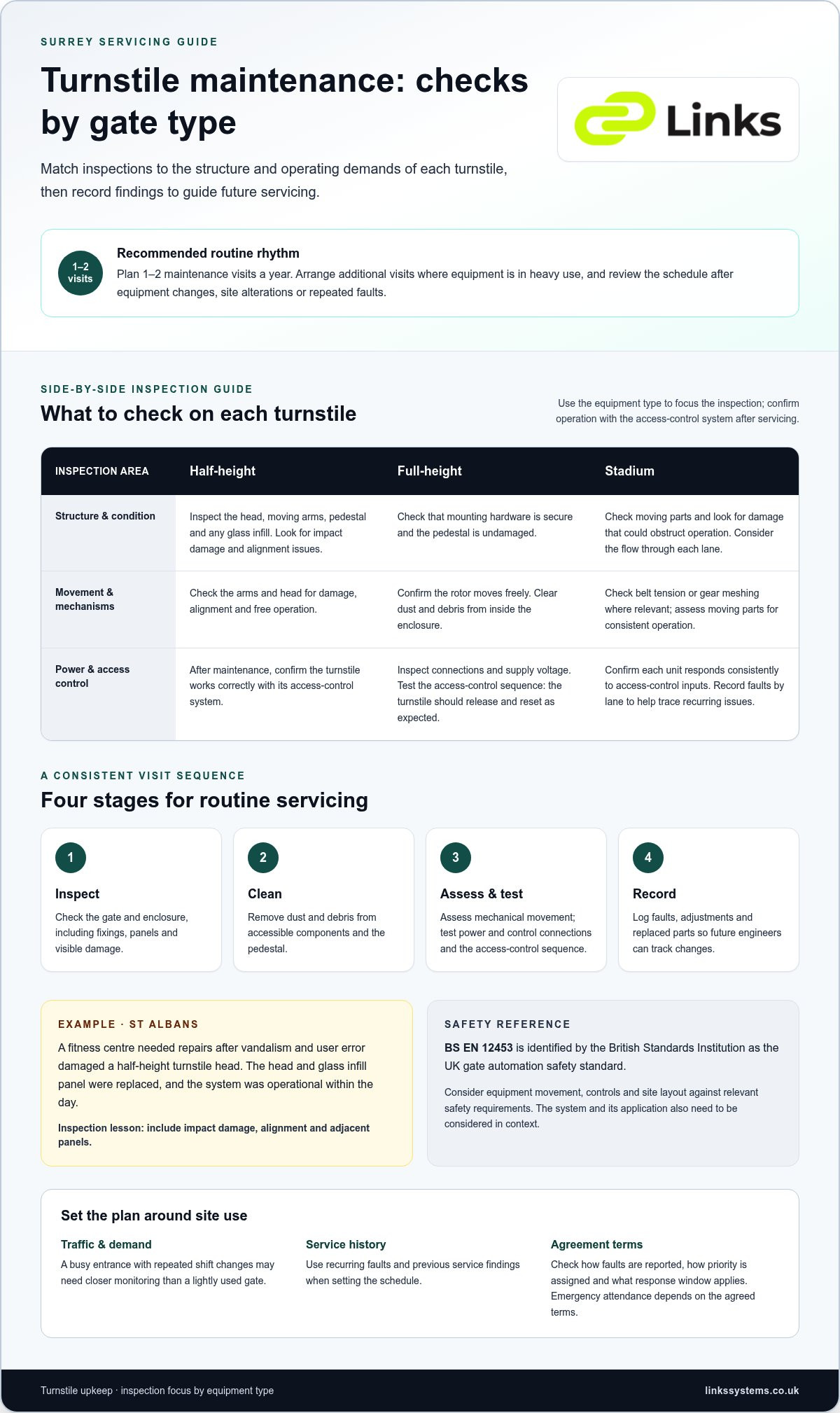
Maintenance for half-height, full-height and stadium turnstiles
Turnstile design affects how equipment can be maintained and which checks matter most. Half-height models, full-height units and stadium turnstiles each need inspections suited to their structure, use and setting.
For a half-height turnstile, inspect the head, moving arms, pedestal and any glass infill. A fitness centre in St Albans needed repairs after vandalism and user error damaged its turnstile head. The head and glass infill panel were replaced, and the system was operational within the day. This example shows why inspections should include impact damage, alignment and the condition of adjacent panels.
Full-height turnstiles have enclosed mechanisms and taller rotating barriers. Check that the rotor moves freely, mounting hardware is secure and the pedestal is undamaged. Clear dust and debris from inside the enclosure, then inspect connections and supply voltage. After maintenance, test the access-control sequence to confirm the turnstile releases and resets as expected.
Stadium turnstiles serve entrances where queues can build before or after an event. Maintenance should account for the flow through each lane, the condition of moving parts and any damage that could obstruct operation. Check belt tension or gear meshing where relevant, and confirm each unit responds consistently to access-control inputs. For sports grounds and venues balancing spectator access with pitch or arena maintenance, specialists such as amdsportservices.co.uk provide wider sports facility and equipment inspections. Record faults by lane to help trace recurring problems to a particular entrance.
A practical inspection sequence helps teams compare different turnstile types:
- Check the pedestal, panels, rotor and mounting hardware for damage or movement.
- Remove internal dust and debris, then inspect circuit boards and power supplies for loose connections.
- Test supply voltage, mechanical movement and access-control operation, recording any faults.
Set inspection priorities according to each facility’s turnstile design and traffic pattern. Replace minor parts as needed, and document repairs so future visits can track component condition and recurring faults.
Turnstile servicing and maintenance agreements
A written maintenance agreement sets out how turnstile servicing is planned across your premises. It can specify preventive visits, inspection tasks, fault reporting and the records provided after each visit. Look beyond visit frequency: check that the agreement covers the equipment and access arrangements your site relies on.
Some turnstile maintenance packages include two comprehensive preventive visits annually. These provide planned opportunities to review equipment condition, clean and lubricate components, test electrical connections and check operation with access-control systems. Heavy traffic, recurring faults or changes to the entrance layout may call for a different maintenance plan.
Before agreeing the scope, list the equipment to be covered, including each turnstile, its control equipment and relevant access-control connections. Ask the agreement to distinguish scheduled maintenance from fault repairs and explain how additional work is authorised and recorded. This makes it easier to compare the service scope with your site’s requirements.
A useful agreement should also explain practical arrangements for each visit:
- Which turnstiles and connected systems are included at the premises.
- What inspections, cleaning, lubrication and operational tests take place.
- How findings, adjustments, replaced parts and outstanding faults are documented.
- How site staff report faults and what response arrangements apply.
For sites with multiple entrances, keep an equipment register showing each turnstile’s location, type and known faults. Engineers can record findings consistently and flag recurring issues across different lanes. Review the agreement after access-control changes, building work or shifts in traffic patterns, as these can change how equipment is used and which checks matter most.
Choose terms that distinguish planned servicing from repair work and make responsibilities clear for both the site team and engineer. A defined scope helps facilities managers plan visits, maintain records and understand how turnstiles support access across the premises. Contact Links Integrated Systems to discuss a maintenance plan for your site.
Links Integrated Systems: Speed Gates & Barriers
Links Integrated Systems helps sites in Surrey plan and maintain turnstile and entrance security systems. Its services include Speed Gates & Barriers, Access Control Systems, and System Maintenance & Commissioning, bringing equipment and access arrangements together.
Turn to Links Integrated Systems when planning a new entrance, reviewing existing turnstiles or arranging maintenance for equipment connected to access control. IP Video Intercom Systems and IP HD CCTV Systems can also form part of a wider security setup. The right scope depends on the site layout, how people use the entrance and the systems already in place.
Contact Links Integrated Systems to discuss turnstile maintenance or entrance systems at your Surrey site.
Set a clear plan for your site
Use your next maintenance review to consider how changes at your site affect turnstile operation. Entrance refurbishments, revised visitor procedures and changes to staff access can all influence equipment requirements. Discussing these plans alongside maintenance helps keep decisions aligned with the facility’s wider security needs.
If you need turnstile maintenance services in Surrey, Links Integrated Systems can discuss how its System Maintenance & Commissioning service fits your equipment and site requirements. Start a conversation about ongoing upkeep or a review of your existing installation.
Contact Links Integrated Systems to discuss your site’s requirements and plan the next stage with confidence.
Frequently Asked Questions
What Are The Different Turnstile Maintenance Packages On Offer With Security Solutions?
One package option covers a single site with low-to-moderate traffic and includes two comprehensive preventive maintenance visits annually. Another option includes two annual servicing and preventive maintenance visits. Compare the written scope, including covered equipment and tasks at each visit. The right arrangement depends on site traffic, the number of turnstiles and the maintenance required.
What types of turnstiles do Surrey maintenance providers service?
Maintenance teams may work on half-height, full-height and stadium turnstiles, tailoring checks to each design. If a facility has different models, keep an asset register of each unit’s location, type and service history. This helps staff track recurring issues and gives engineers a clearer picture before work begins.
What is included in a routine turnstile maintenance visit?
A routine visit should leave a clear record of the work completed. Useful entries include the turnstile’s asset reference, reported symptoms, inspection findings, adjustments, replaced parts and outstanding actions. For example, noting which lane has intermittent reader response helps staff track whether the issue returns after servicing.
How often should turnstiles be inspected and serviced?
Plan one to two maintenance visits a year, with additional visits for turnstiles experiencing heavy use. Use operating patterns to refine the schedule: a staff entrance used throughout shift changes has different demands from a visitor entrance used occasionally. Review fault records and event calendars, then adjust planned visits when activity or site use changes.
How can businesses arrange a turnstile maintenance contract in Surrey?
To arrange turnstile maintenance services in Surrey, start by listing your equipment and operating needs. Include turnstile types, entrance locations, access-control arrangements and known faults. Links Integrated Systems provides System Maintenance & Commissioning for businesses across Surrey, London, Kent, Hertfordshire and Essex.
How do turnstile maintenance providers compare on coverage, experience, warranties, and service plans?
Compare the equipment and sites covered, the engineering experience relevant to your system and the warranty terms. Check the service plan for included work, exclusions, reporting arrangements and how additional repairs are handled. A contract that clearly separates routine maintenance from corrective work makes responsibilities easier to understand and supports consistent facilities planning.