
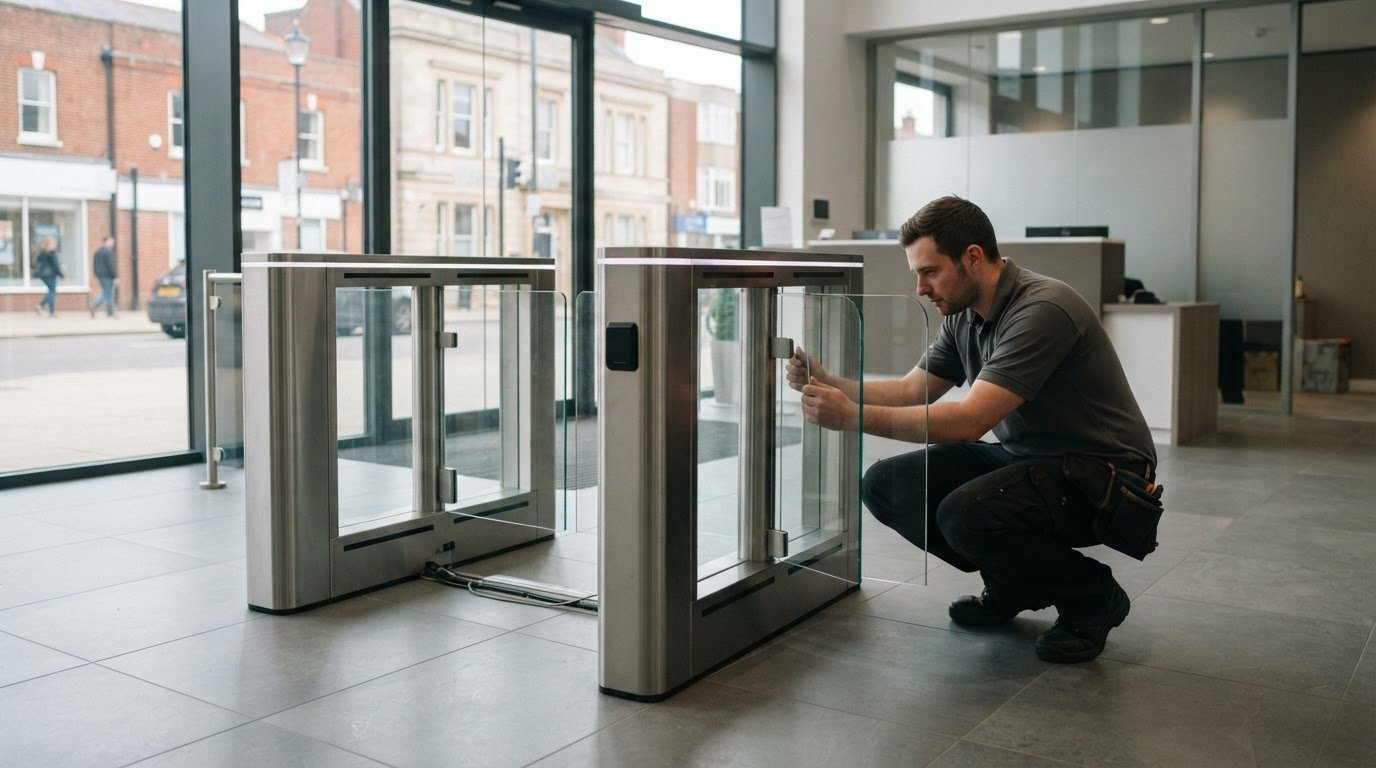
Speed gate installation in Southend-on-Sea has no single standard timescale. The work depends on the site, access-control arrangements and any security systems to be integrated. Connecting the gate to existing systems can affect the programme as much as fitting the equipment.
It’s reasonable to want a clear idea of disruption and when the entrance will be operational. This article explains what installation involves, how speed gates can work alongside CCTV, alarms and access control, and which project details shape the quote and schedule.
You’ll also see what information helps define the scope, from the entrance layout to the systems already in place. This makes it easier to understand the process, from initial assessment through installation and commissioning.
Key Takeaways
- Understand how the entrance layout, pedestrian flow and site requirements shape the gate design and installation plan.
- Electric gate systems described for Southend-on-Sea are set up to BS EN 12453, with force limitation, safety edges and photocells as standard, according to the British Standards Institution.
- See how CCTV, alarms and access control can work alongside a gate, and why planning these connections early matters.
- Learn which project details influence quote preparation and installation timing, including site complexity and the systems that need integrating.
Gate installation, consultation and system design
A site assessment in Southend-on-Sea establishes the entrance layout, operating requirements and surrounding constraints. The design then matches gate movement, pedestrian access and security controls to the property.
Gate Types and Property Suitability
Commercial properties can use speed gates where controlled pedestrian entry is needed. For vehicle entrances, swing, sliding, bi-folding and vertical lift gates suit different layouts. A narrow driveway may favour sliding movement, while a larger entrance may accommodate swing leaves. The choice depends on available space and traffic flow.
Speed gates manage pedestrian passage, while boom barriers and rising arm barriers control vehicle access. Bollards restrict vehicle movement at selected points. A site assessment compares each option’s purpose, the entrance width and how people move through the area. This helps avoid a design that obstructs staff, visitors or deliveries.
Site Surveys and Groundwork
A survey records the entrance dimensions, ground condition, nearby structures and existing access equipment. The installer also reviews the power supply, cable routes and position of control equipment. These checks identify groundwork requirements before installation begins.
For example, uneven paving or a restricted cable route can affect equipment placement and the installation sequence. The survey also considers sight lines and pedestrian routes to reduce the risk of blind approaches or conflicting movement. Where gates connect to existing controls, experience integrating security systems is particularly relevant.
Planning and Building Requirements
Planning requirements depend on the property and gate location. According to the UK Government, in England, a gate over 1 metre adjacent to a highway is an exception to the usual permitted development position for residential electric gates. Listed buildings and conservation areas can also affect residential projects.
That residential rule does not establish the requirements for every commercial site. The installation design should account for the property’s planning context and applicable building requirements. Where entrance works or access modifications interface with public roads, specialist advisors such as Corehard Ltd can provide guidance on street works and traffic management compliance. Electric gate systems described for Southend-on-Sea are set up to BS EN 12453, with force limitation, safety edges and photocells as standard, according to the British Standards Institution.
Made-to-measure gate designs account for the opening, boundary and surrounding architecture. A bespoke design can coordinate gate and fence dimensions, materials and finish, rather than treating the entrance as a separate element. The survey also identifies risks such as poor visibility, obstructed routes and unsuitable ground conditions, so the design and installation plan can address them before work starts.
Integration with CCTV, alarms and access control
A gate works more effectively as part of a coordinated security system. Integration links entry decisions with camera coverage and access permissions. The design should define what happens when someone presents a credential, an authorised visitor arrives or an alarm event occurs. Clear operating sequences help reduce confusion for staff and visitors.
For example, an access control system can authorise a credential before the gate opens. IP CCTV can provide a view of the entrance, helping operators assess activity around the access point. If an existing alarm system is integrated, the project should define which events trigger an alert and who responds. The alarm connection is an interface requirement, not a substitute for assigning responsibilities.
During system design, the installer maps the gate controller, access readers, camera positions and network connections. The plan also identifies how authorised staff enter, how visitor access is managed and what happens during a power interruption. Commissioning tests each sequence, including credential acceptance, gate movement, camera coverage and event reporting. Testing should confirm that access remains controlled without obstructing normal pedestrian flow.
Southend-on-Sea sites have practical local considerations. Entrances near busy roads need a layout that accommodates vehicle queues without obstructing surrounding access. Seafront installations should account for salt-air corrosion. Galvanising before powder coating, stainless fixings and sealed enclosures are recommended to help address exposure. These material choices influence durability and the final finish.
Integration also clarifies operational responsibilities. A site needs defined access permissions, someone responsible for managing credentials and a clear process for responding to alerts. The project design can document these roles alongside the gate’s operating sequence, so staff understand how the systems work together.
For a commercial entrance, map existing CCTV, access control and alarm interfaces before specifying the gate. This gives the installation team a practical basis for designing compatible connections and commissioning the complete system.
Quote response and installation timelines
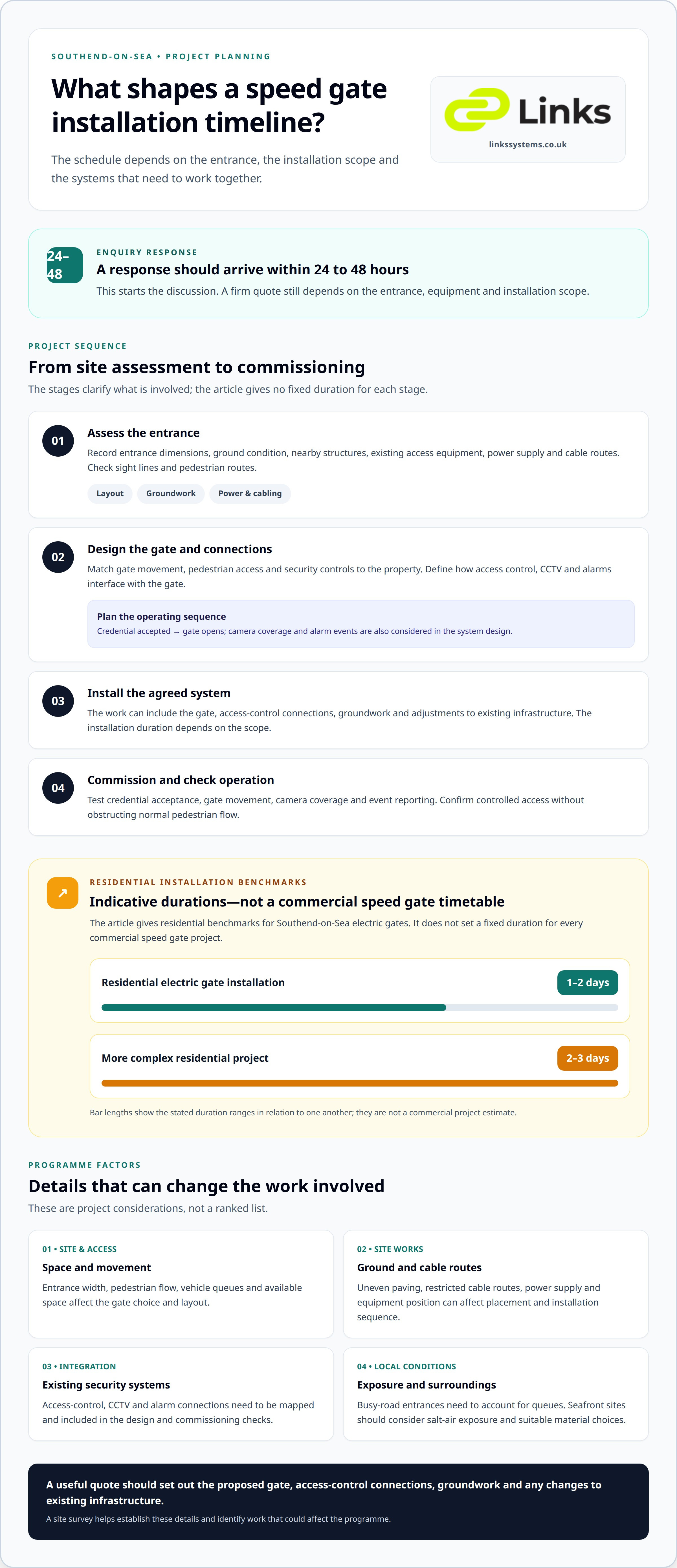
For Southend-on-Sea electric gate enquiries, a response should arrive within 24 to 48 hours. That response starts the discussion, but a firm quote depends on the entrance, equipment and installation scope. A site survey helps establish these details and identify work that could affect the programme.
A useful quote separates the main stages: site assessment, system design, installation and commissioning. It should describe the proposed gate, required access-control connections, groundwork and any adjustments to existing infrastructure. For example, a clear vehicle entrance with an established power supply has different requirements from a site needing new cable routes or coordinated CCTV connections.
Installation duration depends on the scope. Residential electric gate installations in Southend-on-Sea typically take one to two days. More complex residential projects can take two to three days. These are residential benchmarks, not fixed durations for every commercial speed gate project. A commercial programme may also include access-control configuration, integration tests and coordination around the site’s operating hours.
Before scheduling, the installer reviews the survey findings, equipment requirements and access arrangements. Ground conditions, restricted working space and existing systems can affect the sequence. A robust plan allows time for fitting, connection tests and commissioning, rather than treating installation as the only stage. Projects involving wider perimeter work may require several days to a week.
To help define the scope, provide the site address, entrance photographs, preferred access arrangements and details of existing systems. Identify busy periods, delivery routes and any restrictions on working at the entrance. These details help prepare a quote based on the actual site, rather than a generic gate specification.
Ask for the proposed scope and installation stages to be itemised clearly. This makes it easier to understand what the quote covers and how the programme may change if the survey identifies additional groundwork. A defined sequence also gives site managers a practical basis for planning access during installation and commissioning.
What is a speed gate and how does it work?
A speed gate controls access through a defined entrance using a powered barrier and an authorisation method. At a commercial building, for example, staff may present a credential before the gate allows passage. The system combines physical movement with an access decision to help manage who enters controlled areas.
The operating sequence begins when someone uses an approved method, such as a keypad, fob or app. The control system receives the request and allows or denies access according to its configuration. If authorised, the gate opens; if access is refused, it stays closed. This creates a clear entry process for staff, contractors and visitors.
Automated gates also use sensors and beams to detect obstructions. If a person or object blocks the gate, these devices stop its movement. For example, a beam interrupted during closing signals the system to halt rather than continue through the blocked path. The installer tests this response during commissioning.
Operation depends on the site’s chosen access method and user arrangements. A staffed reception may issue visitor access, while a separate keypad or fob system serves employees. The design should also account for pedestrian flow, accessible routes and entrance position. These considerations help prevent queues in busy corridors.
For facilities teams, control settings define who can enter and how access is managed. The installer configures and tests the equipment as one system, including the gate’s response to authorised access and obstruction detection. This helps staff understand the normal operating sequence before the gate enters service.
To discuss a suitable speed gate installation, share the entrance layout and access requirements.
Links Integrated Systems: Speed Gates & Barriers
Links Integrated Systems supplies and installs speed gates and barriers for commercial and professional environments. Its work can also bring access control, IP video intercoms and IP HD CCTV into a coordinated entrance system. This is a practical next step when a site needs controlled entry, a new gate or integration with existing security equipment.
The project scope is shaped by the entrance layout, access requirements and systems already in place. A clearly defined brief helps align gate operation with staff, visitor and vehicle movement. Planning integration early supports a coherent installation and commissioning process.
For a speed gate project in Southend-on-Sea, contact Links Integrated Systems to discuss the site requirements and intended access arrangements.
Plan the next step for your entrance
Planning speed gate installation in Southend-on-Sea starts with a clear brief: explain how people use the entrance, what access needs controlling and which existing systems matter. This gives the project team a practical basis for shaping the design around your site, rather than treating the gate as a standalone purchase. Consider how the entrance needs to serve staff, visitors and deliveries as operations change.
Links Integrated Systems can bring together Speed Gates & Barriers with Access Control Systems and IP Video Intercom Systems. The right combination depends on your entrance and operating requirements. Share the site details and the outcome you need to help shape a suitable project scope.
Contact Links Integrated Systems to discuss your entrance requirements and take the next step with confidence.
Frequently Asked Questions
How long does installation take?
Residential electric gate installations in Southend-on-Sea typically take one to two days; more complex residential projects can take two to three days. Commercial installations need their own schedule, based on the entrance, system connections and site work. For speed gate installation in Southend-on-Sea, a defined scope helps establish a practical programme, including commissioning and any preparation needed before installation.
Why deploy speed gate access control?
Speed gate access control gives a commercial site a way to manage entry through a designated point. For example, a facility can use access permissions to distinguish staff entry from visitor access, supporting a clearer reception process. It can also form part of a wider physical security design, with the gate and access system planned together around the building’s daily operations.
How much does speed gate installation cost in Southend-on-Sea?
The price depends on the project scope and is provided after a quote request. Key factors include the entrance layout, gate configuration, groundwork, access-control requirements and connections to existing systems. The initial consultation is free and helps establish the requirements for a tailored proposal. Sharing site details and intended access arrangements gives the project team a useful starting point for assessing the work.
How long does speed gate installation take?
The overall programme depends on more than fitting the gate. Survey findings, equipment selection, access-control configuration and commissioning all shape the sequence. A site with existing compatible infrastructure may involve different work from one requiring new cable routes or additional preparation. The project schedule should distinguish installation from system testing, so site managers can plan entrance access accordingly.
What safety standards and accessibility requirements apply to speed gates?
Safety and accessibility should be considered together during system design. Gate operation, pedestrian routes and the needs of people using the entrance all affect the layout. Speed gate options include single-lane and multiple-lane configurations, including DDA access options. The appropriate arrangement depends on the building entrance and intended users, so accessibility should be part of the initial design brief rather than a later adjustment.