
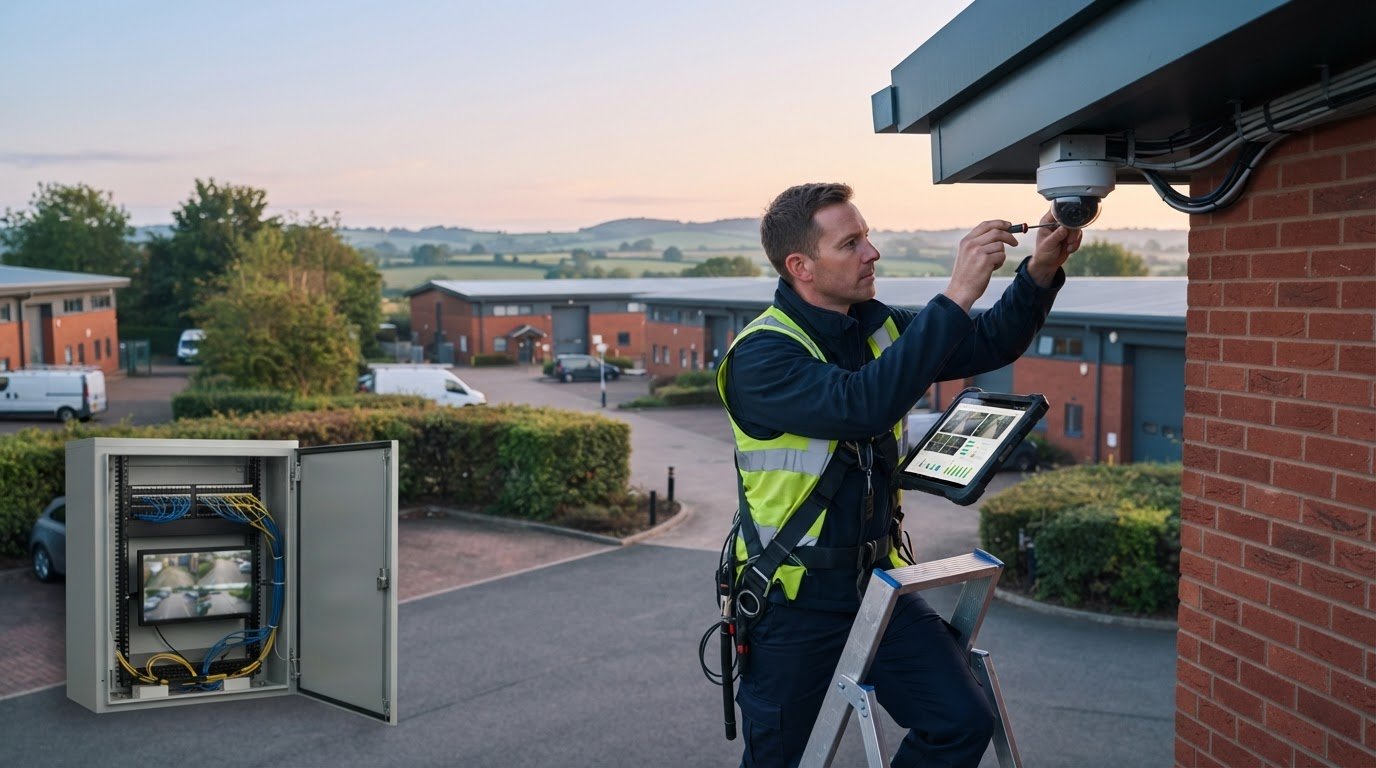
What if your CCTV cameras look operational but aren’t capturing usable images or recording footage when you need it? For commercial sites, a quarterly CCTV maintenance plan Kent businesses can build around their premises makes system performance something to check, not assume.
It’s understandable to want reassurance that cameras, connections and recording equipment are working as intended. A fault that goes unnoticed can leave a gap in coverage or limit the usefulness of recorded footage. Planned maintenance gives site teams a regular opportunity to identify issues, record findings and agree what needs follow-up.
This guide explains what quarterly CCTV maintenance can cover and how to shape a proportionate schedule for commercial premises in Kent. It looks at camera condition and field of view, image quality, recording and playback, plus how to document findings and plan remedial work. Links Integrated Systems maintains commercial IP HD CCTV systems as part of their ongoing lifecycle, supporting a planned, site-aware approach to video security.
Key Takeaways
- Build a quarterly CCTV maintenance plan Kent businesses can use around the needs and layout of their commercial site.
- Include checks of image capture, recording, playback and equipment condition in the agreed maintenance scope.
- Use scheduled visits to identify potential issues, while recognising that maintenance cannot prevent every fault.
- Prepare for a visit by gathering system information, noting reported problems and arranging access with the right site contacts.
- Connect ongoing CCTV maintenance with commissioning and changes to the requirements of a commercial premises.
Why a quarterly CCTV maintenance plan matters for Kent businesses
A commercial CCTV system supports a site’s day-to-day security, but seeing cameras in place doesn’t confirm that they capture the intended areas or record usable footage. A quarterly CCTV maintenance plan Kent businesses can use is a recurring programme of scheduled, documented checks. It gives site teams a clearer picture of system condition and any issues that need attention.
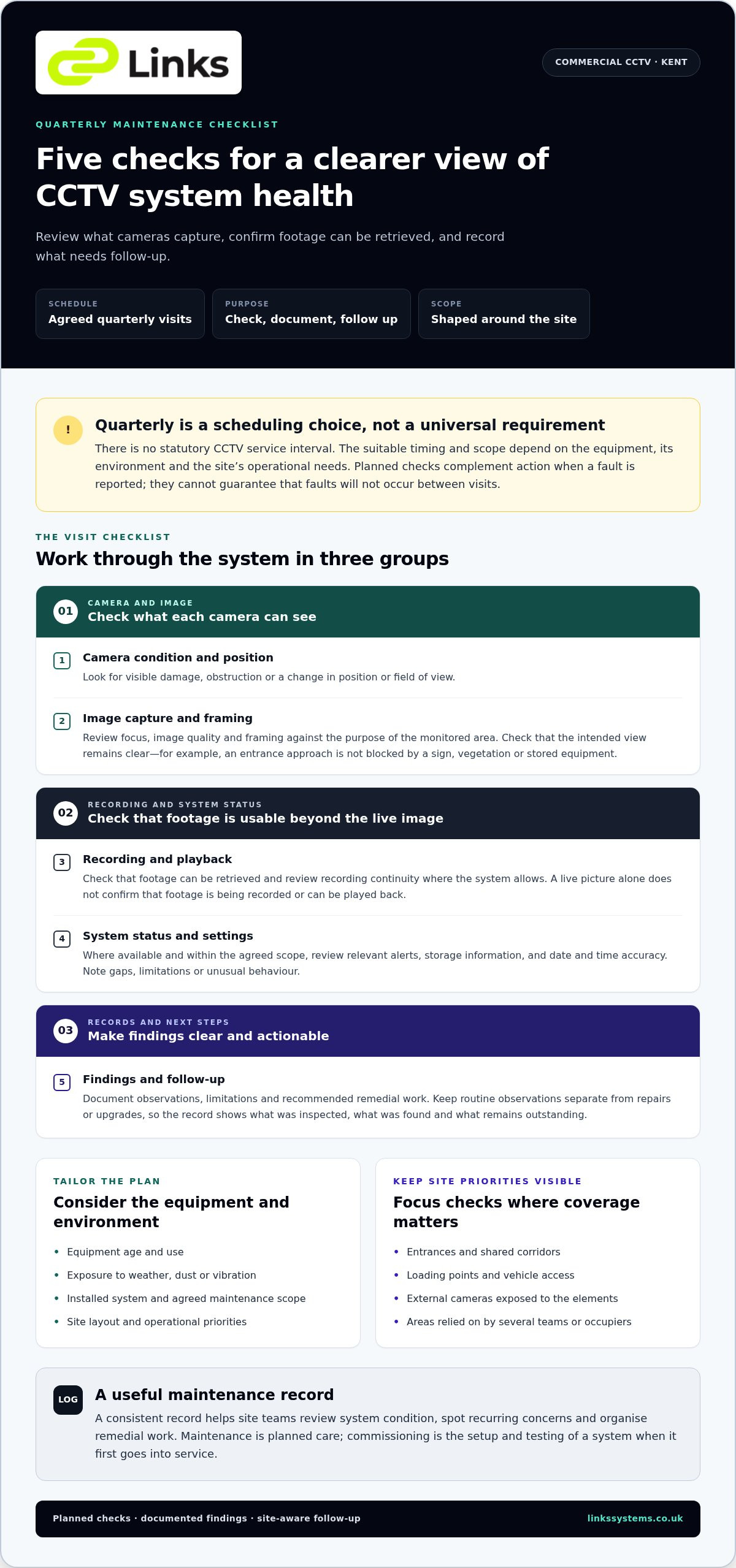
Quarterly maintenance is a scheduling choice, not a universal legal requirement. There’s no statutory CCTV service interval, and a quarterly visit won’t suit every installation in the same way. The appropriate scope and timing depend on the equipment, its environment and the site’s operational needs. Planned checks complement, rather than replace, action when a fault is reported.
What does quarterly CCTV maintenance mean?
Quarterly maintenance means arranging inspections and functional checks at agreed intervals, then recording findings and recommended next steps. Checks should reflect the installed system and agreed maintenance scope, rather than apply an identical checklist to every site. Equipment age, use and exposure to weather, dust or vibration can inform the schedule. This planned care differs from commissioning, which covers setting up and testing a system when it first goes into service.
For an introduction to the technology and its applications, see Closed-circuit television (CCTV). Maintenance gives site teams a recurring opportunity to review how the system performs in the context of the premises and document anything that may need attention.
Which Kent sites can benefit from planned checks?
Offices, warehouses, industrial premises and managed buildings can all benefit from a schedule shaped around their monitored areas. One site may prioritise entrances and shared corridors; another may need to focus on loading points, vehicle access or external cameras exposed to the elements. A site-aware plan keeps these operational priorities in view, particularly where several teams or occupiers rely on the same system.
For property and facilities teams in Kent, documented checks can help maintain clear records, identify recurring concerns and organise remedial work. A quarterly plan doesn’t guarantee that faults won’t occur between visits. Its value is in creating a consistent process for reviewing system performance, recording findings and managing follow-up, rather than waiting until someone notices an issue or needs to retrieve footage.
What a quarterly commercial CCTV maintenance visit should check
A useful maintenance visit follows the installed system and the site’s agreed scope. It should establish whether cameras capture their intended areas, footage can be retrieved and any visible or recorded issues need follow-up. The Surveillance Camera Code of Practice provides guidance on appropriate use of surveillance systems. A planned review can help site teams keep operational needs and system performance in view.
Camera condition, positioning and image quality
Start with what each camera can see. Look for visible damage, obstruction or a change to its field of view, then review whether the image remains usable for the area’s purpose. For example, an entrance camera should still cover the relevant approach rather than having its view blocked by a sign, vegetation or stored equipment. Cleaning or adjustment can be included where it forms part of the agreed work.
Recording, playback and system health
A live image alone doesn’t confirm that footage is being recorded or can be played back. Where supported by the equipment and agreed scope, review recording continuity, playback, storage status, system alerts and date and time accuracy. Record any gaps, limitations or unusual behaviour so the site team can understand the finding and decide on next steps.
A practical checklist for a quarterly CCTV maintenance plan Kent site teams can adapt includes:
- Camera condition: look for visible damage, obstruction or changes in position.
- Image capture: review focus, image quality and framing against the purpose of the monitored area.
- Recording and playback: check that footage can be retrieved and review continuity where the system allows.
- System status: review relevant alerts, storage information and time or date settings where available.
- Findings and follow-up: document observations, limitations and recommended remedial work.
Keep routine observations distinct from repairs or upgrades. For example, a maintenance record can note that a camera has a restricted view, with any repositioning or replacement listed separately as further work. This clarifies what was inspected, what was found and what remains outstanding, without implying every issue can be resolved during the visit.
Links Integrated Systems maintains commercial IP HD CCTV systems through commissioning and planned care. See commercial CCTV maintenance for Kent premises.
Is quarterly CCTV maintenance necessary if the system still works?
A camera showing a live picture can create the impression that everything is fine. But a working display doesn’t confirm that the image is clear enough for its purpose, that recordings are being made consistently or that the view still covers the right area. Planned checks help identify these less obvious limitations before someone needs to review footage.
That doesn’t mean every commercial system needs a quarterly visit. There’s no blanket statutory requirement for CCTV maintenance every three months. A quarterly CCTV maintenance plan Kent businesses adopt is a practical scheduling choice that should reflect the site and system, not a universal rule.
Planned maintenance compared with reactive repairs
Reactive work begins after someone reports a fault or spots a problem. That response matters, but it may leave issues undiscovered if no one has noticed a poor image, recording gap or camera that no longer covers its intended area. Scheduled checks create a regular opportunity to review system condition and record observations, even when no fault has been reported.
Over time, maintenance records can help facilities teams see whether concerns are isolated or recurring, track outstanding work and share relevant information across site contacts. They support better-informed decisions, but don’t guarantee uninterrupted operation or prevent every fault. If an issue appears between planned visits, follow the site’s established reporting process.
When might a different maintenance interval suit a site?
Set the frequency according to the site. A system with many cameras, demanding operating needs or equipment exposed to weather and dust may call for a different approach from a smaller, more stable installation. Consider how important the monitored areas are to daily operations, how intensively the system is used and whether previous checks have identified recurring concerns.
Changes matter too. New layouts, building work or alterations to monitored areas can affect whether camera views remain useful, so the schedule and checks may need review. A quarterly interval might suit one site, while another may need a different planned frequency based on its equipment and operational requirements.
Keep maintenance scheduling separate from legal responsibilities for using CCTV. The absence of a statutory service interval doesn’t remove the need to operate surveillance lawfully and appropriately. The aim is a proportionate plan: frequent enough to support oversight of the system, without assuming the same timetable fits every commercial premises.
How to prepare for a CCTV maintenance visit in Kent
Good preparation helps the attending team understand the system and its operating context before checks begin. For a Kent office, warehouse or managed building, it can also reduce avoidable disruption by organising access, site contacts and known issues in advance. Use these steps to prepare for a visit under a quarterly CCTV maintenance plan Kent businesses can manage consistently.
Before the maintenance visit
Gather any available camera layout, system information and previous maintenance records. These can help identify equipment, monitored areas and earlier findings. If technical documents aren’t available, a clear account of how the system is used is still useful.
- List reported issues: note the affected camera or location, what staff observed and when they noticed it, if known.
- Arrange access: identify restricted areas, access procedures or site rules that may affect the visit.
- Coordinate contacts: tell relevant facilities or operational staff when checks are planned and who can provide site-specific information.
- Flag operational constraints: identify busy entrances, loading periods or other activities that could affect access to monitored areas.
If CCTV works alongside access control, share relevant system context and note any known interaction between the systems. This helps frame the maintenance discussion around the wider site setup. For further background, see integrating CCTV with access control systems.
After the checks: findings, actions and records
Review the findings with the appropriate site contact. Separate observations that need prompt attention from planned improvements, and record the reasons for each recommended action. A restricted view at a key entrance, for example, may need different prioritisation from a minor issue in a lower-priority area. Agree who will manage follow-up and keep each action visible until it is addressed.
Keep a record of the checks completed, limitations identified and actions agreed. Consistent documentation gives facilities teams a useful reference for future visits and helps maintain continuity when responsibilities change. If findings relate to connected physical security systems, physical security integration for commercial buildings offers further context.
Links Integrated Systems provides commercial CCTV maintenance as part of the system lifecycle, from commissioning through ongoing care. Plan commercial CCTV maintenance around your site’s operational requirements and maintenance records.
Plan commercial CCTV maintenance in Kent with Links Integrated Systems
Links Integrated Systems supplies, commissions and maintains commercial IP HD CCTV systems for businesses in Kent, London, Surrey, Hertfordshire and Essex. Commissioning establishes the system for its intended use, while ongoing care provides opportunities to review its condition against the site’s changing requirements.
A quarterly CCTV maintenance plan Kent businesses adopt should reflect the installed equipment and what the cameras need to support. The same timetable and scope won’t necessarily suit every premises. A warehouse, managed building and office may have different monitored areas, operating patterns and priorities. Planning around those factors helps keep maintenance proportionate and relevant.
A maintenance approach shaped around the site
Planning starts with the system configuration, site operations and the areas that matter most to the responsible team. The maintenance scope can then take account of known issues and previous findings. This provides a practical basis for scheduled checks without assuming identical tasks or outcomes for every installation.
Findings help the site team decide what should happen next. A limitation affecting an important monitored area may need to be prioritised differently from an improvement that can be planned for later. Clear records and agreed follow-up actions help facilities and property teams retain oversight, especially where responsibilities are shared across a commercial premises.
As site operations change, the maintenance plan may also need review. Changes to layouts, access arrangements or the way monitored areas are used can affect what the system needs to cover. Links Integrated Systems can discuss a maintenance approach in relation to the equipment in place and the site’s operational requirements.
Discuss your Kent CCTV maintenance requirements
For a planning discussion, outline the system, its main monitored areas, known concerns and the outcomes you want maintenance to support. Existing system information and previous maintenance records can provide useful context. This gives the maintenance scope and schedule a practical starting point, tailored to the project and site requirements.
For commercial premises in Kent, Links Integrated Systems connects CCTV commissioning and ongoing maintenance through a site-aware approach. Discuss your commercial CCTV maintenance requirements with Links Integrated Systems to plan a suitable way forward for your premises.
Make CCTV maintenance a planned part of site security
A useful maintenance approach starts with checks suited to the system and premises, rather than assuming every commercial site needs the same schedule. A quarterly CCTV maintenance plan Kent businesses consider should reflect operational priorities and provide a clear record of findings, limitations and follow-up actions. Quarterly visits are a planning option, not a universal statutory interval.
Links Integrated Systems supplies, commissions and maintains commercial IP HD CCTV systems in Kent and neighbouring areas including London, Surrey, Hertfordshire and Essex. Connecting commissioning with ongoing maintenance supports the system throughout its lifecycle and helps facilities teams review its condition as site requirements change.
If you’re responsible for a commercial property, outline your system, maintenance objectives and site requirements to Links Integrated Systems. Discuss a commercial CCTV maintenance plan for your Kent site and take a considered next step towards well-managed video security.
Frequently Asked Questions
What should a quarterly CCTV maintenance visit include?
A quarterly CCTV maintenance visit should check whether cameras capture usable images and cover their intended areas, and whether footage can be recorded and played back. Depending on the equipment and agreed scope, checks may also include visible camera condition, system alerts, storage status and date and time accuracy. Document findings, including limitations and recommended follow-up. The scope should reflect the installed system and commercial site, rather than assume every installation needs identical checks.
Is quarterly CCTV maintenance a legal requirement in the UK?
No. There’s no blanket UK legal requirement to service commercial CCTV every quarter. Quarterly visits are a planned maintenance approach, not a statutory interval, and a suitable schedule depends on the system and site needs. This is separate from obligations concerning how CCTV is used, including data protection responsibilities. A business should consider its wider legal duties independently of the timetable for technical checks.
Can CCTV cameras record properly even when the image looks unclear?
Yes. A camera may continue recording even if its image is blurred, obstructed, poorly framed or otherwise difficult to use. Footage may exist but fail to show the detail needed for its intended purpose. Reviewing live views and recorded playback can help identify the difference. If an image looks unclear, note the camera and affected area so the issue can be assessed and remedial work considered.
How often should a commercial CCTV system be serviced?
There’s no single service interval suitable for every commercial CCTV system. Many commercial systems are maintained at least annually, while quarterly checks may be appropriate for some outdoor or operationally important installations. The schedule should account for system complexity, usage, environmental exposure, site priorities and previous findings. A quarterly CCTV maintenance plan Kent businesses use should be proportionate to their premises, not selected simply because it’s a fixed interval.
What happens if a fault is found during a CCTV maintenance visit?
If a fault is found, record it clearly, including the affected equipment or monitored area and any relevant limitation. Review the finding with the responsible site team, along with practical next steps and priorities. Some issues may require remedial work beyond routine checks. Recording outstanding actions helps facilities teams track what needs attention; a maintenance visit doesn’t guarantee that every fault will be resolved during that visit.
Can a CCTV maintenance visit disrupt business operations?
A planned visit may require access to cameras, equipment or areas used by staff, so coordination can help limit disruption. Share access restrictions, busy periods and operational concerns in advance, and identify a site contact who can help with arrangements. Checks and access needs depend on the installed system and agreed scope. Planning around site activity can help the visit proceed in an orderly way, although the level of disruption will vary.
Does CCTV maintenance cover data protection compliance?
Technical maintenance and data protection compliance are related but distinct responsibilities. A maintenance visit can review system operation, but it doesn’t by itself establish that the business has a lawful basis, appropriate signage, suitable retention arrangements or controlled access to footage. The organisation operating the CCTV remains responsible for its use of personal data under applicable UK requirements. Keep technical maintenance records alongside, but separate from, the site’s data protection policies and procedures.