
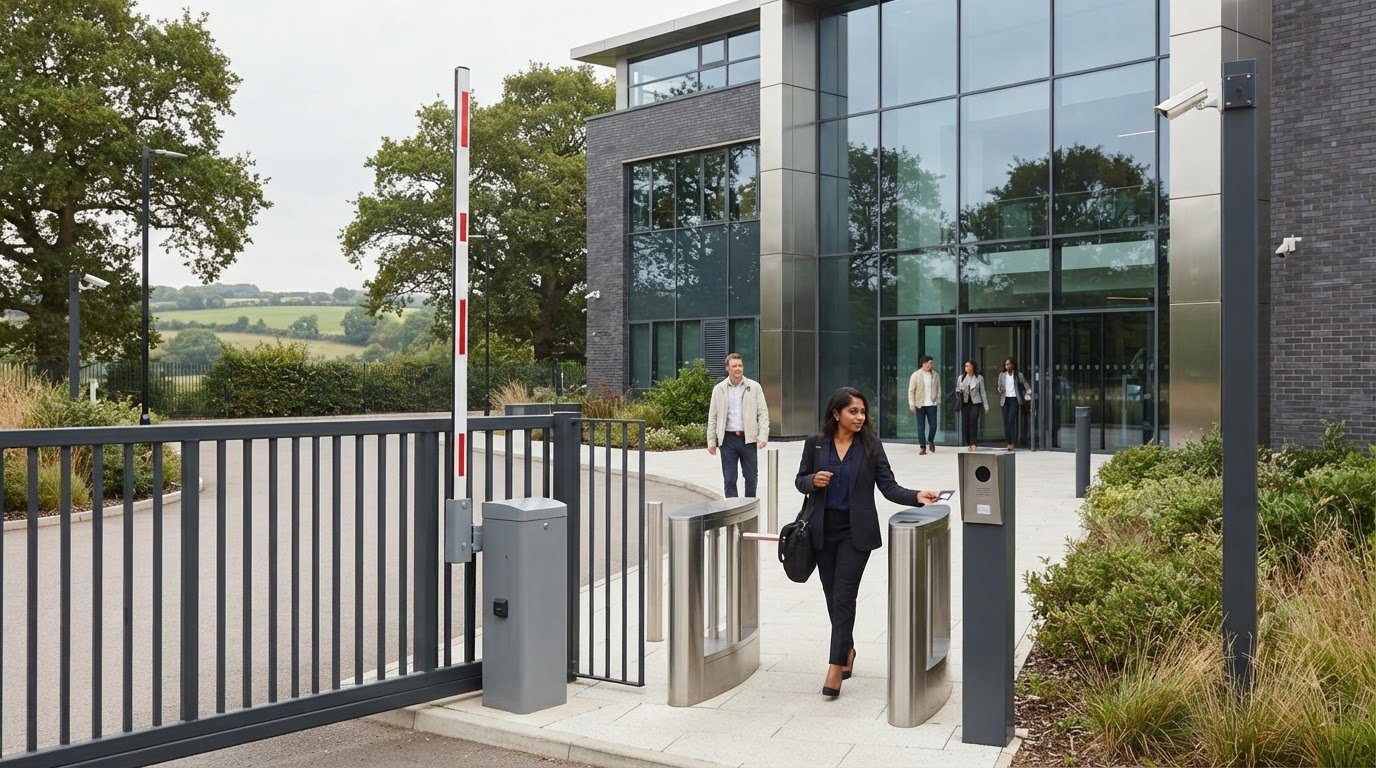
Commercial property security solutions in Kent work best when they address different points of risk together: access control manages who can enter, CCTV helps capture activity around the site, and automated gates and barriers control vehicle access. The right combination depends on the property, its entrances and how people and vehicles move through it.
It’s understandable to want a system that protects the site without making day-to-day access harder to manage. This article explains how access control, commercial CCTV and automated gates and barriers can support security, what to consider when planning them, and why installation, commissioning and ongoing maintenance matter. You’ll also learn how the requirements of your building and its operations shape a practical security approach, so you can assess which measures suit your Kent property.
Key Takeaways
- Map how staff, visitors and vehicles move around your site to identify where access control can improve entry management.
- Plan commercial CCTV around the areas that need coverage, and consider installation, monitoring and maintenance as connected parts of the system.
- Choose gates or barriers to suit your vehicle entrances and site operations, with access arrangements that work alongside other security measures.
- Assess security providers by how well their proposed systems fit your property, operational needs and ongoing maintenance requirements.
Access control
Commercial properties can combine access control with CCTV and perimeter measures. Staff credentials can manage doors, an intercom can screen visitors, and cameras or barriers can help control boundary access. The right mix depends on the building’s entrances, working patterns and the movement of people.
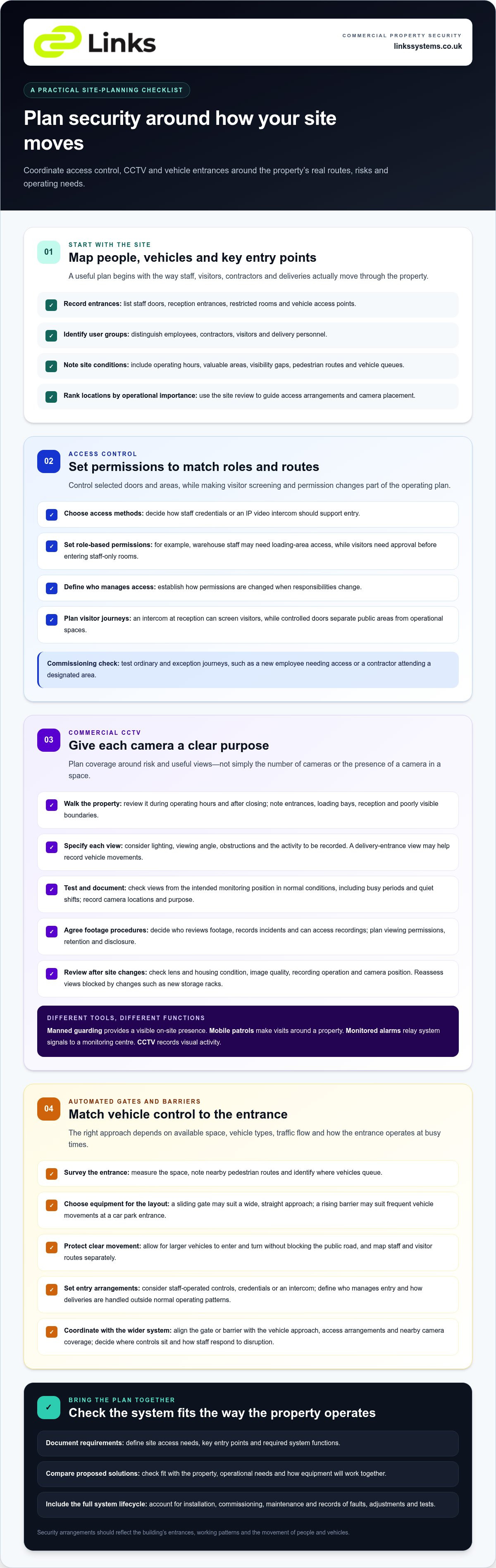
To plan commercial security for a property in Kent, define the site’s access needs, identify key entry points and document the required system functions. Compare proposed solutions against those requirements, including installation, commissioning, maintenance and how the equipment will work together.
Access control systems regulate entry to selected doors or areas. A site can assign credentials to staff and set permissions according to their roles. For example, warehouse staff may need access to loading areas, while office visitors require approval before entering staff-only rooms. Clear permissions make access easier to manage when responsibilities change.
Start with a site access review. Record who needs to enter, which doors they use and where visitors should be received. Then consider:
- Entry points: list staff doors, reception entrances and restricted rooms.
- User groups: distinguish employees, contractors, visitors and delivery personnel.
- Access methods: decide how credentials or an IP video intercom should support entry.
- System operation: establish who manages permissions and how changes are handled.
Integration matters. An intercom at reception can support visitor screening, while controlled doors can separate public areas from operational spaces. The design should reflect the site’s actual routes rather than treating every entrance identically. A distribution site, for instance, may need different arrangements for staff doors and vehicle entrances.
During planning, document the access rules and test each user journey during commissioning. Include ordinary scenarios, such as a new employee needing access, and practical exceptions, such as a contractor attending a designated area. Plan maintenance so faults or changes can be addressed systematically. These steps help keep permissions aligned with how the property operates.
Commercial CCTV installation, monitoring and maintenance
A useful CCTV plan starts with the site’s actual risks. Walk the property during operating hours and after closing. Note entrances, loading bays, reception areas and poorly visible boundaries. For example, a camera covering a delivery entrance may help record vehicle movements. A camera aimed at an empty corridor may offer little operational value.
Next, define what each camera needs to capture. Consider lighting, viewing angles, obstructions and the activity being recorded. During installation, test each view from the intended monitoring position. Check that images show useful detail in normal site conditions, including busy periods and quiet shifts. Record camera locations and their intended purpose for future system reviews.
Manned guarding, mobile patrols and monitored alarms serve different functions. A guard provides a visible on-site presence; patrols make visits around a property; monitored alarms relay system signals to a monitoring centre. CCTV records visual activity, so each option addresses a different operational requirement.
UK licensing and CCTV requirements depend on the activity and how footage is handled. Separate technical installation from guarding or alarm-response duties, and plan camera purpose, viewing permissions, footage retention and disclosure procedures before use.
Businesses can assess site risks by walking the property and documenting likely access points, valuable areas, operating hours and existing visibility gaps. Include practical examples, such as an unattended reception entrance or a poorly lit service yard. Then rank locations by operational importance and use that order to guide camera placement.
Monitoring arrangements should match the site’s operating procedures. Decide who reviews footage, how incidents are recorded and who can access recordings. A clear process helps staff know what to do when an event occurs and keeps camera coverage connected to day-to-day responsibilities.
Maintenance keeps the system aligned with the site. Include lens and housing condition, image quality, recording operation and camera positioning in planned reviews. After layout changes, such as a new storage rack blocking a view, reassess the affected camera. Keep a record of faults, adjustments and commissioning tests so recurring issues are easier to identify and address.
Automated security gates and barriers
Vehicle entrances need a control method suited to traffic flow and site layout. A sliding gate may suit a wide, straight approach, whilst a rising barrier can manage frequent vehicle movements at a car park entrance. The choice depends on available space, vehicle types and how the entrance operates during busy periods.
Start planning with a site survey. Measure the entrance, note nearby pedestrian routes and identify where vehicles queue. For example, a delivery yard needs room for larger vehicles to enter and turn without blocking the public road. Map staff and visitor routes separately so vehicle access does not obstruct people using the site.
Then define how authorised vehicles will gain entry. Options can include staff-operated controls, credentials or an intercom for visitors. A visitor arriving at a trade entrance, for instance, may need to identify themselves before access is granted. Set out who manages entry and how deliveries are handled outside normal operating patterns.
Automated equipment should be considered as part of the wider site design. Align the gate or barrier with the vehicle approach, access arrangements and any nearby camera coverage. Identify who will operate the system, where controls will be located and how staff will respond if access is disrupted. These decisions help make the entrance workable as well as secure.
Before installation, document the site requirements and agree how the system should operate. During commissioning, test expected journeys, including staff entry, visitor arrival and delivery access. Check that the equipment works as intended within the available space, and provide staff with clear operating instructions. Planned maintenance can help identify wear or faults before they interfere with daily access.
Kent-specific crime patterns vary by area and property type, so avoid assuming one county-wide trend applies to every business. Kent Police crime prevention advice and relevant local council community-safety information can help businesses consider local concerns alongside their own site assessment.
For commercial property security solutions in Kent, assess a gate by how it controls the actual vehicle entrance. A well-planned arrangement considers traffic movement, visitor handling, pedestrian routes and routine operation together.
Which security companies provide commercial property security in Kent?
Commercial properties in Kent can use integrated security systems to bring access control, CCTV, intercoms and vehicle barriers together. These systems address different needs from guarding, which focuses on people, patrols or an on-site presence. Match each measure to the security task rather than treating every option as interchangeable.
For a warehouse, the priority might be controlling a vehicle entrance and recording activity around loading areas. A managed office may need visitor entry arrangements and cameras covering reception. Write down the property’s needs first, including entry points, operating patterns, restricted areas and how staff will use the system. This creates a practical basis for planning the solution.
Review the proposed system against the same requirements. Check that the plan explains the equipment, its intended location, how components will work together, and the commissioning and maintenance arrangements. For example, a camera plan should identify the areas it covers and how staff will use recorded footage. An access control plan should explain how permissions are managed for employees and visitors.
Project details also matter. Review the scope, installation responsibilities, handover arrangements, maintenance and process for reporting faults. Make sure the plan describes what is supplied and what site staff must manage. A clear division of responsibilities helps avoid gaps, such as cameras installed without an agreed process for reviewing incidents.
Compare technical providers with guarding firms only where their roles match your requirement. A guard can provide an on-site presence; electronic systems control or record specific activities. Some properties may require both, whilst others need a defined technical system. The deciding factors include site layout, daily operations and the risks identified during a property review.
For a Kent site, assess the proposed solution against real journeys through the property. A visitor arriving at reception, a delivery vehicle entering a yard and an employee using a restricted door are useful examples. Each should have a clear, workable security process before you agree the contract.
Links Integrated Systems: Speed Gates & Barriers
Links Integrated Systems can help commercial properties plan security around their access points and operational requirements. Its Speed Gates & Barriers support controlled vehicle or pedestrian entry, while Access Control Systems and IP Video Intercom Systems address authorised access and visitor handling. IP HD CCTV Systems provide visual coverage of relevant site areas.
Consider an integrated approach when planning a new system, updating existing equipment or coordinating several security measures. Links Integrated Systems supports projects from system design and installation through commissioning and maintenance. Site layout, entry routines and the needs of staff and visitors help shape the right approach.
To discuss security requirements for your commercial property in Kent, contact Links Integrated Systems.
Plan the next step for your property
A useful next step is to turn your site priorities into a practical project brief. Note the areas that need attention, how staff and visitors use the property, and any operational changes you anticipate. This gives the planning discussion a clear starting point and keeps the proposed system connected to how your business works.
Links Integrated Systems can support your project with Speed Gates & Barriers, Access Control Systems and IP Video Intercom Systems. The right combination depends on your entrances, visitor arrangements and site operations. A considered design helps bring security measures together as a coherent system rather than treating them as separate decisions.
If you’re planning commercial property security solutions in Kent, contact Links Integrated Systems to discuss your property. A clear first conversation can help you move towards a suitable, well-planned next step.
Frequently Asked Questions
What commercial property security services are available in Kent?
Kent businesses can use physical security systems including access control, IP video intercoms, IP HD CCTV, speed gates and barriers. Links Integrated Systems also provides system commissioning and maintenance. For example, a commercial building might combine controlled staff entry with an intercom for visitors, while a separate vehicle entrance uses a barrier. The suitable mix depends on the property’s layout and operations.
What are typical prices for business CCTV installation and monitoring in Kent?
The cost of a security system for a Kent site depends on the project scope. Factors include the number and placement of cameras, site layout, installation requirements, recording arrangements and maintenance needs. A small office entrance and a multi-area warehouse have different coverage requirements. Define the areas to monitor and how the system will be used to shape the project scope.
What are the best security solutions for Kent warehouses, offices, retail premises and construction sites?
The most suitable approach depends on each property’s access patterns and priority areas. A warehouse may need attention to goods-in areas; an office may prioritise staff and visitor entry; a retailer may focus on customer-facing spaces; and a construction site may need controlled access to working areas. Map these requirements first, then consider relevant CCTV, access control, intercom or gate systems. The design should reflect the site’s actual operations.