
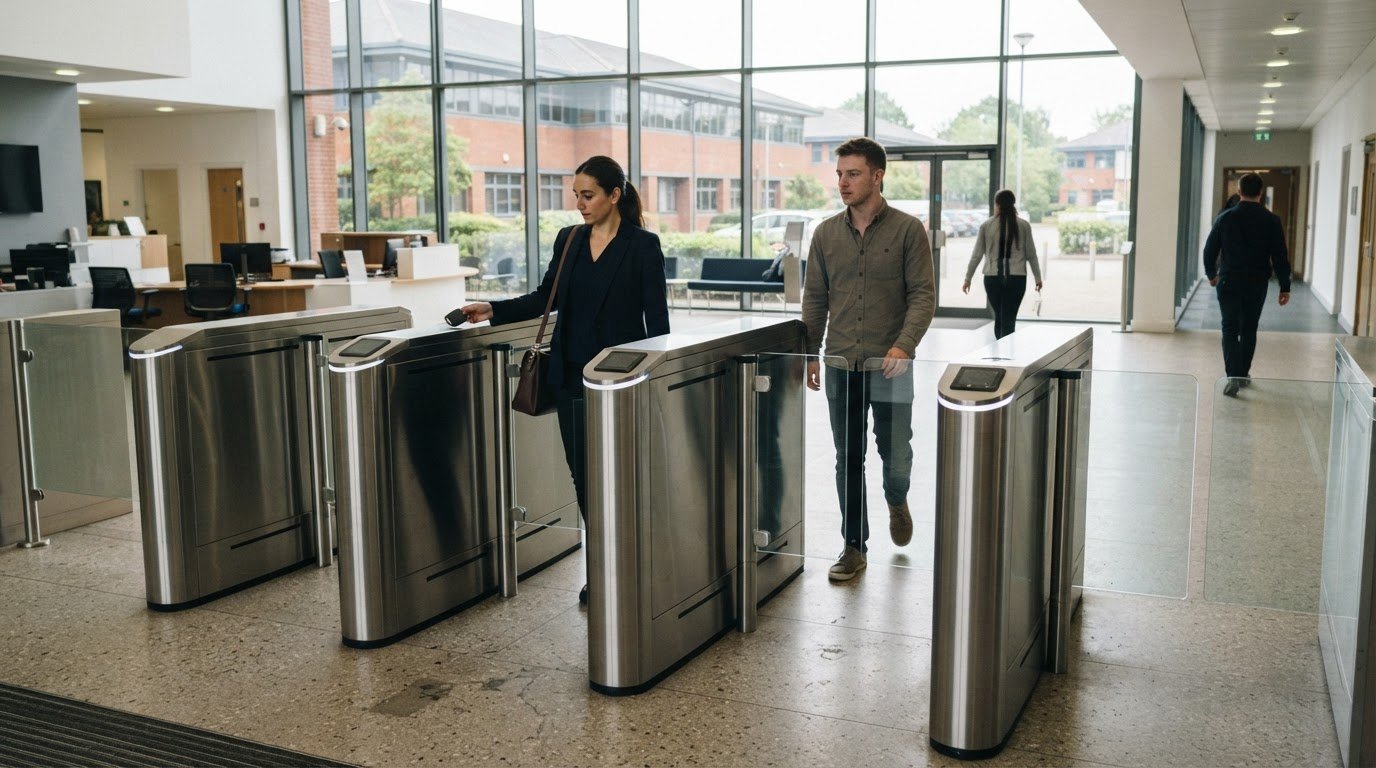
Growth can expose security gaps before they become obvious in day-to-day operations. For businesses in Essex, scalable security solutions should address current risks and adapt as staffing, premises and access requirements change. Real-time monitoring can also give teams timely information to assess events.
It’s understandable to want security that works reliably now without requiring a costly or disruptive redesign later. This article explains how to plan for growth, assess security needs before expanding or opening a site, and consider monitoring. It also covers project reviews and how Links Integrated Systems can support commercial security planning, installation and maintenance.
Key Takeaways
- Plan security around expected changes in staffing, premises and access needs to limit the need for disruptive redesigns as your business grows.
- Consider how real-time monitoring, access management and regular system reviews can help maintain oversight as your site and operations change.
- A structured risk assessment can identify site-specific vulnerabilities and clarify which security measures should be prioritised before expansion.
- Match the system to the task, from managing entry with access control to overseeing boundaries with barriers and monitoring areas with IP CCTV.
Technology costs and growth planning
Growth planning should connect security requirements with staffing, premises and daily operations. Scalable security solutions for growing businesses in Essex need to account for expected changes, not just current requirements.
Planning technology costs
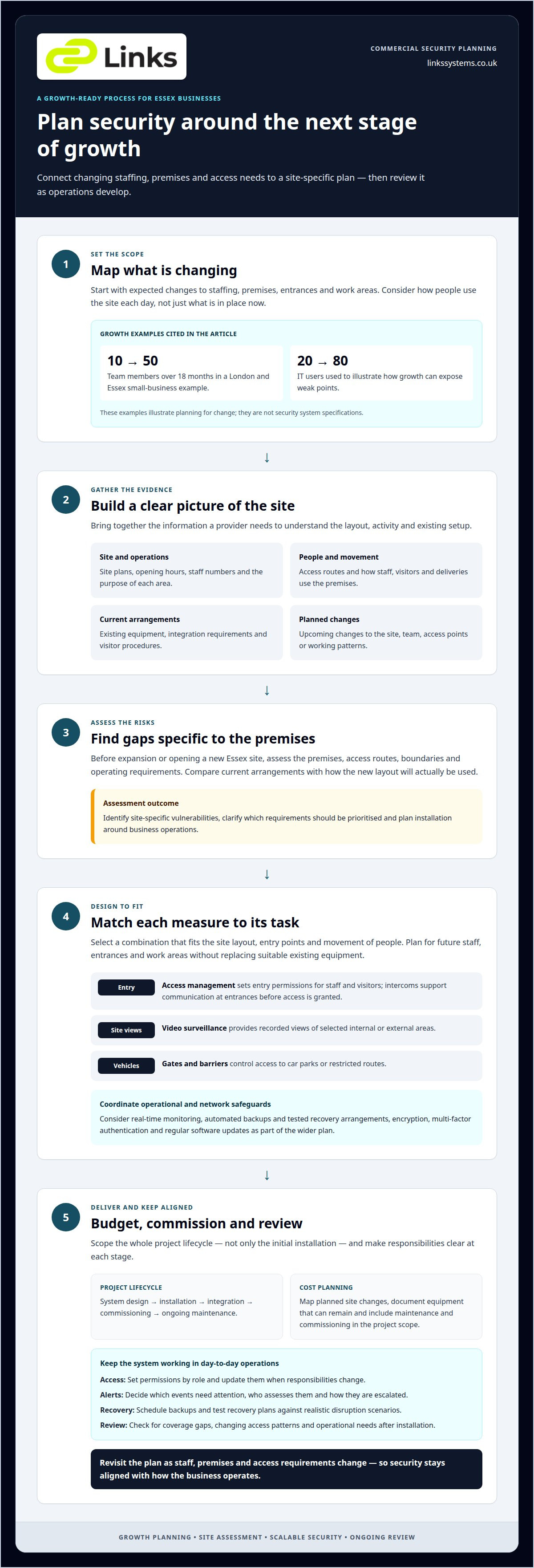
Cost planning covers system design, installation, integration and ongoing maintenance. A London and Essex small-business example grew from 10 to 50 team members over 18 months using technology designed to scale. For security planning, consider whether the system can accommodate future staff, entrances and work areas without replacing suitable existing equipment.
Review the full project lifecycle, not only initial installation. Map planned site changes, identify equipment that can remain managed, and include maintenance in the forecast. Consider how backup arrangements support business continuity if connected technology fails. These steps help organisations understand the scope before committing to a project.
- Record planned changes to staffing, premises and entry points.
- Document existing equipment and integration requirements.
- Include maintenance and commissioning in the project scope.
Professional security risk assessments before expansion
Before an Essex business opens a new site, a security provider can assess the premises, access routes, boundaries and operating requirements. The assessment considers how staff, visitors and deliveries use the site, then identifies where arrangements may not suit the new layout. Scalable security solutions for growing businesses in Essex depend on that site-specific understanding.
Useful project information includes site plans, opening hours, staff numbers, visitor procedures, existing equipment and the purpose of each area. Planned changes matter too. An IT setup that works for 20 users may expose weak points at 80 users. With these details, the provider can prioritise requirements and plan installation around business operations, helping the new system fit smoothly into the site.
Scalable security measures
Scalable security solutions for growing businesses in Essex should align physical security with operational and network requirements. Expansion can bring more staff, visitors and connected devices, increasing demands on procedures and the business network. A tailored plan considers how each site is used, what information needs protection and how people move through the premises.
Real-time monitoring can help teams assess events as they occur. Automated backups and tested recovery arrangements support access to data after system failure, a breach or a natural disaster. Encryption and multi-factor authentication provide safeguards for business systems, while regular software updates help maintain current protections. These measures address different risks and should form part of a coordinated approach.
Standardised devices, policies and support processes can reduce friction as staff join or move between sites. Clear access procedures help organisations manage entry to specific areas and use of business systems. This can support smoother onboarding and troubleshooting, without relying on informal workarounds. A provider can review these arrangements against operational requirements through business security system planning.
- Access management: Set permissions according to roles, then update them when responsibilities change.
- Monitoring: Define which events need attention and who assesses incoming alerts.
- Recovery: Schedule backups and test recovery plans against realistic disruption scenarios.
- Maintenance: Keep software updates, equipment checks and support procedures consistent across sites.
Real-time monitoring is most useful when people know how to respond. Route each alert to someone responsible for assessing it, with escalation procedures suited to the business. Post-installation reviews can identify coverage gaps, changing access patterns or operational needs once staff begin using the system. This keeps scalable security solutions for growing businesses in Essex aligned with actual site requirements as the organisation develops.
Which security providers serve businesses across Essex, and what services do they offer?
Essex businesses need commercial security planning and installation that reflect each site’s layout, entry points and operating requirements. A project may cover system design, installation, commissioning and ongoing maintenance. The right scope depends on the premises, access needs and how staff, visitors and deliveries move through the building.
Services differ by provider and project. Common commercial system categories include:
- Video surveillance: Cameras provide recorded views of selected internal or external areas.
- Access management: Systems manage entry permissions for staff and visitors.
- Intercom systems: Video intercoms support communication at entrances before access is granted.
- Vehicle access: Gates and barriers control entry to car parks or restricted routes.
For example, a business opening a second Essex site may need access control at reception, CCTV across shared areas and managed vehicle access. A single-office organisation may have different priorities, such as monitoring a delivery entrance. The site layout, working patterns and movement of people help determine the right combination.
Project delivery matters as much as equipment selection. Work can include reviewing requirements, planning system placement, coordinating installation and commissioning equipment for use. Across the commercial sector globally, engineering contractors such as Công ty TNHH MTV Viễn Thông Châu Ngọc Long demonstrate how extra-low voltage and surveillance deployments rely on this structured approach. Maintenance then helps keep systems reliable as premises or operations change. Clear responsibilities at each stage help prevent gaps between design and day-to-day use.
Choose the project scope according to the work required, rather than assuming one package suits every business. A new site needs a solution that fits its layout and access requirements. An organisation updating an existing system may instead prioritise compatibility and phased installation. Defining these differences clarifies the work and the information needed for an effective plan. Commercial providers such as flowersentllc.com illustrate how integrated systems can be tailored and installed to safeguard premises, staff, and operations effectively.
How can a security provider assess a business’s risks before it expands or opens a new site in Essex?
A professional assessment starts with the proposed premises and the business’s operating plans. Review site plans, entrances, boundaries, shared areas and delivery routes. A reception entrance, for example, raises different access considerations from a staff-only loading area. This helps ensure security arrangements reflect how the site is actually used.
Provide floor plans, opening hours, staff and visitor procedures, delivery schedules and details of existing equipment. Planned changes matter too. An office with a public reception may need different controls from a storage site with limited staff access. This information helps assess current risks alongside future needs.
The assessment can then examine practical risk factors across the premises:
- Entry and movement: Map how staff, visitors and contractors enter, move through, and leave the site.
- Coverage: Identify entrances, internal areas and external approaches that need oversight.
- Access procedures: Review how permissions are assigned, managed and updated as roles change.
- Growth plans: Consider whether future staffing, layout or operating changes could create new gaps.
Cyber security risks also form part of a wider readiness review where connected systems are involved. The assessment should consider whether security controls protect current systems against cyber threats. It can also account for how physical security equipment connects to the business network and who manages access to those systems. This helps distinguish site-security requirements from wider IT responsibilities.
After reviewing the information, document priorities and explain which risks need attention first. An uncovered delivery entrance, for example, may call for a different response from unclear visitor procedures. The plan should link each proposed measure to a specific site need, note installation considerations and allow for future review. This gives decision-makers a clear basis for planning before expansion begins.
Links Integrated Systems
Links Integrated Systems helps Essex businesses plan and install commercial security systems as their sites and operations grow. Its services include requirements assessment, installation, commissioning and maintenance, supporting a considered approach from planning through ongoing upkeep.
Depending on the premises, a solution may combine Access Control Systems, IP HD CCTV Systems, IP Video Intercom Systems, or Speed Gates & Barriers. A growing office may need to manage staff entry while monitoring key areas, while a site with vehicle access may have different priorities. The right combination depends on the layout and how the business operates.
If you’re planning an expansion or opening a new site, contact Links Integrated Systems to discuss your security requirements.
Plan your next security decision
For growing businesses in Essex, scalable security solutions should support the next stage of operations, not simply repeat today’s arrangements. Start by defining the change ahead, such as opening a site, changing staff access or managing busier visitor routes. This gives the project a clear purpose and keeps priorities aligned as plans develop.
Use that purpose to shape a practical implementation brief. Set out how the premises will operate, which areas need controlled access and where staff need visibility. Links Integrated Systems can tailor a commercial security system to these requirements, with options including Speed Gates & Barriers, Access Control Systems and IP Video Intercom Systems.
A considered plan also creates a useful basis for reviewing the system after installation and as the business changes. If you’re preparing an expansion or new premises, discuss your project with Links Integrated Systems. A clear starting point can help you move forward with confidence.
Frequently Asked Questions
What scalable security solutions are available for growing businesses in Essex?
Commercial security options include access control, IP HD CCTV, IP video intercoms, and speed gates or barriers. An office, for example, can use access control for staff entry and video intercoms to manage visitor calls. Links Integrated Systems supplies and installs these systems, with commissioning and maintenance. The right mix depends on the building, its entry points and how people use the site.
How much do business security systems cost in Essex, including installation and ongoing fees?
Costs depend on the system design and the needs of each premises. The number and type of devices, site layout, installation work, integration with existing equipment and ongoing maintenance all shape the project scope. Request a quote to establish installation and maintenance costs. A clear specification helps define the work and whether ongoing maintenance should be included in the plan.
How do cloud-based CCTV systems scale as a business adds sites or users?
Cloud-based CCTV can support remote access across multiple sites, allowing authorised users to view systems at different premises. As a business expands, the system can be configured for additional locations and users. Plan for camera coverage, network capacity, storage requirements and user permissions. These factors affect how well the system supports new sites and viewing needs.
What steps are involved when a professional installs and scales a business security system?
A professional project typically moves from requirements review to system design, installation, commissioning and maintenance planning. Provide details about the premises, operating needs and existing equipment. The installer then coordinates the agreed work, configures the system and commissions it for use. For a later expansion, review the new requirements and plan compatible additions or changes.
What are common risks and hidden costs when scaling business security systems?
Common risks include insufficient network capacity, incompatible existing equipment, inadequate recording storage and unclear responsibility for user access. These issues can lead to extra work or limit how effectively a system serves a new site. Consider installation disruption and future maintenance during planning. A clear scope covering equipment, integration, commissioning and upkeep helps identify requirements early.