
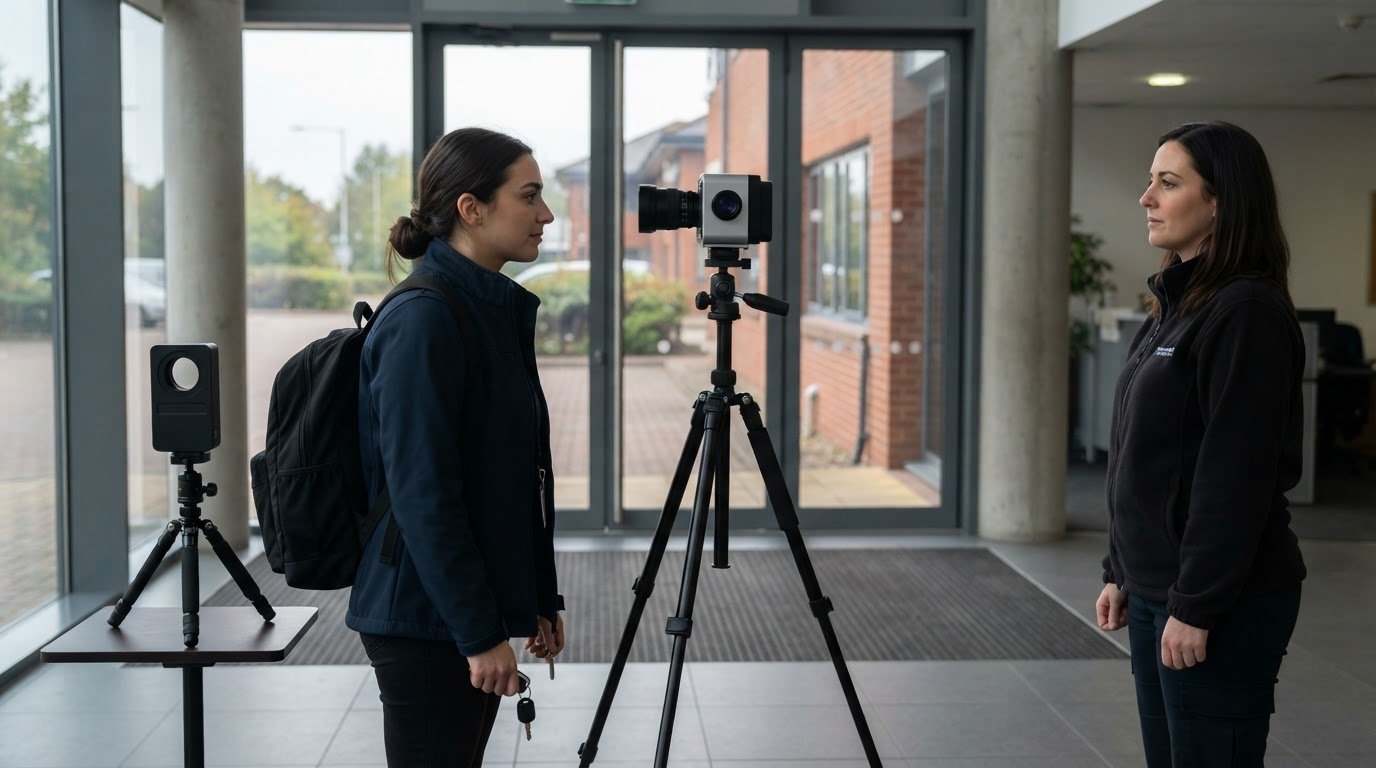
A thermal camera can detect a person’s temperature in one second, compared with nearly 3 seconds for a forehead thermometer. For businesses considering thermal cameras for commercial property in Essex, that speed can make screening at an entrance more manageable, particularly when people are arriving throughout the day.
It’s reasonable to want more than a quick reading: staff need a clear process for screening people and handling the results. Thermal cameras can measure temperature from more than one metre away, allowing screening without placing a thermometer against someone’s forehead. The camera detects temperature; how readings are displayed and recorded depends on the system and its setup.
This guide explains how thermal screening works in commercial offices, what to consider when planning a screening point, and how temperature results can be recorded. It also covers practical factors to consider for an Essex property, helping you understand the requirements before deciding on the next step.
Key Takeaways
- Understand how screening procedures capture temperature readings and what to consider when recording results.
- Learn which thermal camera setup may suit your property, based on its entrance layout and screening requirements.
- See the key UK considerations for handling thermal imaging and the information it may capture.
- Find out how survey conditions can affect thermal imaging and how CCTV and access control systems may support a wider property setup.
Screening and recording temperature results
A thermal camera detects a person’s temperature in one second, while measuring one person with a forehead thermometer nearly takes 3 seconds. It can take a reading from more than one metre away, which allows screening to take place without direct contact. At a commercial entrance, the camera is positioned to view people as they approach a designated screening point.
A screening plan needs to explain how staff respond to a reading and collect results. It can specify who monitors the display, how a reading is reviewed, and what happens if it reaches the site’s chosen threshold. Set the threshold and response before screening begins, rather than leaving reception staff to improvise during a busy arrival period.
- Set the screening point: choose an entrance or reception area where people can approach the camera in a consistent way.
- Assign responsibility: identify the staff member who observes readings and follows the agreed response process.
- Define the record: decide which details are needed, such as the time, screening point and result, and how the record will be handled.
Recording options vary by system. A display may show a live reading, while a connected system may collect results for later review. Before use, establish whether the setup stores readings, how long it keeps them, and who can access them. Don’t assume every thermal camera automatically creates a permanent record.
For example, an Essex office could screen people at reception during morning arrivals, with a named staff member following the same procedure for each reading. A survey should consider the entrance layout, background conditions and recording process. These factors help distinguish temperature screening from general security monitoring, including at busy access points. The same planning principles apply to an office in London, though its entry arrangements may differ.
What types of thermal cameras are suitable for commercial properties?
Choose a camera for its intended task: screening people, monitoring an area or carrying out a thermal survey. A fixed entrance camera suits a defined screening point, such as an office reception. Plan its position around the approach route, background and staff workflow. This differs from a camera designed to monitor a wider area for security. For thermal cameras for commercial property Essex sites, start by defining the specific task.
For a temporary inspection, a handheld thermal imager is a portable option. An operator can direct it at a specific surface or area during a survey, rather than installing equipment at an entrance. This suits targeted checks, such as examining heat patterns across a building component. It is different from a system designed to screen arriving people.
- Entrance screening camera: positioned for a consistent view of people passing a reception or access point.
- Fixed thermal imaging camera: installed to observe a selected area, with placement matched to the intended monitoring task.
- Handheld thermal imager: used by an operator for a directed inspection rather than continuous entrance screening.
Thermal imaging may also be an intelligent camera feature within a commercial CCTV solution. However, not every CCTV camera is suitable for temperature screening. A security camera may monitor activity, while a screening setup needs to be selected and positioned for its specific temperature task. The intended output matters too: a live view, an alert or a recorded result can involve different system requirements.
Before choosing a type, map the area to be covered, the people or surfaces being observed, and how staff will use the output. For example, a single reception entrance calls for a different arrangement from a property requiring a survey of several areas. A broader commercial security system plan can also account for how monitoring relates to the building’s access points, without treating thermal screening and general security as interchangeable. This helps define what thermal cameras for commercial property Essex premises actually need.

Are there UK regulations for thermal imaging in commercial properties?
For a UK commercial property, practical requirements depend on the purpose of thermal imaging and the information the system captures. A camera used to inspect building fabric raises different considerations from one screening identifiable people at reception. Plan the use, data handling and staff responsibilities before installation, rather than treating equipment as a standalone decision.
If a screening system records identifiable images or links readings to names, assess the privacy and data-protection implications. Define the purpose clearly, restrict access to people who need the information, and decide how records will be retained and securely disposed of. For example, reception staff may need to view a reading without keeping a named record of every visitor.
Document the screening process in a site procedure. Explain what the camera is used for, who operates it, what happens when a reading needs follow-up, and whether results are stored. Brief staff before the process begins. If visitors are screened, provide clear information at the screening point so they understand the camera’s purpose.
- Purpose: state whether the system screens people or supports a building survey.
- Access: identify who can view images and temperature results.
- Retention: set a defined approach for keeping and deleting records.
- Response: provide staff with a consistent procedure for handling an unusual reading.
Review the arrangements if the purpose changes. For instance, adding recording to a live screening process may change what information is collected and who can access it. A thermal camera used only to inspect heat patterns in a plant room has a different operational purpose from one at an employee entrance. In either case, document the reason for use and keep the setup aligned with it. This gives managers a clear basis for reviewing the system and its records.
A police helicopter’s thermal imaging camera tracked a driver travelling at up to 115mph during a pursuit in Essex, illustrating another operational use of the technology.
How should a business prepare its property for a thermal imaging survey?
Preparation depends on whether the survey examines building fabric or screens people. For a building survey, arrange access to the areas under inspection and identify the surfaces or components to examine. A plant room, external wall and roof space each need a clear route for the surveyor and an agreed scope.
Conditions before and during a survey can affect thermal images. Avoid solar loading by scheduling the inspection before sunrise. Direct sunlight can warm external surfaces and influence the patterns visible to the camera. The survey should also take place without precipitation just before or during the inspection, as wet surfaces can affect observations.
Before the appointment, the business can prepare by:
- Defining the survey area: identify the rooms, elevations or building elements to be assessed.
- Arranging access: ensure the surveyor can reach relevant spaces, including service areas and plant rooms.
- Sharing site context: point out known concerns, such as a cold patch near a window or a suspected heat loss area.
- Planning around conditions: select a suitable early survey time and avoid periods with precipitation.
For example, an Essex office investigating uneven warmth near a façade should identify the affected rooms and keep them accessible. The surveyor can then compare relevant surfaces and relate the thermal pattern to the building layout. Clear access helps prevent missed areas and interruptions during the inspection.
A people-screening setup needs different preparation. Identify the entrance, arrange a consistent approach route and brief the staff who will operate the system. Queues or strong background heat around reception may mean adjusting the screening point before use. Keep the survey purpose clear: a building inspection and entrance screening assess different things.
For a commercial property plan that also accounts for access and monitoring, discuss your system requirements.
APT Sound Testing recommends avoiding solar loading by starting a thermal imaging survey before sunrise. It also recommends that there be no precipitation just before or during a thermal imaging survey. Take both recommendations into account when arranging access, so the appointment suits the recommended inspection conditions.
Links Integrated Systems
Links Integrated Systems helps businesses plan commercial security systems around property layouts and operational requirements. If your thermal screening project also involves reviewing entry points or CCTV coverage, the team can coordinate the wider system design.
Depending on the site, this may include Access Control Systems, Speed Gates & Barriers, IP Video Intercom Systems or IP HD CCTV Systems. Each serves a different purpose: access control manages entry, gates organise movement through selected points, intercoms support visitor communication, and CCTV provides video monitoring. The right combination depends on the building and how people use it.
For an Essex commercial property, consider these systems alongside screening procedures rather than treating each entrance requirement in isolation. Contact Links Integrated Systems to discuss your property’s security system requirements.
Plan the next step for your property
Choosing thermal cameras for commercial properties in Essex starts with defining the purpose: screening people, examining building fabric or both. This decision shapes equipment placement, the information to capture and how the process fits daily operations. A clear scope also helps align screening arrangements with the property’s wider security and access requirements.
Before moving forward, bring together the site layout, intended use and operational priorities. Consider how staff and visitors move through the building, which entrances matter most, and how screening or survey activity should fit around normal business. These practical decisions provide a useful starting point for discussing the project.
Links Integrated Systems can discuss the wider security infrastructure around your commercial property, including access management and visitor entry. Contact Links Integrated Systems to discuss your property’s requirements and plan a suitable next step.
Frequently Asked Questions
What can thermal screening cameras do?
Thermal screening cameras display temperature patterns across the people or areas in their field of view. In a commercial office, this can help staff identify a reading that needs review under the site’s screening procedure. A camera may also support a thermal survey by showing warmer and cooler areas on a surface. The image shows a temperature pattern, not its cause.
What can thermal cameras detect in commercial buildings?
Thermal cameras detect differences in surface temperature, helping reveal patterns across walls, windows, roofs or building services. For example, a survey may show a cooler patch beside a window or unusual warmth near equipment. These observations can guide further inspection, but a thermal image alone cannot establish whether a defect exists or explain the cause of a temperature difference.