
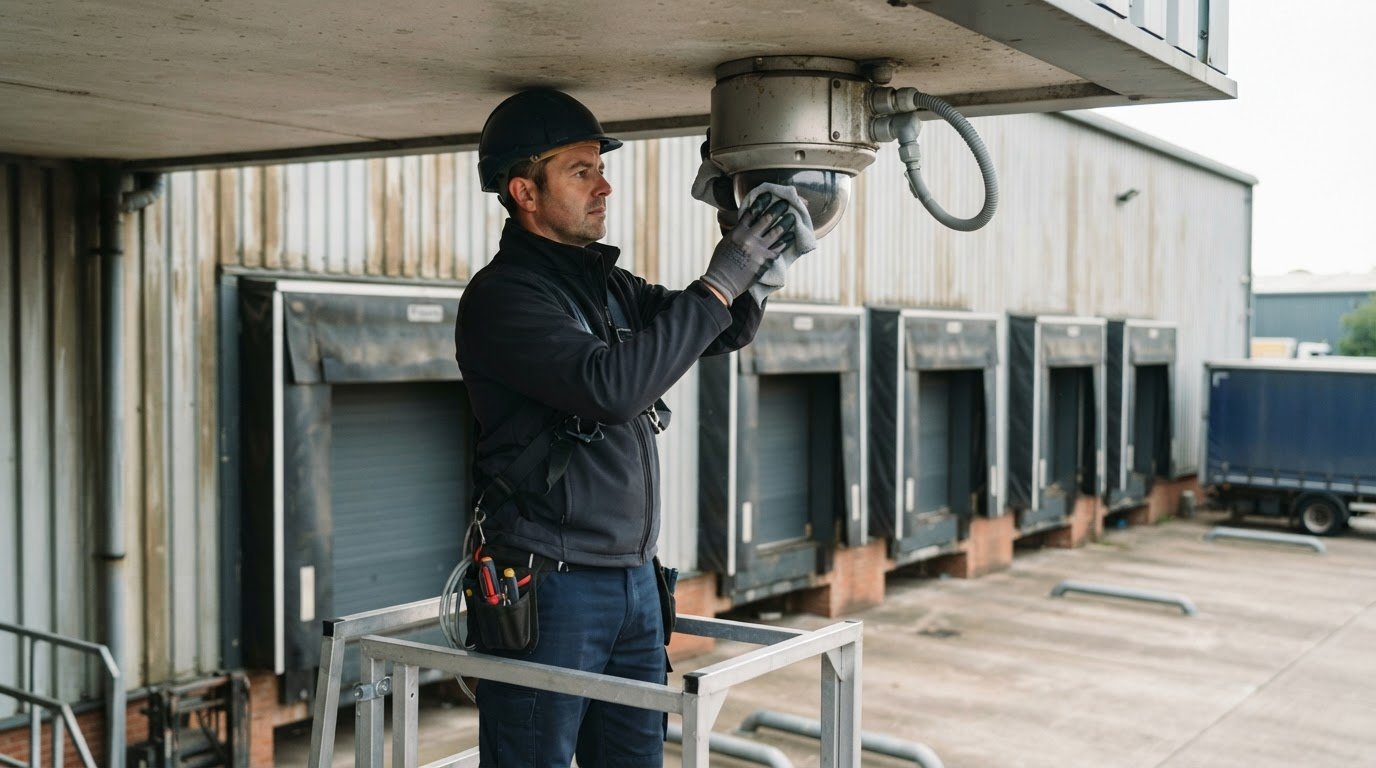
A maintenance visit has no fixed duration. The time depends on the system’s size and condition, site access, and the checks or repairs needed. For businesses weighing the benefits of a maintenance contract for security systems in Essex, a routine inspection and a fault-finding visit may take different amounts of time. Start by defining the work to be covered, rather than assuming every visit will take the same length of time.
It is reasonable to want security equipment checked efficiently and to know what happens when something goes wrong. A planned maintenance arrangement can set out service intervals and how faults are handled. Regular checks can also help identify issues before they become more serious.
This article explains what affects visit duration, how often commercial CCTV may need servicing, and how contract terms shape fault response and repair costs. It also outlines what to consider when arranging security system maintenance across Essex.
Key Takeaways
- Agree how faults are prioritised and what response the contract covers, so you understand the support process before an issue arises.
- Set CCTV service intervals around the system and its requirements; some commercial systems need more frequent attention than an annual visit.
- Visit duration depends on the equipment, its condition, access and the work required, so planned inspections and fault repairs can take different amounts of time.
- Preventative checks can identify developing faults earlier, helping you plan repairs and manage the risk of more disruptive breakdowns.
Emergency call-outs and preferential response
A maintenance contract can define how equipment faults are reported, assessed and prioritised. When staff spot a fault, they can report the affected equipment, its symptoms and the impact on site operations. A failed access control point, for example, may restrict entry to a work area, while a monitoring fault may make it harder to spot a system issue. Clear details help the service team assess the problem and arrange the appropriate response.
Priority also matters when an intruder alarm generates false activations. Two false alarm calls in a rolling 12-month period prompt police to write and advise remedial action. Three false alarm calls in a rolling 12-month period mean loss of police response. Regular maintenance can identify faults that contribute to false activations, allowing remedial work to be planned before problems continue.
A service level agreement (SLA) sets out the response arrangements attached to a contract. It can specify fault priorities and response arrangements that differ from standard service. The SLA should explain how to report a fault, how its priority is assessed and what process follows. Engineer attendance time depends on the agreed terms and the circumstances of the fault, not on a universal response time.
Accreditation can affect police response to intruder alarms. Police response is available only when an alarm system is maintained by an SSAIB- or NSI-registered company. Maintenance may also help property owners meet relevant buildings and contents insurance terms. Not every equipment fault is an emergency: the system affected, operational impact and contract terms determine its priority. Clear arrangements make it easier to respond when a fault occurs.
How often should CCTV systems be serviced?
Service intervals depend on the system type and its operating requirements. Commercial CCTV may need attention every six months or monthly, while other systems may be maintained annually.
Annual Servicing and System Checks
During an annual CCTV maintenance visit, an engineer can clean and check equipment, then assess whether it is operating as intended. The inspection may identify faults or errors before they affect performance. When setting service intervals, commercial sites should consider how heavily the system is used: some need checks every six months or monthly. A service report records findings and equipment condition, helping teams identify deterioration and any follow-up work.
Qualified Engineer Maintenance
A qualified engineer checks security equipment for faults and errors that could cause an alarm system to fail. Intruder alarm contracts may include checks once or twice a year, while British Standards recommend maintaining fire detection and alarm systems twice a year. Special circumstances may call for four visits a year. The equipment type and its requirements determine the maintenance schedule.
Records add practical value to each visit. A dated report can note what the engineer inspected, any faults found and recommended remedial work. For commercial CCTV, this creates a useful service history for facilities teams and helps track recurring issues. It also gives site managers a clear basis for scheduling follow-up work, rather than relying on memory when equipment performance changes.
Maintenance arrangements should distinguish between CCTV, intruder alarms and fire systems because their service intervals differ. Regular checks can help identify issues before they become critical, but the schedule should reflect the installed equipment and operating conditions. Keep service records with relevant site documents so maintenance activity and outstanding actions are easy to review.
Reducing breakdown, repair and replacement costs
A maintenance contract can make security-system spending more predictable than pay-as-you-go repairs because costs are set in advance. With pay-as-you-go, you pay when a fault occurs. The contract’s coverage determines which visits, engineer labour and repairs are included.
Priority Support and Call-out Fees
Maintenance contract customers receive priority for support requests, which can help get a fault assessed sooner. Whether this reduces call-out or engineer labour fees depends on the agreement, including which visits and repairs it covers. Review the inclusions, exclusions and charges for work outside the contract. Regular maintenance can also identify developing faults before they affect alarms or leave equipment out of service.
For example, an engineer can assess a recurring camera fault during a planned visit before it becomes a complete system failure. A service record also helps the engineer understand previous findings instead of starting without the equipment’s maintenance history.
Potential Insurance Reductions
Insurance discounts are available only when an alarm system is maintained by an SSAIB- or NSI-registered company. For a home insurance policy, the maintenance arrangement and its records may therefore be relevant to a discount. Savings are not automatic: the insurer’s terms determine whether the maintained system qualifies. Keeping service records helps document the maintenance carried out and the system’s condition.
Contract and Pay-as-you-go Costs
With pay-as-you-go repairs, you pay when a fault needs attention, and the work required determines the bill. A maintenance contract sets costs in advance, helping businesses budget and manage expenses. Compare the contract’s scope with likely repair tasks for the installed equipment, including call-outs, labour and replacement work. Exclusions matter as much as listed inclusions.
A condition survey can help establish what equipment needs attention and where deterioration is present. That gives a business a clearer basis for deciding whether planned maintenance or reactive repairs better suit its system. For peace of mind, assess the coverage against the equipment, service history and operational impact of a breakdown.

Security system maintenance across Essex
Across Essex, a maintenance agreement should reflect the equipment installed, its condition and its role in site protection. Essex Police’s force area covers 1,404 square miles, so site location and access arrangements matter when planning an engineer’s visit. The benefits of a maintenance contract for security systems in Essex include having a defined basis for covered equipment, planned maintenance, fault reporting and any charge for work outside its scope.
Start with an inventory of the installed system: cameras, access points, alarm devices and communications equipment. This helps define which components need checks and clarify responsibilities. For a burglar alarm, planned maintenance can include checking for faults that may cause failure or false activations. Communicating alarm systems need regular servicing to reduce false activations sent to the receiving centre.
Age and condition also shape the work. Old intruder alarm batteries can overheat and compromise the alarm system, so an engineer’s inspection can identify battery issues before they affect operation. If a site inherits a malfunctioning alarm, servicing can establish its condition, and the engineer can show the customer how to operate it to suit their needs.
Include reporting and follow-up in the agreement. A service record should identify inspected equipment, faults found and recommended remedial work. For a system connected to a telephone line, remote monitoring and diagnostics can help identify problems quickly. These details give facilities teams a practical maintenance record and clarify which repairs may incur an additional charge. They also help teams assess the benefits of a maintenance contract for security systems in Essex against their equipment and reporting needs.
For Essex sites with several buildings or systems, one agreement can organise equipment and visit planning across locations. Set out each site, the system installed there, relevant access arrangements and the reporting route for faults. This gives the responsible team and engineer a clear service basis. Arrange security system maintenance to establish a planned approach for your installed equipment.
Links Integrated Systems: Access Control Systems
Links Integrated Systems helps organisations plan security infrastructure around their site, access requirements and operational priorities. Its services include Access Control Systems, Speed Gates & Barriers, IP Video Intercom Systems and IP HD CCTV Systems. Understanding how these systems are installed and used can inform ongoing maintenance planning.
Discuss your site requirements when planning a new system, reviewing existing access arrangements or coordinating security equipment across commercial premises. A clear understanding of the equipment and its role helps shape practical decisions about system support and future servicing. For security infrastructure planning in Essex, contact Links Integrated Systems to discuss your requirements.
Plan the next stage of your security system
A maintenance agreement is most useful when it reflects how your site operates, which equipment is critical and how faults should be handled. Before changing arrangements, identify the systems that support daily access and monitoring, then define a maintenance scope and reporting process that suit your team. This turns the benefits of a maintenance contract for security systems in Essex into a practical plan for your premises, rather than a document that sits unused.
Links Integrated Systems works with security infrastructure including Speed Gates & Barriers, Access Control Systems and IP Video Intercom Systems. If you are reviewing installed equipment or planning a coordinated approach to ongoing maintenance, a conversation can help establish the next steps for your site.
Contact Links Integrated Systems to discuss your security system requirements and move forward with a considered maintenance plan.
Frequently Asked Questions
How long will a maintenance visit last?
A maintenance visit takes as long as the equipment, its condition, site access and the required checks dictate. A system spread across several buildings may need more inspection time than equipment in one area. If an engineer finds a fault that needs diagnosis or repair, the visit may take longer than a routine inspection. The planned scope and fault reports help define the work involved.
What is included in a service and maintenance package?
A maintenance package sets out the equipment covered, planned visits, fault-reporting arrangements and how additional repairs are handled. For example, a commercial site might include its CCTV cameras and recording equipment, while listing access control separately. The agreement should explain what happens when an inspection identifies a fault, including whether remedial work is included or treated separately.
Why Is Maintenance So Important?
Maintenance helps identify equipment faults and deterioration before they disrupt normal operation. For example, a camera with an unclear image may need attention before staff rely on it to review an incident. A maintained system also gives facilities teams a clearer picture of equipment condition and outstanding work. This supports informed decisions about repairs, replacement planning and how the security system serves the site.
Will I be offered a long term contract?
Contract length depends on the agreement’s terms and the maintenance arrangement selected. Before signing, review its duration, renewal process, covered equipment and provisions for ending or changing the service. A business with changing premises or equipment may need different arrangements from a site with a stable installation. These points help ensure the contract continues to fit operational plans.
What is included in a security system maintenance contract in Essex?
A contract should define the security equipment and sites covered, planned service visits, fault-reporting process and how repairs are handled. For an Essex business with multiple premises, the agreement can identify each location and its installed systems separately. It should also clarify who arranges site access, where service records are kept and how recommended remedial work is agreed.
What are the benefits of regular security alarm and CCTV maintenance?
Regular maintenance gives teams a structured way to review equipment condition and address faults. Checking camera images, for example, can reveal a developing picture-quality issue, while inspecting alarm equipment can highlight a fault needing attention. A documented service history also helps facilities teams track recurring issues and plan work around site operations, rather than relying on informal staff reports.