

For a commercial access control installation in Essex, entry is managed through permissions set for people, doors and access times. The system can log who enters and when, while fobs can be restricted to specific areas and entry and exit activity recorded. Authorised staff can manage access settings as business requirements change.
It’s reasonable to expect a system to do more than unlock a door. The right arrangement can help you manage movement through a building, connect access control with CCTV and fire alarms, and control vehicle or pedestrian entry with gates and barriers. This guide explains how monitoring and access permissions work, what to consider when integrating security systems, and how access control can be planned around your premises. It also covers the practical role of readers, cards and fobs, so you can understand how day-to-day access is administered and what to consider when planning an installation.
Key Takeaways
- Review who needs access to each area and how permissions should be managed when staff or business requirements change.
- Plan how security systems work together so monitoring supports a clear response to events and safe building operation.
- Match the access arrangement to your premises, daily movement and operational needs before settling on a system design.
- Consider how speed gates and barriers can organise entry for people and vehicles across your site.
How is an access control system monitored / controlled / settings changed?
Access records can show who entered a premises and when. Permissions can restrict fobs to particular areas, and an authorised administrator can review records and update settings as responsibilities or working arrangements change. This gives businesses in Essex a practical way to manage access over time.
Begin by mapping each entrance, door and user group. Staff may need access to a shared entrance, for example, but not to a restricted room. Record which credentials open each door, who manages permissions and how changes are handled. This creates a clear control plan for commercial access control systems in Essex.
Wired systems connect components using physical cabling, while wireless systems communicate without cabling between those components. The right approach depends on the premises, door locations, building fabric and installation requirements. A site assessment helps determine how the system should be arranged and monitored.
For a commercial automatic door or entrance-system installation in Essex, coordinate the reader, controlled door and normal movement through the entrance. Plan how authorised users enter, how visitors request access and how people leave. A push-button system may include a break-glass unit that keeps a door unlocked after release until it is manually reset. Specify this operation and include it in commissioning checks.
Installation typically moves from site assessment and system design to specification, fitting and commissioning. For each door, confirm the access method, permission settings and connection to the control system. Test authorised entry, denied access, records and manual release before handover. Check that the arrangement supports the building’s intended movement and that people understand reset procedures.
Cost depends on the premises’ size, the number of doors and the system selected. These factors determine the equipment, installation work and settings required. A tailored design can accommodate different entrances and changing access needs across Essex.
Integration with CCTV and alarms
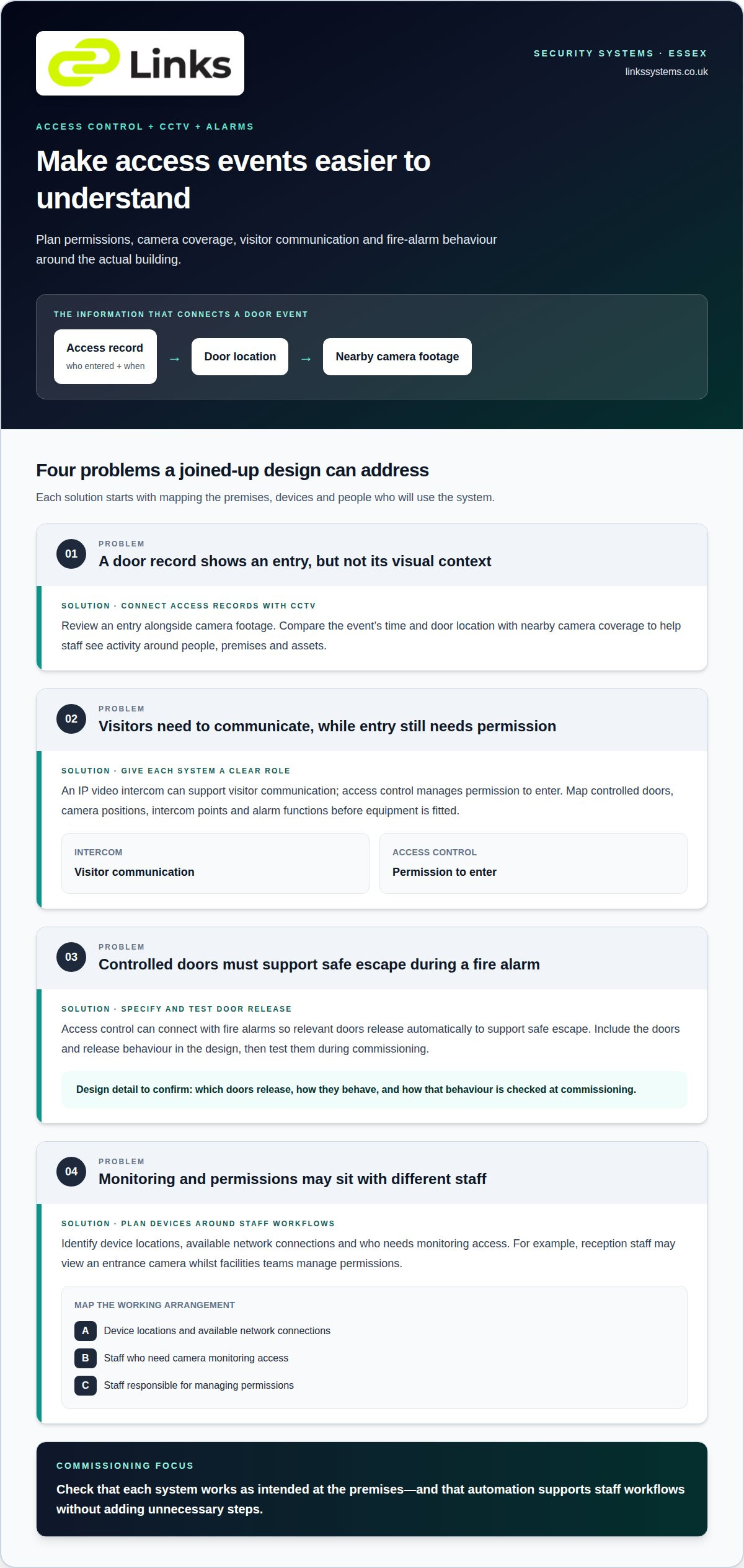
Linking door access with CCTV can help staff review an entry alongside camera footage. CCTV provides real-time surveillance and can help monitor access and identify potential security threats. For example, a manager can compare an access event’s time and door location with nearby camera coverage. This gives staff a clearer view of activity around people, premises and assets.
For commercial access control installation Essex businesses need, plan the connections before fitting equipment. Map each controlled door, camera position, intercom point and alarm function, then decide how staff will use the information. An IP video intercom can support visitor communication, while access control manages permission to enter. This joined-up design can make daily door access easier to oversee.
Fire alarm integration has a specific safety purpose. Access control can connect with fire alarms so doors release automatically to support safe escape. Include the relevant doors and release behaviour in the design, then test them during commissioning. Automatic doors can also integrate with access control, allowing an authorised person to present a card to a nearby reader to open the door.
Network planning matters when CCTV and access devices use a building’s communications infrastructure. Identify device locations, available network connections and which staff need monitoring access. Reception staff, for example, may view an entrance camera while facilities teams manage permissions. A commercial access control installation in Essex should reflect the actual building layout, not an assumed template. Automation should support staff workflows without adding unnecessary steps.
To coordinate door permissions, visitor communication and camera coverage, include them in the same design discussion. This helps define how each system contributes to monitoring and building operation. Explore access control and intercom planning as part of that process.
Looking for Security Systems & Services in Essex?
Access control needs depend on the premises, its users and the movement it must manage. Comparing these factors helps identify a suitable system and installation approach.
Suitable businesses and premises
Access control can suit offices, warehouses, commercial sites and residential blocks with shared entrances. It can also manage entry to rooms containing equipment, records or stock. Identify who enters, which areas they use and whether visitors need to request access. These details show where controlled entry can support the way the premises operates.
Access control for business types
A warehouse may need to separate staff routes from vehicle entrances, whilst an office may focus on reception and restricted rooms. A shared residential entrance needs a clear way for residents, visitors and individuals responsible for the building to gain entry. Consider how the system will work during normal operations, including deliveries and staff changes. The best fit is easy to use, secure and flexible enough for the premises’ requirements.
Choosing an Essex installer
Choose an installer with experience across different settings and a reputation for excellent customer service. Ask them to assess the entrances, user groups and access requirements before recommending a design. A useful proposal should explain how the system will operate at your premises and how permissions can be managed. These points help you judge whether the installer has understood the work, rather than offering a generic specification.
Commercial installation companies
Commercial access control installation companies in Essex work across business premises with differing layouts and entry needs. A directory lists 82 security businesses across Essex, including Chelmsford, Basildon and Colchester. That figure gives a sense of the local market, but the relevant comparison is each company’s fit for your project. Look for a clear installation process, an appropriate system design and support that reflects how the premises will be used.
Automatic gates and barriers for vehicle and pedestrian access
Gates and barriers can control vehicle and pedestrian access to a site. Plan each route around the people, vehicles and access methods the premises needs to manage.
Gate and barrier access
Map vehicle entrances, pedestrian gates and the points where routes meet. A barrier may suit a vehicle entrance, while a pedestrian gate can control access on foot. Consider deliveries, staff entry and visitor arrivals when deciding where controlled access is needed. Clear route planning supports efficient daily movement and shows where security systems need to work together.
Then choose suitable credentials for each entrance. Commercial access control can use key cards, fobs, PIN codes or biometric data. Cards or fobs may be straightforward for staff to use and for administrators to manage. Set permissions according to the areas each user needs, rather than assuming every gate requires identical access.
Access control for automated gates
Automated gates can use access control to manage who is permitted to enter. Match the reader and access method to the gate location and its users. Staff might use a card or fob, for example, while visitors follow a separate entry process. An IP video intercom can support communication where visitors need to speak with staff.
For automatic doors, a reader near the entrance allows an authorised person to present a card to open the door. Specify how users approach the reader and which doors it controls. This keeps access clear for staff and visitors and aligns credentials with the premises’ layout. A considered design supports daily routines and site security requirements.
To plan suitable gates and barriers for your site, map the entrances, user groups and access routes before selecting the control approach. A clear brief gives the installation design a practical starting point and supports a system suited to the premises.
Links Integrated Systems: Speed Gates & Barriers
Links Integrated Systems helps businesses plan commercial entry around their premises, access requirements and daily movement. Its Speed Gates & Barriers and Access Control Systems can manage controlled pedestrian and vehicle access. IP Video Intercom Systems support visitor communication, while IP HD CCTV Systems provide camera monitoring.
Before specifying a solution, clarify which entrances need control, who uses each route and how visitors should request entry. This gives the design a practical basis and helps align gates, credentials and other security equipment with site operations.
If your premises in Essex needs a coordinated approach to access control, gates or barriers, contact Links Integrated Systems to discuss your requirements.
Plan the next step for your premises
A commercial access control installation in Essex should be planned around how your site operates, not just the equipment at each entrance. Before design begins, note which routes need controlled access, who will manage permissions and how visitor entry should work. These details give the project discussion a practical starting point.
Consider how requirements may change as teams, working patterns or site layouts develop. If your plans include speed gates or barriers, access permissions or visitor intercoms, bring those needs together in one brief. Links Integrated Systems can discuss how its systems fit your commercial premises and access requirements.
For a considered conversation about your project, contact Links Integrated Systems. A clear outline of your entrances and day-to-day requirements can help you take the next step with confidence.
Frequently Asked Questions
How do I choose an access control system for an office building?
Start by mapping office entrances, staff roles and restricted areas. Reception staff may need access to shared floors, for example, while facilities teams may also need access to plant or equipment rooms. Consider how permissions will be updated when responsibilities change and whether visitors need an intercom. A written access schedule turns these requirements into a practical specification.
What sort of businesses would benefit from an access control system?
Businesses can benefit from access control when they need to manage entry to particular rooms, entrances or working areas. Offices, warehouses, commercial buildings and shared residential premises can all have different needs. A warehouse might separate staff areas from delivery routes, while a professional office may control access to records or equipment. Start by identifying who uses each space and what access they need.
What types of access control methods are available?
Common access methods include key fobs, cards, PIN codes and biometric credentials. Systems designed to support them can also use mobile or Bluetooth credentials. Each method affects how users enter and how administrators manage permissions. A business could issue individual fobs to staff and use a PIN-controlled entrance elsewhere, according to its operational needs.
What is the access control installation cost for commercial premises in Essex?
Installation cost depends on the premises’ size, the number of doors and the selected system type. The specification may also reflect entrance layouts and the access methods required. For a commercial project, the price depends on the individual case and is provided after a quote request. Set out the entrances and requirements clearly so the proposed scope reflects the work involved.
What types of commercial access control systems are available, including key fob, keypad, card, biometric and mobile?
Commercial systems can use fobs, cards, PIN keypads or biometric data to manage entry. Some systems also support mobile or Bluetooth credentials. The right method depends on how people use the premises and how administrators issue or change credentials. A business might use cards for staff and an intercom process for visitors, rather than relying on the same method for everyone.
Which UK regulations and standards apply to commercial access control systems?
System design should account for the building’s safety arrangements, access requirements and how controlled doors operate. Fire alarm interfaces and accessible routes are important considerations in the specification. Relevant standards depend on the installation and equipment. Links Integrated Systems states that its installations follow relevant EN and BS standards and certification. The design should explain how these requirements apply to the premises.