
A security system is only as reliable as its weakest integration point, yet many commercial facilities remain tethered to fragmented hardware that fails at the first sign of a technical conflict. When choosing an integrated security system for business, the focus must shift from individual software features to a unified, hardware-led infrastructure. You’ve likely experienced the frustration of managing disconnected vendors whilst system downtime or inconsistent pedestrian flow disrupts your daily operations. It’s a common pain point for project managers who require stability over trendy, short-term fixes that lack professional commissioning.
This 2026 guide provides the technical clarity needed to move beyond these operational bottlenecks. You’ll learn how to master the complexities of modern integration to protect your commercial assets with a strategy that prioritises reliability and UK building standards. We’ll examine the process of aligning speed gates, IP CCTV, and access control into a single, commissioned entity that’s built to last for over a decade. This overview details the transition from fragmented security components to a streamlined, professional operation that offers genuine peace of mind for high-level stakeholders.
Key Takeaways
- Understand how a unified IP-based infrastructure creates a single, interoperable network between physical barriers and digital surveillance.
- Identify the essential criteria for choosing an integrated security system for business by matching hardware specifications to specific commercial use-cases.
- Learn why professional commissioning is the decisive factor in system longevity, preventing the technical failures often associated with poor installation.
- Discover the importance of a hardware-led strategy that prioritises consistent pedestrian flow and strict compliance with UK commercial building standards.
- Evaluate the operational advantages of engaging a specialist contractor with a 40-year heritage in the London and Home Counties security sector.
What is an Integrated Security System for Business?
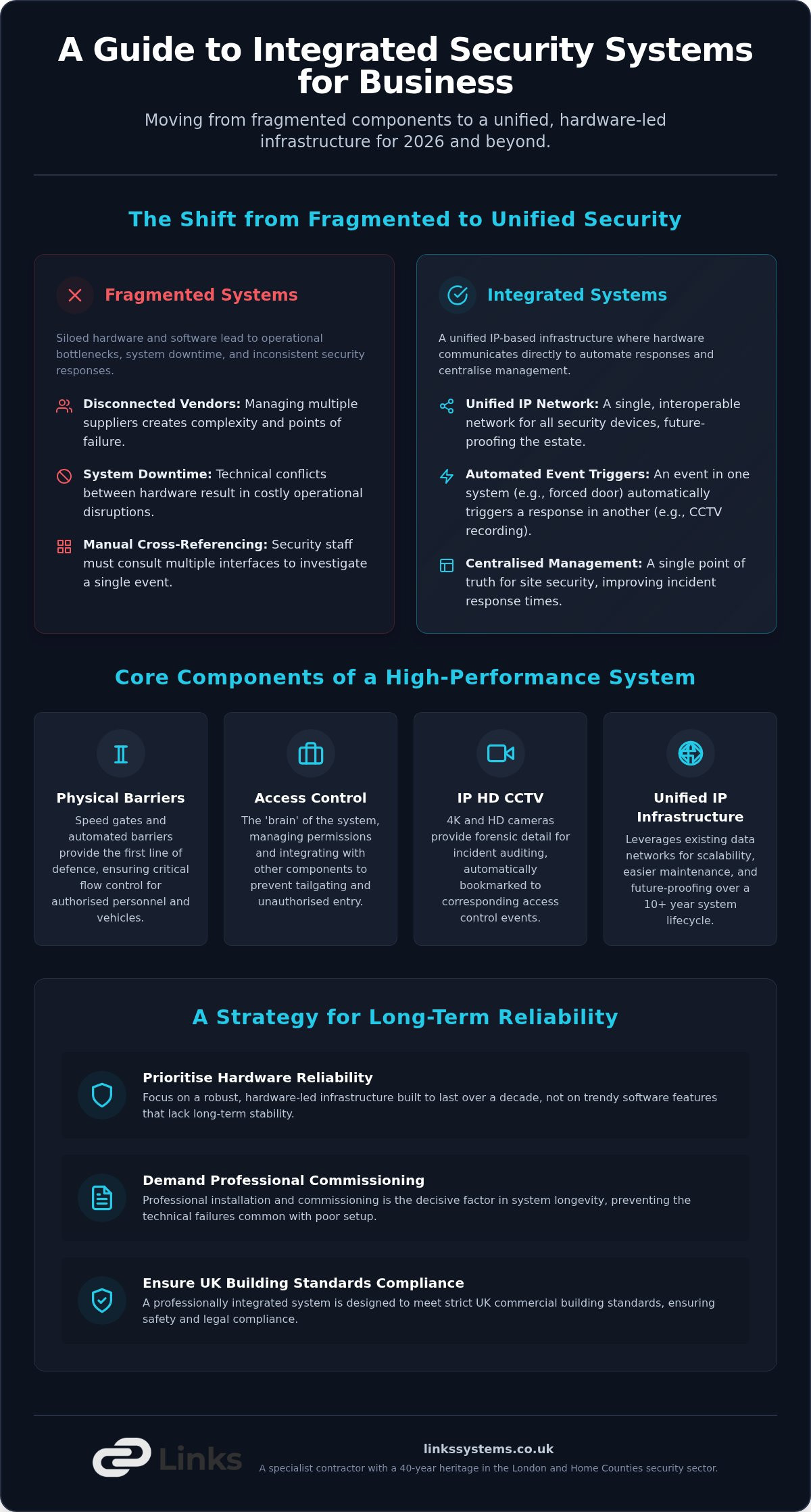
An integrated security system is a unified network where physical barriers and electronic surveillance operate in tandem. When choosing an integrated security system for business, stakeholders must look beyond simple software overlays. True integration involves an interoperable IP-based infrastructure where hardware components communicate directly to mitigate risks. This approach moves away from siloed systems that require manual cross-referencing, replacing them with a centralised management platform that acts as a single point of truth for site security.
It’s a common misconception that having two systems visible on one monitor constitutes integration. In a professional environment, “integrated” means that an event in one system triggers an automated response in another. For instance, an unauthorised attempt at a speed gate should immediately flag the nearest IP HD CCTV camera to focus on the entry point whilst notifying the management console. This level of coordination is fundamental to the Core Components of a High-Performance Integrated System, ensuring that physical hardware and digital data work as one.
The Shift to IP-Based Security Infrastructure
Traditional analogue setups are increasingly obsolete in the modern commercial landscape. Modern IP video intercoms and CCTV systems utilise existing data networks, providing high-definition video feeds that offer actionable evidence rather than grainy images. This shift enables businesses to future-proof their estates effectively. Because these systems are inherently scalable, you can expand your security footprint across multiple floors or sites without the need for extensive new cabling. It’s a methodical approach to infrastructure that ensures long-term stability and easier maintenance over a 10-year lifecycle.
Operational Efficiency in Professional Environments
In high-traffic London office lobbies, managing pedestrian flow is a constant challenge for project managers. Integrated systems reduce the burden on security personnel by automating routine tasks through intelligent triggers. Visitor management becomes significantly more streamlined when an IP video intercom is linked directly to access control permissions. Automated protocols can grant temporary access to specific zones whilst logging the entry in real-time. This unified visibility improves incident response times, as staff don’t have to navigate multiple disconnected interfaces during a critical event. It creates a professional atmosphere where security is robust but remains unobtrusive to daily business operations.
Core Components of a High-Performance Integrated System
A high-performance system relies on the precision of its hardware. Whilst software provides the interface, physical components are the primary enforcement layer that secures the building perimeter. When choosing an integrated security system for business, you must evaluate how each piece of equipment contributes to a cohesive strategy. This involves selecting hardware that doesn’t just sit on the network but actively communicates with other devices to mitigate threats in real-time.
Physical Barriers: Speed Gates and Automated Barriers
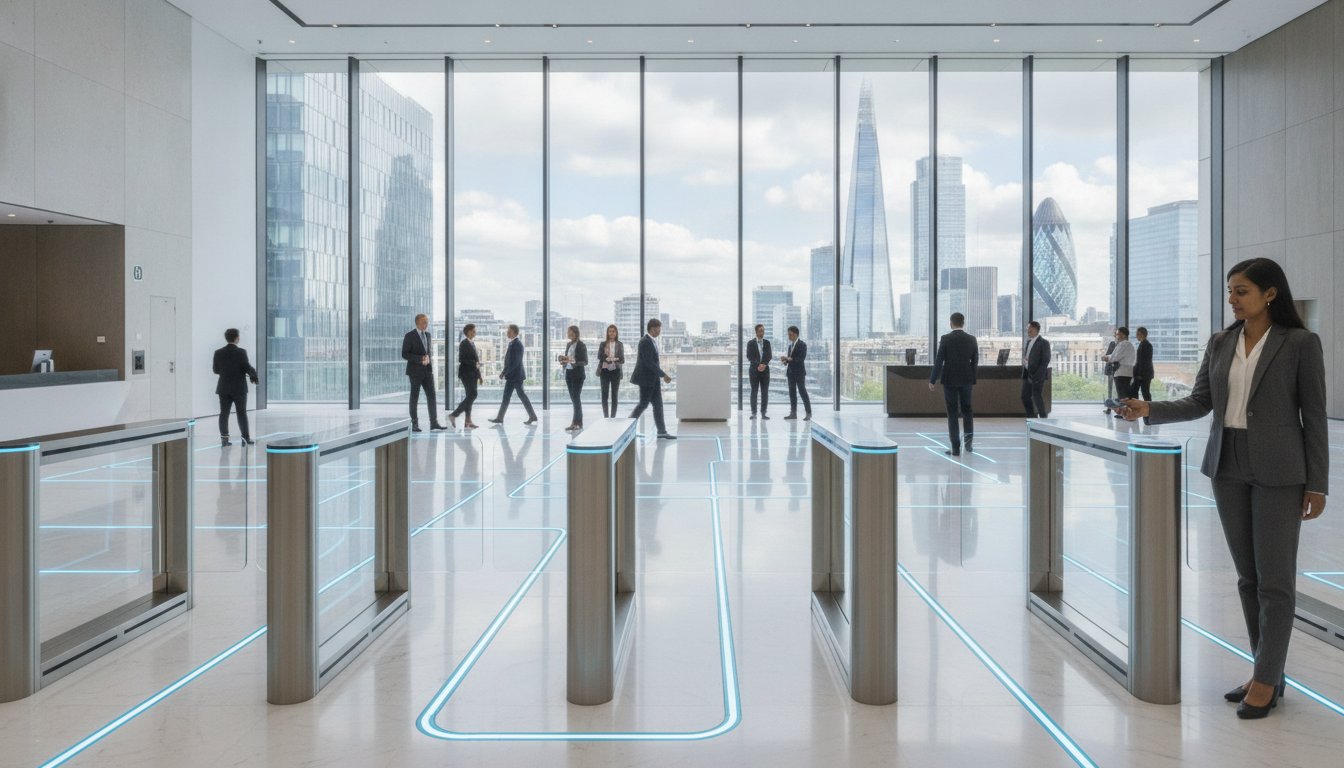
Speed gates represent the first line of physical defence in commercial lobbies. They provide critical flow control, ensuring that only authorised personnel enter the premises. It’s essential to select gates that match the specific security requirements and aesthetic of your building. For instance, high-glass panels offer a greater deterrent against climb-over attempts than low-level barriers. These gates communicate directly with your access control system to prevent tailgating, where an unauthorised person follows a credential holder through an open gate. For external perimeters, automated barriers integrated with Automatic Number Plate Recognition (ANPR) or long-range readers provide seamless vehicle management without compromising site safety.
Visual Verification: The Role of IP HD CCTV
Visual verification is the backbone of incident auditing. 4K and IP HD CCTV are now industry standards because they provide the forensic detail required for modern evidence. In an integrated environment, camera feeds are linked to specific access control events. If a door forced alarm occurs, the system automatically bookmarks the corresponding video footage for immediate review. Strategic camera placement in commercial centres ensures there are no blind spots, particularly at transition points like lifts and stairwells. Selecting the right hardware is a technical process that often requires Partnering with a Specialist Security Contractor to ensure the infrastructure is both robust and compliant.
The final layer involves IP video intercoms and access control systems. These components manage credentials across multiple zones, allowing you to restrict access to sensitive areas like server rooms whilst maintaining open access in public-facing zones. IP video intercoms allow for professional visitor screening, enabling receptionists or remote security teams to grant entry through high-definition visual and audio confirmation. To ensure these components operate at peak reliability, professional system maintenance and commissioning is vital for long-term operational success. By aligning these hardware components, you create a unified ecosystem that is significantly more effective than the sum of its parts.
The Professional Selection and Specification Process
Choosing an integrated security system for business begins with a rigorous site audit. This is not a cursory walk-through but a technical evaluation of vulnerabilities and pedestrian flow patterns. A multi-tenant corporate headquarters in London requires a different hardware profile than a single-occupier distribution centre in the Home Counties. By identifying these nuances early, project managers can avoid the significant costs of retrofitting hardware that doesn’t meet the building’s actual use-case. Professional specification ensures that every component is selected for its specific duty cycle and operational environment.
Defining Your Security Objectives
Security objectives must be clearly defined before any procurement begins. You must decide if the primary goal is a visible deterrent, a covert detection network, or high-volume access management. This stage requires collaboration amongst facilities managers, IT departments, and HR leads to ensure the system meets the diverse needs of the organisation. A successful installation balances robust security with a seamless user experience, ensuring that physical barriers like speed gates don’t become operational bottlenecks during peak hours.
Adherence to UK standards and “Secured by Design” principles ensures that your estate meets the highest professional benchmarks. These standards are essential for insurance compliance and long-term risk mitigation. Professional specification involves matching the technical capabilities of your hardware to the specific risks identified in your audit. It’s about precision; ensuring that high-security zones are protected by reinforced access points whilst public-facing areas remain welcoming yet monitored.
Technical Compatibility and Open Standards
Technical compatibility is often where generalist installers fail to deliver. Choosing non-proprietary hardware based on open standards is vital for long-term flexibility. This approach prevents vendor lock-in and allows for easier integration with future technologies as they emerge. Your existing network infrastructure must be assessed to ensure it can support the high-bandwidth requirements of modern IP HD CCTV. Professional-grade hardware is designed to handle these data loads, whereas off-the-shelf retail solutions often falter under the pressure of a commercial environment.
Finally, evaluating the scalability of your security architecture is a core part of the selection process. A well-designed system grows with your business. Whether you need to add more IP video intercoms or expand access control to new zones, the underlying infrastructure should remain stable and reliable. This methodical planning is the hallmark of a specialist contractor who understands the full lifecycle of a commercial project, ensuring your investment remains relevant for at least a decade.
Installation, Commissioning, and Ongoing Reliability
Installation of physical hardware is merely the midpoint of a project. When choosing an integrated security system for business, it’s vital to distinguish between a basic installation and professional commissioning. The latter is the most critical stage, ensuring that the disparate components of your network actually function as a unified entity. A failure at this stage often leads to the “install and leave” culture prevalent amongst generalist contractors, where systems are left with technical glitches that only surface during a security event. True reliability is built during this final technical phase, where the theoretical design is proven in a live environment.
The Commissioning Phase: Ensuring Everything Works as Intended
Commissioning involves rigorous testing of every integration trigger within the environment. For example, a fire alarm signal must instantly trigger a fail-safe release on all speed gates and barriers to allow for safe egress. We also fine-tune CCTV analytics to ensure that every access control event is accurately timestamped and synchronised with the video storage server. This phase isn’t complete until the on-site security teams have received comprehensive training on the management interface. Providing your staff with the technical confidence to operate the system is just as important as the hardware itself. It ensures that the investment you’ve made is utilised to its full potential from day one.
Preventative Maintenance for Commercial Hardware
Mechanical components like speed gates and automated barriers require specialist periodic servicing to maintain their 10-year plus lifecycle. Unlike static software, these systems have moving parts that suffer from wear and tear in high-traffic London lobbies. A structured maintenance contract ensures that engineers check IP camera focus, housing integrity, and the health of your data storage arrays on a regular basis. This proactive approach prevents system downtime and allows for budget predictability, as you aren’t hit with unexpected repair costs. It’s a methodical way to protect your commercial assets whilst ensuring the system remains compliant with current standards.
Maintaining the reliability of your estate also requires regular firmware updates to protect against technical vulnerabilities. It’s a deliberate process that ensures your hardware continues to meet UK commercial building standards long after the initial sign-off. If you require a partner to oversee the full lifecycle of your project, our team provides expert system maintenance and commissioning backed by 40 years of industry experience. This commitment to precision is what separates a long-term security asset from a short-term technical burden.
Partnering with a Specialist Security Contractor
Choosing an integrated security system for business requires more than just selecting a software provider. It demands a partnership with a specialist who understands the mechanical and electronic intricacies of physical hardware. A generalist firm might understand basic sensors, but the engineering required for high-frequency speed gates and complex IP-based networks is a separate discipline altogether. By working with a specialist, you ensure that every component is specified for its exact environment, preventing the early hardware failures that often plague poorly planned installations.
Specialist Hardware Expertise vs. Generalist Alarms
Generalist alarm companies often lack the technical depth required to manage the full physical security lifecycle. Speed gates and automated barriers are mechanical assets that require precise calibration and ongoing maintenance to function correctly within an integrated network. A specialist contractor focuses on the physical enforcement layer, ensuring that your IP HD CCTV and access control systems aren’t just recording events but actively preventing unauthorised entry. This hardware-first approach prioritises reliability and stability, providing a level of precision that generalist providers cannot match whilst ensuring your hardware lasts for 10 years or more.
The Value of a Local Service Partner
Local expertise is a critical factor when managing commercial estates in London, Kent, and Surrey. A partner with a deep understanding of local building regulations and commercial property standards can navigate the specific requirements of high-traffic metropolitan environments. Being based in the South East allows for rapid response times during scheduled maintenance visits, ensuring your system remains operational without long delays. This proximity fosters a collaborative relationship where the contractor acts as a dedicated service partner rather than a distant vendor, providing consistent support across the lifecycle of the project.
Links Integrated Systems brings a 40-year heritage to every project, positioning our team as a seasoned guide for complex technical requirements. We’ve established ourselves as a dependable pillar within the professional community, guiding project managers through the entire process from initial design to long-term maintenance. Our methodical rhythm of service ensures that every technical requirement is handled with precision, mirroring a professional project workflow that values rigorous standards. If you’re ready to secure your commercial assets with a proven, high-quality solution, Speak to our specialists about your integrated security requirements today. This steady, experienced hand provides the peace of mind necessary for managing complex technical infrastructures whilst maintaining the long-term value of your hardware.
Securing Your Commercial Future with Precision Integration
Establishing a unified security ecosystem requires a shift from fragmented hardware to a commissioned, IP-based infrastructure. By prioritising the interoperability of speed gates, access control, and high-definition surveillance, you create a robust environment that protects both assets and personnel. This hardware-led strategy ensures that every component serves a specific operational purpose whilst maintaining compliance with UK standards. When choosing an integrated security system for business, the technical expertise of your partner is the decisive factor in achieving a system that remains reliable for over a decade.
Links Integrated Systems provides the professional assurance needed for these complex technical requirements. With 40 years of industry experience, we are specialist installers of speed gates and IP CCTV across London, Kent, Surrey, Hertfordshire, and Essex. Our methodical approach ensures your project moves seamlessly from initial design to long-term maintenance. We invite you to Request a Professional Security Consultation to discuss your specific site requirements. Investing in a precise, expertly commissioned system today provides the stability and peace of mind your business deserves for the years ahead.
Frequently Asked Questions
What is the difference between a standalone and an integrated security system?
A standalone system operates as an isolated unit with its own management interface, whilst an integrated system links multiple components into a unified network. When choosing an integrated security system for business, you gain the ability to create automated triggers across devices. For example, an access control event can instantly tag a specific CCTV recording. This coordination eliminates the need for manual cross-referencing between disconnected software platforms, significantly improving operational efficiency.
Can I integrate my existing CCTV cameras into a new access control system?
Existing cameras can often be incorporated if they utilise IP technology and support open standards such as ONVIF. Traditional analogue cameras typically require encoders or complete replacement to function within a modern integrated ecosystem. Successful integration depends on the technical compatibility of the network protocols. A specialist contractor will conduct a site audit to determine which legacy components are stable enough to remain whilst ensuring the new infrastructure remains future-proof.
How much does it cost to install an integrated security system for a business?
The investment required for an integrated system varies significantly based on the scale of the facility and the complexity of the hardware involved. Factors such as the number of speed gates, the resolution of IP HD CCTV cameras, and the depth of the access control database all influence the final specification. Professional commercial systems require a dedicated budget for precise commissioning and long-term maintenance to ensure reliable performance and compliance with UK building standards.
Are speed gates necessary for a professional office lobby in London?
Speed gates are essential for high-traffic London lobbies where maintaining pedestrian flow and preventing tailgating are primary concerns. These barriers provide a physical enforcement layer that electronic surveillance alone cannot offer. They ensure that only one authorised person enters per credential presented, which is vital for multi-tenant buildings with strict security protocols. Choosing an integrated security system for business often includes these gates to manage the transition from public to private zones effectively.
What maintenance is required for a commercial integrated security system?
Maintenance involves both mechanical servicing and digital system health checks. Specialist engineers must periodically inspect the moving parts of speed gates and barriers to prevent wear and tear from affecting performance. On the digital side, regular firmware updates and storage health checks for IP HD CCTV are required to maintain system integrity. A structured maintenance contract provides the methodical oversight needed to protect the lifecycle of your commercial hardware over a decade or more.
How does an integrated system improve building safety during an emergency?
An integrated system improves safety by automating fail-safe protocols during an emergency. When a fire alarm is triggered, the system can be programmed to instantly release all speed gates and barriers to ensure unobstructed egress for occupants. Simultaneously, IP video intercoms and CCTV can provide real-time visual data to emergency responders. This unified response is significantly more reliable than manual procedures, which can be prone to human error during high-stress incidents.
Can IP video intercoms be managed remotely across multiple sites?
IP video intercoms are designed for remote management across multiple sites through a centralised management platform. This allows security teams or receptionists to screen visitors and grant entry to several buildings from a single location. Because the hardware sits on a standard data network, the video and audio feeds are accessible from any authorised terminal. This scalability is a core advantage for businesses managing diverse estates in London and the Home Counties that require a unified security operation.