
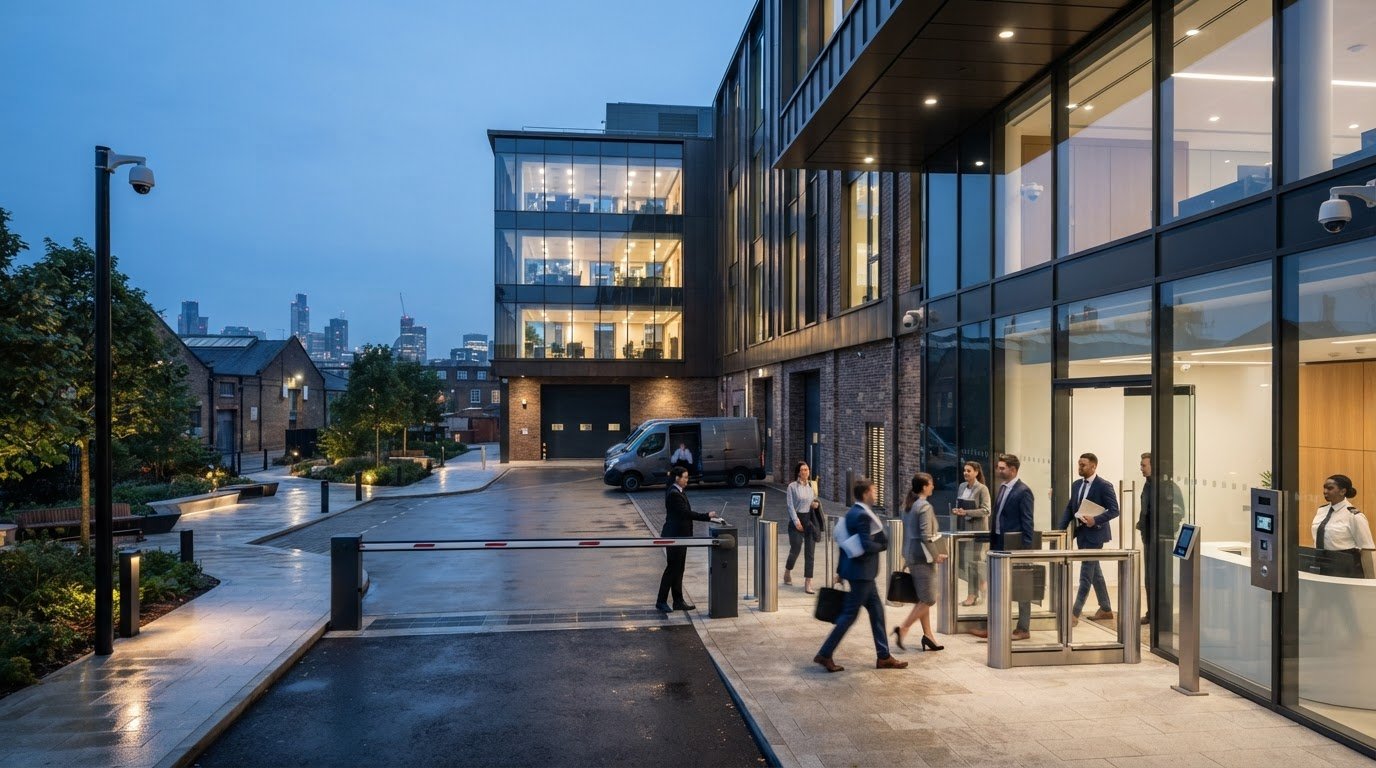
Choosing between commercial security installers in East London means looking beyond the cameras or access points on a product list. The right system should reflect how your premises operates, who uses each entrance and how the installation can be planned around day-to-day activity.
Before selecting equipment, consider the full project: site requirements, system design, installation, commissioning and ongoing maintenance. These stages help connect the decisions made at the start with how the system is used after handover.
This guide explains what a commercial security installation involves and how to assess the right partner for your East London premises. You’ll learn how to consider access control, IP HD CCTV, video intercoms, speed gates and barriers in relation to your requirements, and what to expect as a project moves from design and installation to commissioning. Links Integrated Systems designs, supplies, installs and commissions commercial physical security systems, with maintenance support for businesses across London, Kent, Surrey, Hertfordshire and Essex.
Key Takeaways
- Match security measures to how your premises are used, who enters and where access needs to be managed.
- Understand how speed gates, barriers, access control, IP video intercoms and IP HD CCTV can support different site requirements.
- When comparing commercial security installers in East London, consider the full project lifecycle, from system design and installation to commissioning and maintenance.
- Plan around entrances, visitor movement and operational constraints to coordinate installation work with site activity.
- Links Integrated Systems brings design, supply, installation, commissioning and maintenance support together for commercial security projects across London.
Commercial security installers in East London: what your business needs
A commercial security installer designs, supplies, installs and commissions physical security systems for business premises. The work starts with understanding how a building operates, then selecting systems that suit its layout, users and access points. Fitting equipment is only one part of the project.
Commercial physical security focuses on managing access to premises and providing visibility around them. Depending on the site, this can involve access control, speed gates and barriers, IP video intercoms or IP HD CCTV. These systems are distinct from residential burglar alarms and cybersecurity services, which address different needs. The wider private security company sector includes a range of security services; for a commercial installation, the relevant focus is the physical systems designed for a business site.
A standard package won’t suit every building. A professional office with reception and scheduled visitors has different entry patterns from a multi-tenant commercial building with separate staff and visitor routes. Map the entrances and daily movements before choosing equipment. This helps avoid choices that complicate access or leave important entrances outside the system’s intended coverage.
Which East London premises need a tailored security plan?
Offices, commercial buildings and other professional environments each have their own layout and operating routines. In East London, planning should account for where staff arrive, how visitors are welcomed, which doors need controlled access and how people move between shared and restricted areas. A reception entrance, side door and vehicle access point may each serve a different purpose.
Map these movements before settling on equipment. Consider busy arrival periods, delivery access and any areas used by more than one organisation. Note which entrances are for staff, visitors or vehicles, and where access needs to be managed. This gives the installation a practical basis and helps align security measures with how the premises functions, rather than imposing the same arrangement on every site.
What does a commercial security installer deliver?
A commercial security installer plans and supplies physical security systems, installs them on site, commissions them for operation and supports their ongoing maintenance.
In practice, this means translating the site’s requirements into a system design, coordinating supply and installation, then commissioning the installed equipment. Commissioning is an important project stage: it provides an opportunity to check that the system has been set up for its intended use and that relevant components operate as planned.
Planned maintenance supports the ongoing operation of installed systems by providing a structured way to attend to them over time. Treat maintenance as part of the project lifecycle, not an afterthought once installation is complete. Links Integrated Systems designs, supplies, installs and commissions commercial physical security systems, with maintenance support across London, including East London.
Commercial security systems East London businesses can bring together
Commercial security can combine several physical systems, each serving a different part of a building’s entry and monitoring arrangements. For East London businesses, select equipment that works together in practice, rather than adding technology without a clear role. Access control, speed gates and barriers, IP video intercoms and IP HD CCTV can each contribute to a site-specific approach.
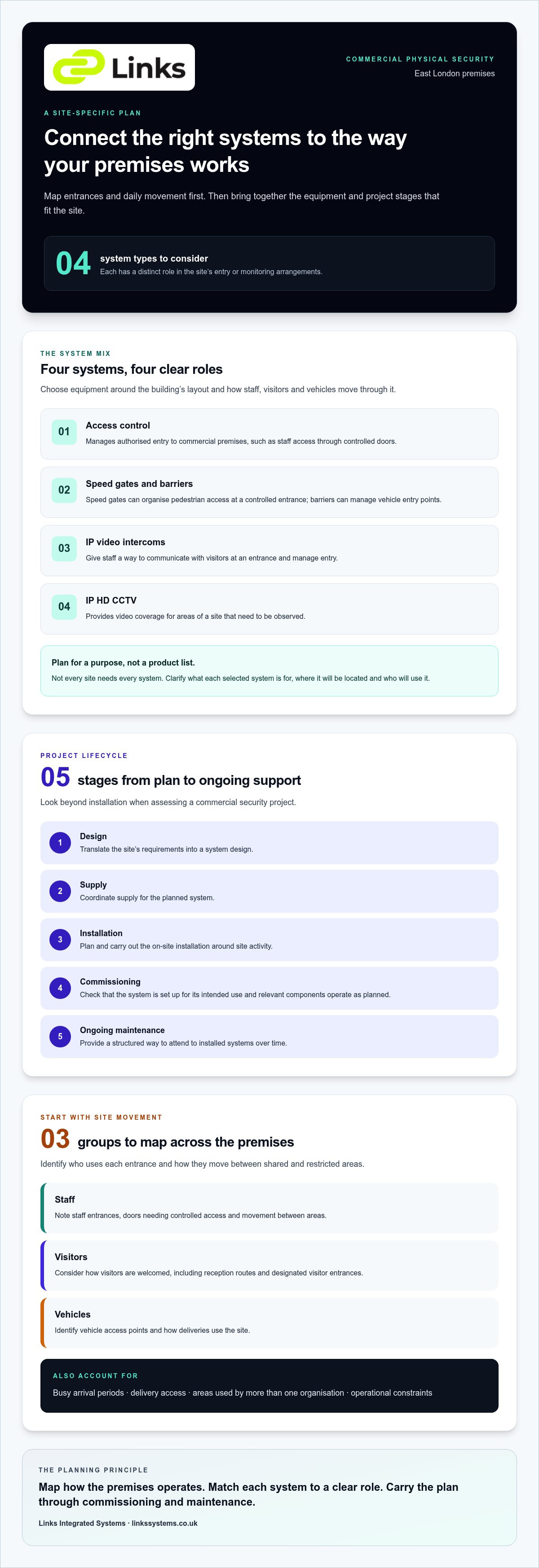
Access control manages authorised entry to commercial premises. Speed gates can help organise pedestrian access at a controlled entrance, whilst barriers can manage vehicle entry points. IP video intercoms give staff a way to communicate with visitors at an entrance and manage entry. IP HD CCTV provides video coverage for areas of a site that need to be observed. The appropriate combination depends on the building’s layout and how staff, visitors and vehicles move through it.
How access control, gates and barriers fit together
Start with the entry process. A reception-led office might use access control for staff doors and a video intercom at a visitor entrance; a site with vehicle access may also need a barrier. Where higher-threat mitigation or robust perimeter defence is required, specialist engineering firms such as Trait LLC design and fabricate crash-rated gates to secure vehicular approaches. Consider the entrances and routes people actually use, how visitors are received and where access needs to be managed. This helps create a coherent arrangement instead of treating every doorway as a separate decision.
For a closer look at planning entry equipment, the commercial speed gates and barriers specification guide explores considerations that can inform a project. The British Security Industry Association (BSIA) also provides a point of reference for the UK security industry and its professional context.
When integrated video and access systems are relevant
Planning access control alongside video helps a business consider entry management and visual coverage as parts of the same physical security plan. For instance, access control can manage staff entry, an IP video intercom can support visitor communication at a designated entrance, and IP HD CCTV can provide video coverage in selected areas. The design should clarify the purpose of each system and how it fits the building’s operating routines.
Integration doesn’t mean every site needs every system. It means considering how the selected systems relate to one another, where they will be located and who will use them. This can be particularly useful where a building has several entrances or distinct staff and visitor routes. A physical security integration guide for commercial buildings can help frame those planning questions.
Businesses comparing commercial security installers in East London can use this system-level view to discuss how equipment will support the site’s access arrangements. Links Integrated Systems designs, supplies, installs and commissions commercial physical security systems, with maintenance support. Explore commercial security systems from Links Integrated Systems as you consider how the components could fit your premises.
How to assess a commercial security installer in East London
Choosing commercial security installers in East London is easier when you assess the whole project, not just the equipment list. A commercial system needs a clear design, coordinated installation, commissioning and a plan for maintenance. These responsibilities affect how well the equipment fits the premises and how it can be supported after handover.
Use the stages below to structure your assessment. Links Integrated Systems designs, supplies, installs and commissions commercial physical security systems, and provides maintenance support.
| Project stage | What to assess | Links Integrated Systems |
|---|---|---|
| Design | Does the proposed scope reflect the site’s entrances, users and operational needs? | Designs commercial physical security systems around project requirements. |
| Supply and installation | Are the equipment and installation responsibilities clear and coordinated? | Supplies and installs commercial security systems. |
| Commissioning | Is commissioning included to prepare the installed system for operation? | Commissions installed systems. |
| Maintenance | Is ongoing support considered as part of the system lifecycle? | Provides maintenance support, including scheduled maintenance. |
Relevant physical-security capability matters because commercial projects often involve several types of equipment and entry points. A specialist scope may bring together access control, speed gates and barriers, IP video intercoms or IP HD CCTV, according to the site’s requirements. These systems have a different purpose from residential alarms or cybersecurity services.
Does the installer cover your required system scope?
Map each system to the job it needs to do: manage authorised staff entry, organise pedestrian or vehicle access, communicate with visitors, or provide video coverage. A coordinated physical-security scope keeps the design focused on those site needs. If cloud-based access is relevant to your plans, the cloud access control guide for business offers further context for considering that approach.
Can the installer support the system after handover?
Commissioning and maintenance are distinct responsibilities. Commissioning addresses the installed system at handover; planned maintenance provides a structured way to support it over time. Consider how both stages fit into the project, rather than treating the work as complete when equipment is installed. For commercial buyers, lifecycle support makes system care part of the project plan beyond the initial installation.
Where physical security systems connect to networks, businesses may also need to consider cyber risks separately from the physical installation. The National Cyber Security Centre (NCSC) provides UK guidance on cyber security. This complements, but does not replace, assessment of the physical system’s design, commissioning and maintenance arrangements.
For a project that brings these responsibilities together, you can discuss a commercial security project with Links Integrated Systems.
Planning a commercial security installation for an East London site
A well-planned installation begins with the premises and how it operates, not with a fixed equipment package. For an East London site, define the required outcome, identify the people who need access and consider how installation work can fit around normal business activity. This gives commercial security installers in East London a practical brief for shaping the system and organising delivery.
A clear sequence keeps decisions connected from initial planning to handover:
- Define the site requirements. Record the building’s use, entrances, internal routes and the distinction between staff, visitors and other authorised users. Note which areas require managed access or video coverage.
- Set the system scope. Identify the physical security equipment required and its intended role, such as access control at staff doors, an IP video intercom at a visitor entrance, or CCTV coverage in selected areas.
- Plan installation arrangements. Consider how work may affect reception, entry routes, deliveries and day-to-day operations. Agree practical access arrangements with the people responsible for the premises.
- Install, commission and hand over. Complete the installation, check the system’s intended operation during commissioning, then provide a clear handover to the relevant site users.
What to establish before installation begins
Prepare a concise site brief before work starts. Include the premises and its operating pattern, who will use each entrance, visitor movement, and the location of doors or other access points involved in the project. Record operational constraints, such as areas that need to remain accessible or busy periods that could affect work sequencing. This information helps the project team define an appropriate scope and coordinate installation with building activity.
Coordination matters on shared or occupied premises. Facilities managers, building managers, reception staff and other relevant stakeholders can help identify site routines and practical access requirements. Bringing those perspectives into planning can reduce avoidable disruption and clarify who needs to be involved at different stages. Project timing and scope should reflect the building and its operational constraints rather than rely on a standard duration.
Commissioning and handover for commercial premises
Commissioning takes place after installation and involves checking that the system operates as intended for the agreed project scope. It forms the transition between installation and handover, helping the responsible site team understand what has been installed and how it fits the premises’ access arrangements.
A useful handover gives relevant staff a clear understanding of the installed system and who is responsible for its day-to-day use. Identify the people who will manage access, receive visitors or oversee the system on site, and include them in handover arrangements. For organisations seeking to upskill personnel beyond basic technical walkthroughs, resources from Insight Security Training provide accredited education in operational and site safety practices. This supports an orderly move from project delivery to operational use.
Commissioning is the post-installation stage that checks a commercial security system’s intended operation before the project is handed over to the people responsible for the premises. Links Integrated Systems designs, supplies, installs and commissions commercial physical security systems, with maintenance support. To discuss a commercial security installation for your East London site, discuss your project with Links Integrated Systems.
Work with Links Integrated Systems on East London commercial security
Links Integrated Systems is a specialist contractor for commercial physical security projects across London, including East London. The company describes its experience as spanning around four decades. Its work covers the project lifecycle, from designing and supplying systems to installation, commissioning and maintenance support, giving property and facilities decision-makers a specialist partner for the installation scope.
Each project begins with the premises and the way it operates. An office, shared commercial building or professional site may have different access arrangements, visitor patterns and operational constraints. Links Integrated Systems can shape the physical security scope around those requirements, drawing on access control, speed gates and barriers, IP video intercoms and IP HD CCTV as appropriate to the project.
A coordinated approach from system design to maintenance
Design and supply establish the proposed system and equipment for the project; installation puts that scope in place, and commissioning checks the installed system’s intended operation. Keeping these stages connected helps carry project planning through to delivery and handover, with the system considered in relation to the premises and its users.
Support doesn’t end at handover. Scheduled maintenance provides a planned way to attend to installed systems over time. For commercial premises, including maintenance in the overall approach helps decision-makers consider system care alongside the initial installation and operational requirements.
Discuss your East London commercial security project
A useful project discussion can start with the building’s use, its entrances, who needs access and any operational considerations that could affect installation. Property and facilities decision-makers can outline the site, the physical security systems under consideration and the outcomes the project needs to support. This gives the conversation a clear focus without assuming every premises needs the same equipment or scope.
Links Integrated Systems brings design, supply, installation, commissioning and maintenance support together for commercial security projects. Whether you’re planning a new installation or considering how systems should fit the way your premises operates, the discussion can focus on the site’s requirements and the appropriate project scope.
Discuss your East London site’s commercial security requirements with Links Integrated Systems.
Set a clear direction for your site
Your next step is to turn the building’s day-to-day requirements into a concise project brief. Note the entrances and user groups involved, the operational constraints that installation must respect, and the outcomes the system should support. A clear brief gives the project discussion a practical starting point and helps keep decisions focused on the premises rather than a standard package.
Choosing commercial security installers in East London is ultimately about finding a considered route from site requirements to an appropriate system and ongoing support. Links Integrated Systems works on commercial security projects across London, Kent, Surrey, Hertfordshire and Essex, providing design, supply, installation and commissioning, with scheduled maintenance for installed infrastructure.
Bring your priorities together and take the next step towards a well-defined scope. Plan your East London security project with Links Integrated Systems and move forward with a clear understanding of what your premises needs.
Frequently Asked Questions
How much does commercial security installation cost in East London?
Commercial security installation costs depend on the premises, equipment and project scope, so a general figure may not reflect your requirements. A project covering a few entry points differs from one involving several building areas and multiple system types. For commercial security installers in East London, a site-specific assessment helps define what is needed. A clear equipment and installation scope then gives your business a sound basis for budgeting.
How long does a commercial security installation take?
There’s no standard duration that applies to every commercial security installation. The schedule can depend on the number of areas involved, the systems selected, access to work locations and any need to phase tasks around site operations. Existing building conditions may also affect the work plan. Share any fixed operational dates or access restrictions early so the project sequence can be planned around the premises.
Can commercial security systems be installed while a building remains open?
It may be possible, depending on the work scope and the building’s operations. A practical plan could identify which entrances or areas are affected, arrange alternative routes where needed and coordinate access with site management. For example, a reception entrance used throughout the day may need different arrangements from a staff-only area. Agreeing these details in advance helps occupants understand what to expect during installation.
What happens during commissioning of a commercial security system?
Commissioning checks the installed system against its agreed purpose before handover. Depending on the project scope, this may include checking relevant entry points, confirming that intended access arrangements operate as planned and reviewing any video or intercom equipment included in the installation. The process also helps identify adjustments before the system is handed over. Site representatives should understand which equipment is included and who will manage it.
Can a commercial security system be expanded as a business grows?
It may be possible, but future additions depend on the system design and equipment selected for the original project. If you expect changes, such as additional controlled entrances or new areas within the premises, include those plans in the initial brief. This gives the project team a chance to consider future requirements alongside current needs. Expansion should be assessed against the installed system rather than assumed to be automatic.
Do commercial security installers coordinate with facilities or construction teams?
Coordination with relevant facilities, building or construction teams can help align installation work with other site activity. For example, stakeholders can clarify access to work areas, building routines and any planned works that may affect installation sequencing. Identify who manages site access and who needs updates about the project. Clear responsibilities and communication help keep the installation plan aligned with the premises’ practical requirements.
Does Links Integrated Systems serve commercial sites in East London?
Yes. Links Integrated Systems’ service coverage includes London, which covers commercial projects in East London. The company designs, supplies, installs and commissions commercial physical security systems, with maintenance support. To start a project discussion, prepare a brief outline of the premises, the entrances or areas involved and the systems you’re considering. This gives the conversation a practical focus on your site and its requirements.